Saving Pop Culture: Experimental German Music Videos
Written by
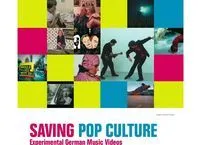
The Goethe-Institut in cooperation with The Film Archive Wellington and MIC Auckland proudly presents a compilation that features the 16 best examples of German music videos produced between 2003 and 2007.
Awarded the MuVi Prize at the International Short Film Festival Oberhausen for best visualisation, these clips are in stark contrast to the vibe of expensive performer videos. The Goethe-Institut in cooperation with The Film Archive Wellington and MIC Auckland proudly presents a compilation that features the 16 best examples of German music videos produced between 2003 and 2007.
Awarded the MuVi Prize at the International Short Film Festival Oberhausen for best visualisation, these clips are in stark contrast to the vibe of expensive performer videos.The works refuse to obey mainstream laws, re-shaping them according to their own standards, creating a parallel cultural niche which incorporates all traditions of modern art.
German film maker Christina von Greve will come to New Zealand to present her own work as well as that of her 15 colleagues. NZ musicians Bright Colours will be playing a live performance in Wellington in response to Christina's work on 11 October 2008, 7 pm.
"The music video that really deserves to be called such always relates to its music, never treats music as something merely to be illustrated or commercialized, but as an equal and interactive medium of expression for an audio-visual art form that exists in its own right."
(Lars Henrik Gass, Director, International Short Film Festival Oberhausen)
Background:
The first ever music clip was "Studie Nr. 2", made by Oskar Fischinger in 1929. It was also around that time that Hans Richter made his "Vormittagsspuk" ("Ghosts before Noon") to the music of Paul Hindemith. Abstract films and Dadaist montages were perceived as "music for the eyes" or "painting in time". When the National Socialists came to power, the experimental music clip emigrated. During the 1980s it found a new platform on the music TV channels, where after some years the experimental ultimately yielded to the mainstream, only to pop up again - like the proverbial phoenix from the ashes - on the internet platforms of youtube, myspace and the like. It is here that these short experimental clips have advanced to become the currently most-watched film genre.
Auckland, Galatos, 17 Galatos St, Newton, Auckland City, 2 & 7 Oct, 7 pm
www.mic.org.nz
Wellington, The New Zealand Film Archive, 9 & 10 & 11 Oct 2008, 7 pm
Thursday October 9: German music videos from the Oberhausen short film festival
The Dreams & Flicker
In 2001 film makers Christina von Greve and C-Schultz turned 1960s radio play The Dreams into a film. Originally made as an audio artwork and LP by British artist Barry Bermange The Dreams consisted of people describing the contents of their sleeping imagination. The stories of the interviewees were backed by an ethereal soundtrack by Delia Derbyshire, a staff member at the BBC radiophonic workshop and composer of the original theme for Doctor Who.
Intrigued by Bermange's work von Greve and C-Schultz set the piece to a collection of amateur film clips. The film makers fleeting images of people and places hinted at the leaps of imagination being described in Bermange's audio work.
Since being made in 2001 The Dreams has played at over a dozen festivals world wide including the Rotterdam Film Festival and the Oberhausen Short Film Festival.
Christina von Greve and C-Schultz both studied at the art academy in Cologne and began working together in in 1997. Since then they have worked together on a number of film collaborations. The Dreams is preceded by their 2006 short film Flicker, a film described as "Restless, pulsating images in silhouette ... matched by a rhythmically repeating minimalist score".
Friday October 10: Films by German film maker Christina von Greve with her in attendance
Saturday October 11: Live music and film performance by Bright Colours to films by CVG
In films such as Bill Morrison's Decasia (2002) the decay of film has been celebrated as an aestheticonder that reminds us of the fragility of the medium and the of time. In Decay Loops von Greve has taken a series of film clips and repeated them. Images are unveiled and obliterated before once again reappearing.
Accompanying the film will be two-piece experimental group Bright Colours. Composed of Ian Downer and Jeremy Coubrough the band draws inspiration from the short, stop-start attack of late 1970's American musical movement no-wave, sometimes as a guitar and drum duo or in a face to face drum attack.
Whilst both musicians have an extensive background in experimental music they are both relatively new to their chosen Bright Colours instruments. Coubrough says this has allowed them to open doors to musical material that wouldn't normally be accessible using their 'main-instrument' sensibilities. Specifically, this forces them to completely engage with what they consider to be some of the essential aspects of experimental music: Repetition, deconstruction, density and degeneration. Indeed, all the elements of von Greve's Decay Loops.
The performance will be preceded by von Greve's short film Xaxapoya which has a recorded soundtrack by German group Von Spar. Christina von Greve will be in attendance.