Wrapping up the Arts Festival Box
By Renee Liang
By Renee Liang
It’s the final night of the Auckland Arts festival and I’m wandering around the Festival garden, looking at everything newly-washed by the rain. Despite the recent downpour, the tables near the bar are full – I spot a few familiar thespian faces in animated conversation and a group in Festival staff T-shirts are enjoying the outdoor bean bags, along with some tired-looking kids left over from the Festival Family Day.
Above me, colourful prayer flags flap in the light breeze, seeming to reach for the Sky Tower and Town Hall Clock. They’re part of Tiffany Singh’s installation Fly Me Up to Where You Are, an aspirational incantation to the gods by Auckland schoolchildren. It’s feeling quite spiritual round here. A few steps away, facing outwards onto a busy Queen St, ancient Hindu gods spring to astonishing life on a giant LED screen, in When The Gods Came Down To Earth. And I’m about to attend NZTrio’s concert Convergence, where the taonga puoro instruments used are literally the voices of spirits and gods.
As I bolt my pre-show ice cream (the kind lady at the Kapiti stand enquires if I’m a theatre person – is it really that easy to spot? – then gives me extra scoops), I chat to the tired-looking festival staff at the info office. They’ve been there every day of the Festival – what fortitude – and tell me it’s been a huge two weeks. Indeed. Word is that it’s been one of the most well-attended festivals so far, with many sold out shows and performances. So maybe the mix of shows and events has hit the spot, or maybe – could it be? the Auckland public are finally coming around to the idea of valuing cultural events as much as sporting ones. (Do I sound a bit catty? I don’t mean to, truly.)
As for me, I’m both sorry and relieved the Festival has come to an end. It’s been a packed itinerary – entirely the result of my eagerness to see and experience as much as possible – and I’m not going to do any trite thing of trying to pick my favourite. They were all so different, often surprising, and emotionally exhilarating. Here’s what I learned from the final three shows I attended.
Babel
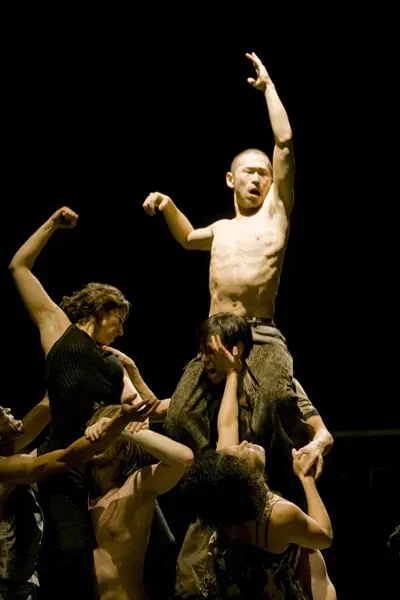
When handled by dancers, the solid steel frames of sculptor Antony Gormley seem to float, endlessly merging and re merging into representations of dwellings, cities and the human mind. The work itself also floats between crackpot comedy and deadly seriousness. This is dance taken to extremes: not necessarily of physicality, though there’s plenty of examples of that, but more of genre. Touching and blending into theatre, satire, architecture and visual arts, this is a work that starts by examining the boundaries of language but ends up transcending them. Learning point: If you ignore the boundaries of what can and can’t be done, if you just follow the idea, eventually it will lead you somewhere truthful and new.
Ballad of Pondlife McGurk
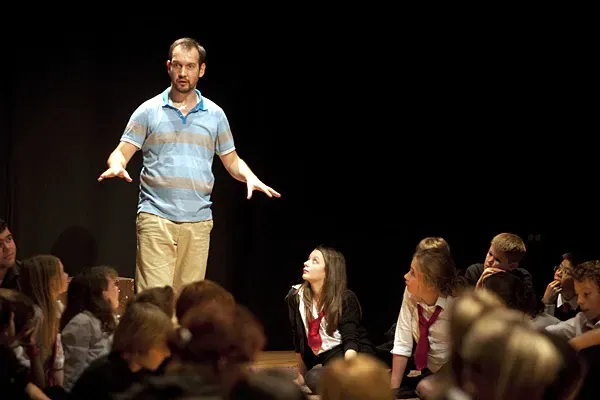
On entry to the Concert Chamber, the space looks underwhelming – drab patches of carpet form a space to sit cross legged, intersected by crossroad of ‘lanes’ and four grey boxes. Adults and kids alike sit on the mat and there’s an excited buzz in the air. A ordinary-looking man, wearing an ordinary jacket, shirt and pants, stands up and asks us to keep the lanes clear for safety. “I’ll be going quite fast,” he says. A pause. And then, “Shall we begin?”
Performer Andy Manley is a powerful storyteller. He doesn’t need costumes or set to make the tears well, which they did, several times (I’m not ashamed to admit it.). His story of childhood friendship, betrayal and (perhaps) redemption, has been told before, but he does it incredibly well. And it’s a story worth hearing again. Learning point: Words and stories can work more theatrical magic than lights, set and costume.
Convergence
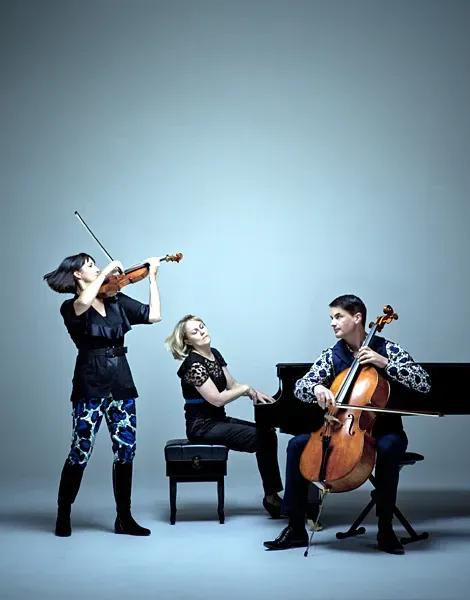
The NZTrio don’t disappoint in this rendition of new and unfamiliar pieces by NZ and international composers. Richard Nunns and Horomona Horo are once again generous in sharing the sounds of their taonga puoro with an audience. Every note, they explain, evokes something different, some kind of remembrance of another time these instruments were played. It’s as good an explanation as any I’ve heard of why music speaks so deeply to us. As I listen I’m aware of my own breathing forming a counterpoint to what I’m hearing. A particular favourite is Victoria Kelly’s ‘romance’ between the classical Western instruments of the trio, and the taonga puoro – each feeling its way toward the other, testing and listening. A reminder of the power of music, and the need also to respect where it comes from.