Visiting Hood Fellow explores the bigger picture of drawing
Written by
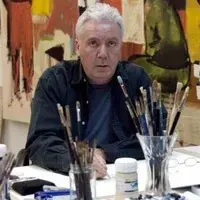
"We would be aghast if people admitted they couldn't read or write, but somehow it is acceptable for people to say they can't draw," says Stephen Farthing - artist, author and the Rootstein Hopkins Chair in Drawing at the University of the Arts, London, and Hood Fellow at The University of Auckland for the next three weeks.
"We would be aghast if people admitted they couldn't read or write, but somehow it is acceptable for people to say they can't draw," says Stephen Farthing - artist, author and the Rootstein Hopkins Chair in Drawing at the University of the Arts, London, and Hood Fellow at The University of Auckland for the next three weeks. "I want to explore why drawing has been dropped as one of the basic elements of communication - and how to get it back into the fundamental curriculum."
Over the next few weeks, Professor Farthing will lead seminars, present a public lecture and mount an exhibition, all examining the nature of drawing and its relationship to art, culture and life itself. "I want to encourage people to realise how unimportant it is to connect drawing with art and how important it is to connect drawing to literacies such as music, writing and mathematics," says Professor Farthing, who edited the book 1001 Paintings You Must See Before You Die (March, 2007). "Not everyone is an artist, but everyone should know how to draw."
Professor Farthing's forthcoming public lecture, "The Bigger Picture of Drawing", will examine how and why most drawings over time have had little or nothing to do with art and art galleries. The lecture will track the uses of drawing through myriad media, from mapping and the markings on sports fields to tattooing, sky writing and the camera obscura. The focus of the lecture, says Professor Farthing, is to pull drawing away from art and locate it as a fully functional aspect of every day life.
An acclaimed painter in his own right, Stephen Farthing has also created an exhibition on drawing that will be mounted during his stay at the University. Over the course of two recent weeks, the artist took it upon himself to learn to draw by following the instructions of Victorian art critic John Ruskin. Entitled Leaf to Leopard: A Practical Guide to John Ruskin's The Elements of Drawing, the 31-piece collection reflects the techniques, tools and tips offered to would-be artists in the 19th century. "The book almost works, but it needs to be fully repackaged for the 21st century," says Professor Farthing, who firmly maintains that anyone can draw if properly taught.
"It is an honour to have an academic and artist of such high international standing at the University and we look forward to his insights on the many aspects of drawing within the Faculty," says Professor Sharman Pretty, Dean of NICAI. "From his scholarly examinations of the way drawing fits into every day life, to his own aesthetics as a painter, Stephen Farthing is a gifted mind who can only inspire our work in the study of drawing."