Tony de Lautour survey at Sofa Gallery
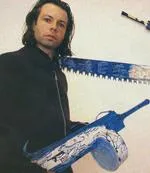
Tony de Lautour was born in Melbourne, Australia in 1965. His parents then moved to New Zealand where he was raised and educated. The artist graduated from the University of Canterbury School of Fine Arts in 1988 majoring in sculpture. At Ilam de Lautour had become associated with a group of artists who later became known as the 'Pencilcase' painters for their sketchy style that resembled adolescent doodling, while drawing heavily on popular culture.Tony de Lautour was born in Melbourne, Australia in 1965. His parents then moved to New Zealand where he was raised and educated. The artist graduated from the University of Canterbury School of Fine Arts in 1988 majoring in sculpture. At Ilam de Lautour had become associated with a group of artists who later became known as the 'Pencilcase' painters for their sketchy style that resembled adolescent doodling, while drawing heavily on popular culture.The artist has painted fulltime since graduating. De Lautour won the prestigious Visa Gold Art Award in 1995. His work is held in various collections, including that of Art Forum's executive publisher Knight Landesman.
De Lautour's paintings of the early 1990s were characterised by a seemingly paradoxical contrast between forms derived from tattoo art and comic books with the 'high art' mediums of oil and canvas. The artist explored and subverted notions of national identity by the repeated utilisation of the kiwi, which Tessa Laird (New Zealand Listener 19/9/98) described as "Stoting weapons and syringes, they vomit and cry, their legs and wings often broken and patched together again in a horrendous parody of political cartoons about the welfare state." In conversation with Laird, de Lautour described the syringe as a convenient metaphor, not only for drug taking but also as referring to any kind of sickness, or the medicine administered to get over that sickness.
By the late 1990s de Lautour had moved on to creating his 'revisionist' paintings. These works entailed the artist's superimposition of his own
characters onto paintings sourced from junk shops and auctions, thereby providing the actors for these ready-made backdrops. Here we encountered the British lion derived from imperial heraldic emblems, yet now seedy and mangy looking, fighting it out with the deviant overweight ciggy-puffing kiwi against a backdrop of idyllic New Zealand landscape. The scathing political commentary requires no elucidation, yet de Lautour is able to infuse his historical observations with biting humour. This utilisation of humour is a current trend in New Zealand art, which differentiates politically based works of the 1990s onwards with the more heated political statements of the 1970s and '80s.
More recently de Lautour's work has considered issues of global colonisation. For 'Prospect 2001' (City Art Gallery, Wellington) de Lautour pictured "the logos of multinational companies as mountainous islands, part of the actual body of land, isolated in a sea of darkness."
(Lara Strongman, curator)
De Lautour's exhibition for SOFA encompasses a selection of these works, and others, over a ten year period, so will thereby provide an important
overview of the development of this smart and informed Christchurch artist.
TONY DE LAUTOUR - Paintings 21 July 22 August
Selected Work 1994-2004
Preview 20 July, 5.30pm
Floor Talk 12.30 Friday 23 July
SOFA Gallery is proudly supported by the Dux De Lux, Resene Paints and Signdisplays.
Hire SOFA Gallery for your special function, contact the Gallery office for further details. Easy terms, no small print.
SOFA Gallery
Research Space for Contemporary Art
School of Fine Arts
University of Canterbury
The Arts Centre
Christchurch
New Zealand
P.O. Box 1921
Telephone. +64 03 365 0192
Facsimile. +64 03 365 0058
www.sofagallery.ac.nz