Toi Aotearoa Support For New Editions of Nga Moteatea
Written by
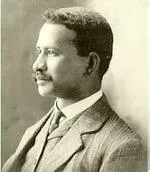
After spending 40 years compiling the largest and most comprehensive collection of Maori waiata, Sir Apirana Ngata described the collection as 'the finest example of Maori poetry'.After spending 40 years compiling the largest and most comprehensive collection of Maori waiata, Sir Apirana Ngata described the collection as 'the finest example of Maori poetry'.Since their completion, the four volumes which make up Nga Moteatea have become an invaluable resource for scholars, teachers and students of Maori. The collection is a result of the work of Ngata and another renowned scholar Pei te Hurinui Jones. Ngata collected and recorded hundreds of songs and chants from iwi throughout Aotearoa and published his research in four volumes. They include English translations - some by Ngata and most by Te Hurinui
Now new editions of Nga Moteatea will be developed by the Polynesian Society with help from a $50,000 Creative New Zealand grant to enable work to begin on the project. The society plans to produce new editions of all four parts of Nga Moteatea.
Creative New Zealand Maori Arts Services Manager Muriwai Ihakara said the direct grant from the organisation's governing body, the Arts Council, was recognition of the significance of Nga Moteatea.
"Nga Moteatea has been an invaluable resource for anyone interested in Maori waiata, poetry, tribal history, whakapapa and language," he said.
"The work the Polynesian Society is undertaking will enhance this taonga so that New Zealanders will continue to benefit from it for years to come. It's an exciting project and one which Creative New Zealand is keen to support."
Polynesian Society spokesperson Richard Benton said the new editions will include additions to the annotations, macronisation of common Maori words and corrections to reference and typographical errors. Recordings of waiata contained in each of the volumes will be included in CD form, and the fourth volume would be translated for the first time.
"It is about preserving a national treasure and making it more accessible to a wider audience. Nga Moteatea is a rich source for continuing research and scholarship in all sorts of areas - both nationally and internationally.
"It is also a prime text in teaching Maori language, literature and tribal history. The new editions will enhance this potential," he said.
Further information contact:
Moerangi Vercoe
Communications Adviser
Creative New Zealand
Phone: 04-498 0727 or
Mobile: 027-290 1606
Dr Richard Benton
Polynesian Society
Phone: 09-3737 599 x 85087
Mobile: 021-665 454
Professor Margaret Mutu
Polynesian Society
Phone: 09-373 7599 ext 87465
Background information on Nga Moteatea
The material in Nga Moteatea was collected originally by Sir Apirana partly to provide additional texts for study for the BA unit in Maori introduced by the University of New Zealand, and also to gather as much contextual information about the songs as possible before the knowledge disappeared.
Volume 1 (songs 1-90): First published in Maori only in 1928 - although 40 were previously published in various issues of the Toa Takitini magazine, in 1924-25. The first 23 were subsequently translated by Ta Apirana and published in the Journal of the Polynesian Society. Pei Te Hurinui then took over this task, and the complete collection with translations was published by the Polynesian Society in 1959, as "Polynesian Society Maori Texts, No. 1". A major factor in this was the need for high-level materials for the Maori language courses just introduced at the University of Auckland.
Volume 2 (songs 91-200) translated by Pei Te Hurinui. First published (by the Polynesian Society) in 1961.
Volume 3 (songs 201-300) translated by Pei Te Hurinui. First published (by the Polynesian Society) in 1970.
Volume 4 (songs 301-393) at present in Maori only, first published (by the Polynesian Society) in 1990, edited by Tamati Reedy and Cleve Barlow from the texts discovered by Bruce Biggs in Pei Te Hurinui's papers.