The Walters Prize finalists announced today
Written by
The 2004 Walters Prize finalists are: et al. for restricted access (2003), Jacqueline Fraser for (2004), Ronnie van Hout for No Exit Parts 1 and 2 (2003) and Daniel von Sturmer for The Truth Effect (2003). The judge will be curator and critic Robert Storr, until recently a curator at New York's Museum of Modern Art.
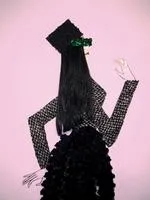
Image: Jacqueline Fraser from her show InvisibleThe 2004 Walters Prize finalists are: et al. for restricted access (2003), Jacqueline Fraser for (2004), Ronnie van Hout for No Exit Parts 1 and 2 (2003) and Daniel von Sturmer for The Truth Effect (2003). The judge will be curator and critic Robert Storr, until recently a curator at New York's Museum of Modern Art.
Image: Jacqueline Fraser from her show InvisibleThe Walters Prize was established to promote interest in New Zealand contemporary art, making it more accessible to a potentially larger and more culturally diverse public. Modelled on overseas awards such as the Tate's Turner Prize, the Prize is awarded to an artist who makes an "outstanding contribution to contemporary visual art in New Zealand in the two years previous." A jury of New Zealand curators and critics selects four finalists who present work in an exhibition at Auckland Art Gallery Toi o Tamaki. On the basis of this presentation, an international judge selects the winning artist.
Launched in 2002 by Prime Minister Helen Clark, the Walters Prize was the initiative of founding benefactors and principal donors Erika and Robin Congreve and Jenny Gibbs, working in partnership with the Auckland Art Gallery. The Walters Prize is New Zealand's largest art prize, with the winner receiving $50,000. This year, thanks to major donor Dayle Mace, the finalists will also each receive a Finalists Award.
In 2002 the jury selected Gavin Hipkins, John Reynolds, Michael Stevenson and Yvonne Todd. Acclaimed curator Harold Szeeman, who directed the two previous Venice Biennales, awarded the prize to Yvonne Todd.
We are pleased to announce the 2004 Walters Prize finalists: et al. for restricted access (2003), Jacqueline Fraser for (2004), Ronnie van Hout for No Exit Parts 1 and 2 (2003) and Daniel von Sturmer for The Truth Effect (2003). The judge will be curator and critic Robert Storr, until recently a curator at New York's Museum of Modern Art.
Chris Saines says, "We're very pleased with the work the jury's done. It's a great line up. You have et al., Jacqueline Fraser and Ronnie van Hout, who are now really canonical figures in New Zealand art, but also Daniel Von Sturmer, representing a younger generation. He's something of a wild card in the mix. I think it's going to make for a great exhibition".
THE JURY'S STATEMENT
Selecting four artists who have made an outstanding contribution to New Zealand art in the last two years proved challenging and exhilarating, given the calibre of what has been produced. We have selected artists whose work we consider to be timely and important, who offer something distinctive to what is "in play" in the contemporary art field. Each has affected us - as regular viewers of current practice - in memorable ways.
Ronnie van Hout is one of a number of contemporary artists who explore the image of the artist as a wayward figure in contemporary life. But he brings to this subject an array of idiosyncratic obsessions that situate his practice in the realms of the personal and the local. His recent series No Exit is characteristic. It presents the artist in a multitude of guises - creepy nature worshipper, alien abductor, abject idler, frustrated artist - in situations as solipsistic as the series' title. His works do something rare in the world of contemporary art - make you laugh but leave you strangely moved.
et al. are a conundrum: a shifting group of artistic entities designed to jam the systems and institutions of art. Their installations over the last two years - seen in such shows as abnormal mass delusions? and Public/Private: The 2nd Auckland Triennial - have consistently produced an eerie critique of our human condition, exposing our tendency to trust inevitably flawed intellectual models and technological solutions. In such light, restricted access from abnormal mass delusions?, with its massing of adjusted and recycled objects behind a mesh barricade, is a sombre experiment in resisting the relentless drift to obsolescence.
Jacqueline Fraser has enjoyed outstanding international success in the last two years. She brings an astute and elegantly barbed sensibility to her consideration of contemporary issues. In , a major installation conceived for Artes Mundi (an award exhibition at Cardiff's National Museum and Gallery featuring ten artists selected by leading international curators), she uses glamorous textiles to clothe a line-up of wraith-like female figures, combining these with pithy epithets that sting us about our fascination for fashion in a world of inequality and grief.
Daniel von Sturmer may be less well known to New Zealand audiences, having made most of his work in Australia. His video installation The Truth Effect, seen last year at Melbourne's ACCA and Berlin's Hamburger Bahnhof, is a breath of fresh air. It orchestrates simple materials in lightly wrought situations within the confines of a simple white box. Represented via video, the box becomes something more: a spacious light-filled room, the white cube of the modern art gallery, a television studio or laboratory. What we see defies the simplicity of both origins and means, conveying to the viewer a new sense of the marvellous.
THE 2004 JURY
Christina Barton is a writer and curator. She lectures in Art History at Victoria University of Wellington.
Dr Deidre Brown is a freelance curator and Senior Lecturer in Architecture at the National Institute of Creative Arts and Industries, University of Auckland.
Greg Burke is director of the Govett-Brewster Art Gallery.
Justin Paton is curator at Dunedin Public Art Gallery and Editor of the journal Landfall.
2004 JUDGE
Robert Storr is a leading international art curator. He is best known for his time as Senior Curator at New York's Museum of Modern Art (1990-2002), where he was responsible for such shows as the critically acclaimed 2002 Gerhard Richter retrospective. In 2000 he was on the selection panel for the Biennale of Sydney, which included New Zealand artists Bill Hammond, Lisa Reihana and the Pacific Sisters. In 2001 he was on the Turner Prize jury that selected Martin Creed's Work #227: The Lights Going On and Off. He is also a writer. He has written on many key 20th century artists including Louise Bourgeois, Willem de Kooning, Raymond Pettibon and Charles Ray. He is a contributing editor at Art in America, and frequently writes for Artforum and the New York Times. In 2002 Storr was appointed Solow Professor of Modern Art at the Institute of Fine Arts, New York University. This year he curates the SITE Santa Fe International Biennial, exploring the grotesque in contemporary art. This will be Robert Storr's first visit to New Zealand.
EXHIBITION DATES
18 September to 28 November 2004
WALTERS PRIZE ANNOUNCEMENT
The 2004 Walters Prize winner will be announced by Robert Storr at the Prize dinner, 28 October 2004
WALTERS PRIZE PUBLIC PROGRAMME
A comprehensive public programme will accompany the Walters Prize. Highlights will include talks by nominated artists, responses to the exhibition by some of New Zealand's foremost art commentators, an "After Hours", and an exclusive public lecture by the Prize Judge, Robert Storr.
Founding Benefactors & Principal Donors
Erika and Robin Congreve
and Jenny Gibbs
Major Donor
Dayle Mace
Founding Sponsor
Saatchi & Saatchi
Principal Sponsor
Ernst & Young