The true measure of success
Written by
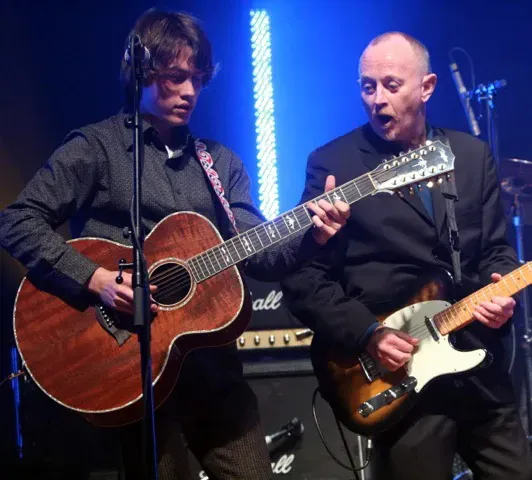
By Mike and Barney Chunn
Most of what we do in life is judged by what it results in. If you ask most people why they go to school, they’ll tell you (apart from being legally and parentally forced into attending) that it is a necessary step to getting somewhere.
The same is often said for university: one gets the degree to get the job. One gets the job to get the money. One gets the money to support the family. One has the family so that when they pass on they can be safe in the knowledge that a little bit of them is left to inhabit the earth they’ve left behind. A little narcissistic? Maybe. Or maybe a little nihilistic of me. Either way, all these things are gateways to the next. That is not to say that they aren’t enjoyable processions to pass through. Nevertheless, the thought that we go through life ticking boxes is not uncommon.
It depends of course on what we mean by results. If the ‘result’ of going to university to get the job to get the girl to have the kids to buy the house is a happy and fulfilled life, then I cannot think of a better ‘result.’ Fulfilled dreams are marvelous. Rather, the person who went to school but dropped out and got the girl but not the job so travelled a bit and wrote a book he loved but no one else did and ate really well but had no money, can still be totally happy and fulfilled, regardless of his ‘result.’
‘Result’ in the less positive sense is the outcome of an action. ‘Result’ in the sense that we mean it is that action: that’s not a paradox: the result is about the process and the experience and the ultimate outcome of how one felt and changed and grew during whatever happened that eventually turned into a ‘result.’
Let’s not read too much into this though. Results are good. They indicate success. Again, success is good. Like everything, the problem arises when these things are taken too far, and are no longer connected to why they became important in the first place.
At Play is Strange we applaud and celebrate success. In the 8 years we’ve been around, we’ve been involved with the likes of Annah Mac, Kimbra, and Massad, musicians who have had and been involved in hit singles in New Zealand, and Kimbra has amazing success in the UK and Australia. We’ve had theatre artists go on to do amazing things; we’ve had young NZers with the right level of extrovert projection land roles on Shortland St. These young adults we are incredibly proud of. But we are not only proud of them for the successes they have achieved, but for that fact that they got involved. Play it Strange alumni have gone on to do a host of amazing things in varied capacities. Not all of them are on their way to musical stardom. Yet, we hope, the result for them in their participation is that they gained something from their experience; the joy and connection with others that playing music together in such a way can accomplish.
Play it Strange takes the middle path. Not to be confused with the middle of the road, our philosophy is that we celebrate excellence, as is shown by the many competitions we run, and we celebrate participation. The process is as important as the rest. If somebody can learn a little something along the way, be a little happier because their song was heard; be proud they created something tangible - these things we celebrate as much as the wonderful successes of our more esteemed graduates.
Our competitions are competitions. But a competition in music is not the same as it is in sport. A game of sport is centered on bettering those that you are playing against. Someone wins. Someone loses. Music is different. It reaches us individually on an emotional level that reflects the vast variance of perspective and depth that we are capable of as humans. There can be no right or wrong in music. At least objectively. So a competition in the musical sense is not about bettering one another, but an ability to convey honesty and imagination and a sophistication of one’s craft. Therefore, the element of direct competition is notably absent from the mix.
To put it anecdotally, as youth both of us Chunns played rugby for our schools. We both loved (and love) the game, both the playing and the spectating of; the passion and the comradeship. But both of us are 5 ft. something, with little to no excess muscle and we both bruise rather easily. In this sense, we both resigned ourselves fairly early on to the fact that the All Blacks jersey was perhaps to be relegated to the same sort of realm as either of us being cast as James Bond. Nevertheless, it in no way lessened our love of the game. It wasn’t about being the best at it. It was about the doing of it. It’s exactly the same with music. You don’t have to be Dave Dobbyn to play music and write a song, you just need to enjoy it as much as he does. If you do, you (and we) have already won.