The South Project 2 in Wellington
Written by
by Jacquie Clarke
The most interesting thing about The South Project is the reorientation towards a different pole.
It's the latitude, the horizontal gaze across the great southern swathe characterised by empty vast spaces like Antarctica, the Australian desert, and the Pacific and Atlantic oceans. You have to ask, "Where is everybody?".
It makes you aware of the fact that culturally many of us operate in autopilot, craning our southern heads northward to Europe or America to look at more peopled spaces for cultural rapport. Looking crossways at the South is a different weave, it's movement on another axis, from margin to margin, weird sideways transits on less-travelled air routes.
The South Project intentionally positions its focus "away from the epicentres of the art world". Perhaps that's wise considering the nominal and fleeting interest that those epicentres pay towards art production from far away lands.
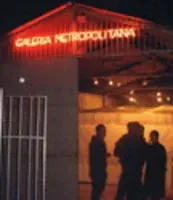
Image: Galeria Metropolitana on the outskirts of Santiago. South Project 2 heads to Santiago in 2006.by Jacquie Clarke
The most interesting thing about The South Project is the reorientation towards a different pole.
It's the latitude, the horizontal gaze across the great southern swathe characterised by empty vast spaces like Antarctica, the Australian desert, and the Pacific and Atlantic oceans. You have to ask, "Where is everybody?".
It makes you aware of the fact that culturally many of us operate in autopilot, craning our southern heads northward to Europe or America to look at more peopled spaces for cultural rapport. Looking crossways at the South is a different weave, it's movement on another axis, from margin to margin, weird sideways transits on less-travelled air routes.
The South Project intentionally positions its focus "away from the epicentres of the art world". Perhaps that's wise considering the nominal and fleeting interest that those epicentres pay towards art production from far away lands.
Image: Galeria Metropolitana on the outskirts of Santiago. South Project 2 heads to Santiago in 2006.The South Project is an initiative fostered and funded by Craft Victoria and so is a local government initiative - and as one S.P trustee told me receives no funding from Howard's federal government. That's a shame considering that the project does a lot for revealing the culturally progressive side of Australia and despite their foreign policy. South Project 2 in Wellington began with a powhiri in the Te Papa Marae and shaped up to be an interesting and provocative 2-day mix of dialogue, workshops, a gallery crawl, live readings, and a gala dinner at the Matterhorn.
With the theme 'between sky and earth' - ways of making a place in a placeless world - the content of the gathering included a heady mix of indigenous, environmental and socially oriented art production. Luis Alarcon from Chile spoke about Galeria Metropolitana, a community art initiative housed in a zincalume shed in a low socio-economic region on the outskirts of Santiago. Also presenting was Clifford Charles, an artist from South Africa and the first black student to graduate with a BA in Fine Arts from the University of Witwatersrand and who has also represented his country at the Venice Biennale. He thanked the New Zealanders for their protests against apartheid in South Africa during the seventies. Aboriginal artist Vicki Couzens (Kirrae Wurrung/Gunditjmara) gave her presentation on possum cloaks, an Aboriginal traditional blanket. There is now a resurgence of that art form in Australia ironically made with possum furs from New Zealand. (There were no cruelty protests outside like there were at Fashion Week in Auckland). Vicki Couzens is also part of a collective of Aboriginal artists who are working on some major urban design redevelopment in the centre of Melbourne. Natalie Robertson, (Ngati Porou, clan donnachaidh) gave a presentation that documents issues of extreme erosion on the East Coast - she videoed a neighbouring farmer destroying manuka forest in what was already very fragile territory. Megan Tamati-Quennell presented an introduction to a major Ngai Tahu exhibition that she is curating for Te Papa. The pvi collective, know for their 'terror tours' in which they consider potential terrorist sites in Australia also presented and held a workshop. David Jamali, a stone carver from Zimbabwe gave a presentation on the fate of some current art collectives in the current Zimbabwe climate.
There were workshops on weaving and digital storytelling and Cuckoo taught people how to make omelettes without breaking eggs. There was much more that I didn't see and than there is room here to reflect upon. What is always interesting at any international conference is the conversations that happen in the down time.
Wellington shone for the event despite the wind and rain - the hospitality was fantastic and the vibrant city culture was very apparent.
So The Journey continues in 2006 in Santiago. The South Project really just opens up a space and what occurs is what people bring to it. South Project 2 in Wellington was a fantastic success and all credit to Craft Victoria and the Wellington support team who made it happen.