The pretty eyes of vacancy
Written by
By Mark Amery Courtesy of The Dominion Post
It's astonishing how much we still look to read into something as staged as the gaze of a portraitist's subject. How we look for meaning in their eyes, fully aware that this is their most prepared of moments.
You can understand 19th century wonder with the advent of photography in the idea that finally a picture might capture some piece of a person - after centuries of people painted as costume dramas. Yet rarely have photographic portraits been about capturing the essence of someone. They are about providing a representation with which others can connect. The way a person looks, and their poses and costumery are a recognisable code that holds more meaning than what lies in the pools of their eyes.
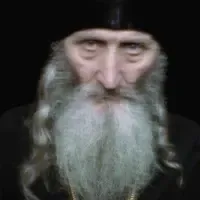
Image: Pere, Orthodox Christian, France - Portraits by Nicola Dove By Mark Amery Courtesy of The Dominion Post
It's astonishing how much we still look to read into something as staged as the gaze of a portraitist's subject. How we look for meaning in their eyes, fully aware that this is their most prepared of moments.
You can understand 19th century wonder with the advent of photography in the idea that finally a picture might capture some piece of a person - after centuries of people painted as costume dramas. Yet rarely have photographic portraits been about capturing the essence of someone. They are about providing a representation with which others can connect. The way a person looks, and their poses and costumery are a recognisable code that holds more meaning than what lies in the pools of their eyes.
Image: Pere, Orthodox Christian, France - Portraits by Nicola DoveHamish Tocher's exhibition Unknown Renaissance Portraits at Pataka pairs up looks and poses from Renaissance portraits with those from contemporary magazine advertising.
A Michaelangelo study of a male back is paired with a muscular male model twisted in satin sheets. Two priests by Massacio are paired with three young black hooded models. These pairings are photographed as within the pages of a book, alluding to the fact that the codes of representation connect across time and between the media of painting and photography.
That the balance of the poses and the looks of people as captured by Renaissance painters should have some correlation to those taken by fashion photographers is unsurprising. Fashion is forever putting new clothes on the bones of the past and the compositional ideas explored here run through our visual culture. Surely also there really are only so many positions we can twist ourselves into for the camera. Likewise there's nothing surprising about the comment inherent here that consumerism has replaced religiosity in being given glossy gravitas in our visual culture.
Echoing the Renaissance double portrait, Tocher's series look smart. There is in the pairings some beautiful aesthetic subtleties and some sharp, witty quips. Ultimately for me however this is a rather banal exercise, with just not enough new ideas going on. Through mirroring, the works empty the images of their connection to the world and to me. This may well be Tocher's intention, forcing you to look into the pretty eyes of vacancy for meaning. Shaved of their context, it could be taken as a meditation on what meaning might be found in our shared iconography. Yet I find I'm neither moved or intrigued beyond the initial clever hooks. Akin to a slide show at a media studies lecture, it feels excessive at over 40 works on the same theme.
Nicola Dove's Observance in the next room is also a study in what meaning might be drawn from the portrait. Dove is interested in the idea that it might actually be possible to convey the inner life of the sitter through the camera, exploring in this series that a photograph might contain the emanating energy of its subject. Employing a long (fifteen- second) exposure with her portraits she recalls the spirit photography of the 19th century, and as far as I'm concerned the results are equally bogus.
Dove has photographed head and shoulder shots of people of 23 faiths in 42 countries whilst in prayer. They are people already at a remove from the world, made at one further remove by the camera. Made up close in big glossy prints the long exposure sees the subjects freakishly shimmer, the pupils of their eyes the only stable balls, reflecting the light of the world beyond the camera.
The long exposure affects our perception of time. These photographs remove the subjects from the time within which they are in, so they are now on their own meditative plane in our moment. I do like these works' bold directness, and the fragility it reveals in its subjects - it is as if their skin is just a wrapping for something more powerful. Yet their remains a contradiction between their openness and the contrivance of the controlled portrait - these individuals meditate in the photographer's carefully stage-managed chamber.
Feeling their presence and the strength of their faith isn't enough for me. I learn nothing about them, their faith or their inner being. I still read these images based on the props, costumes and look of the subject. The exhibition feels like a butterfly collection.
I'm clearly meant to meditate on how we may all be of different faiths but are all really the same. Yet as with Tocher's exhibition the subjects are removed from my world, distanced to become representations of us all, rather than people I can make conversation with.
More information:
Exhibitions at Pataka
Unknown Renaissance Portraits - Hamish Tocher - until February 6
Observance - Portraits by Nicola Dove - until March 16
31/01/08