The myth of the NZ story
Written by
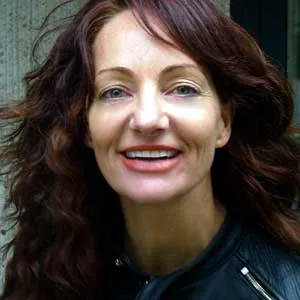
Ande Schurr interviews award-winning NZ documentary filmmaker, Pietra Brettkelly, who finds exception with the funding bodies' requirement to only fund 'New Zealand stories'.
"Because in the end it is our voice, it is our perspective and it's our take on wherever that story is."
* * *
If we judge a documentary filmmaker by the festivals they've been invited to and awards they've garnished, then Pietra is among our finest. Renowned for her international storytelling, fearlessness and persistence, Pietra has an admirable array of attributes. What she is lacking however is cash.
How does someone whose work is lauded around the world - winning best editing (Irena Dol) at Sundance for The Artstar and the Sudanese Twins in 2008, recipient of the NZ Film Commission Producer Award in 2010, and now the deeply NZ story Maori Boy Genius, which had its world premiere earlier this year at the Berlin Film Festival - come up empty handed and be, in her own words, cash-strapped?
This interview explores the conflict that this documentary filmmaker faces, being a proud New Zealander, yet having her heart among the world's stories.
"I think this is so naive and ridiculous that our funding bodies say it has to be a New Zealand story, and they define that; they give us the definition. That shouldn't be the way. We should be telling them what the definition of a New Zealand story is."
- Listen to the audio interview, or read the transcript below.
How did your talk go at the Big Screen Symposium? (Auckland University, 1-2 Sep).
I don't know. When you do one of those talks, you kind of get into the momentum of it and then afterwards I think - I was saying to Leanne (Pooley, fellow documentary filmmaker who was facilitating the session), how many times did I say "I cried?!". Probably far too many times and they are all going to go "God, she's a light weight". I think the important thing is to be honest because I know I've learned so much from people being honest to me, other filmmakers being honest. So for me that is the important thing - and hopefully it wasn't too negative because I think it's such a gift what I do - what people allow me to do is incredible.
You said you cried a few times but it just showed how intimate you get with the subject. I've just seen Maori Boy Genius and it is deeply inspiring. This leads me to the gist of this interview; how is it possible that at the height of your career, (and I'm sure it goes even further!) are you so financially cash-strapped?
It's all about the funding. Here in NZ our funding bodies are not able to support films that are not NZ stories, as they say. I'm interested in a story, it doesn't matter where it's from, it's just that something resonates with me, so a lot of the films I shoot are overseas so I don't get local funding for these. So I apply for every other fund overseas and pitch to commissioners and networks and stuff like that but you only get a certain amount - really you get the greatest amount during the production from your domestic markets.
So, yeah, it's just really tough but I'm so driven I think to tell stories that I have put the financing… you know I'm so in debt but that's silly, because in the end it's supposed to be work isn't it and it should be a better business model than I'm managing.
Also, you know, TV1 had a documentary strand, TV3 had Inside NZ and Maori TV was developing Pakipumeka but since then TV1 and TV3, their documentary strands, have gone and there's ten Pakipumeka per year on Maori TV so there are all of fighting for the funding of ten and those also have to be Maori stories or of interest to Maori and so that kind of, you know, that is a limitation in itself for somebody like me.
It's also about I was pushing more into the international market - I had been since 2002 when I started making Beauty Will Save the World in Libya. So I'd already started to push and I just could feel that my filmmaking was more part of the international market and I would get better received over there for what I wanted to make.
You are working next on a documentary which is going to have co-funding from Canada and Denmark.
Yes - it will be a Danish production because he (the Danish producer) can access more money and more resources from Denmark than I ever will here and the Canadian will be the co-producer - and there may be other co-producers too but at the moment that is the party.
Something you said previously is that you may not succeed in getting the funding from NZ funding bodies but possibly the second and third generation people who try eventually scrape away and carve out that income stream - you are possibly ahead of your time, is that how you perceive it?
I think there are a lot of us who feel the same way, but I may be a bit more vocal than others but I do believe we are part of a continuum. It's not just about me being here and telling my stories, it's about the next lot and it's about the previous lot and they certainly helped me and so therefore if I can help the next lot then that's better.
Because I think this is so naive and ridiculous that our funding bodies say it has to be a NZ story, and they define that; they give us the definition. That shouldn't be the way. We should be telling them what the definition of a New Zealand story is.
It's proven that supporting your local community to be part of an international voice is, you know… for example in Sundance this year, Denmark, which is a similar sized country to ours had three films in the world documentary competition. Now, we've got great storytellers and we should have stories in there as well, we should have films… I mean, The Artstar and the Sudanese Twins (by Pietra) is the only documentary film that's been in competition at Sundance, and that was four and a half years years ago. There should have been somebody else since then with a great film - and why is that not happening? We're not being encouraged to be experimental. This morning (at the Big Screen Symposium) this is exactly what Rod Sarkies was saying, "are we making interestingly challenging, inspiring and creative films?". I don't know that we are. Because we aren't thinking globally, we aren't being challenged by the global storytelling and the global storytelling is going in places that are so exciting and we should be part of that conversation and we're not.
That's really interesting, I mean, in business I'm sure there is the belief that if you keep all the brains within Kiwis you are limiting the scope of bringing in new ideas so there should be the same concept possibly in filmmaking too, and a great encouragement to tell stories - international stories - not just NZ stories.
Because in the end it is our voice, it is our perspective and it's our take on wherever that story is, so I do believe I tell NZ stories because nobody else is telling them like I'm telling them and I was born and bred here and I'm very entrenched in NZ culture.
What I have learned is that there's only a certain amount of tears that I can shed in a film and the next film I will not shed them over the fact that I feel no support from our funding bodies here. I will not even attempt to approach the film commission because I wasted my time with them last time and I'd rather put that energy and that emotion into making a film rather than being frustrated that I'm not being supported.
How would you describe your drive?
It's weird. I'm just so interested and excited. When I meet somebody and I think "oh my God, that is blimmin fascinating what you're telling me" and I start thinking visually about it and I think if I'm interested then other people will be interested and I can't stop - and that's my problem - I don't stop being driven to tell that story. My parents brought us up to be intrigued by others; a life beyond ourselves, and I think that has been the greatest gift that they've given me to I suppose wonder about myself through exploring the lives of others but not to be narcissistic or egotistical about it, you know, I really am genuinely interested in other people.
In your presentation here, you said that you make it very clear with the talent the highlights and the low points will be captured, "it's my edit, it's my film", and they have to accept that - and perhaps you have to remind them! How important is it capturing the low points when that is probably the last thing they want to show the world?
Those are the most important really because that shows the sense of humanity and when people are in the dramatic moment, intense moment or low moments that is when they reveal so much more of themselves and you see their personality, you see their frailty and then you see how they deal with it. That's what always attracts me to a story, I wonder how a human spirit can deal with a certain scenario or event and that's what drives me to tell stories really because I just sort of think 'gosh I've met this young guy - in the situation with Ngaa Rauuira (Maori Boy Genius) - or Vanessa in the Artstar and the Sudanese Twins or Teca in Beauty Will Save the World and I think, "wow I wonder what is going to happen when the shit hits the fan with this person" - gosh, that sounds so callous of me but it's the roundness of the human spirit that interests me; how survivalist we become and what we draw on to survive - I suppose the low moments, the tough times, reveal that the most.
In Ngaa Rauuira's case, in those moments of trial, he drew on his language - that was his touchstone - and his whanau and his knowledge of his sense of place, even though he was studying in the U.S. at this time - his 'sense of place' in a metaphysical way. And I loved how he revealed that so strongly when he thought he was really failing at Yale University. Those scenes were beautiful and he showed me so much of himself.
They are incredibly revealing those moments. That is when we really... that person becomes very endearing to us because we are like "oh, you know, that's so sad and I'm there with him and I'm feeling for him". That is why you have to keep on talking to your subjects and keeping them on board as much as possible but that's a really, really tough process. And you know, the subjects at a later date will thank you for pushing for these more tragic, more dramatic moments to be captured because it shows a more complex representation of their character. It is truer to who they really are. Just at the time they might not want me around.
That's why I try always have to have that conversation at the start, why are you wanting me to hang out with you and a camera for such a long period of time?
You put it on them?
Yes and therefore, through the bad times, when they don't possibly want you around - and it happens every time - then you can say 'remember, you wanted to tell an inspirational story that would hopefully raise others up within your culture, within your people - as was the case with Ngaa Rauuira (really, it was Ngaa Rauuira's family, he was always supportive) - and sometimes that just clicks them back in. Or you might have to be a bit more forceful sometimes.
You are off tomorrow to Afghanistan…
No I'm going to Qatar first to work from there - I've just come back from Afghanistan, the research trip, and then Jake (Bryant) and I will start filming in October. Just being in Qatar will mean I'm closer to Afghanistan if something happens but also … I may stay a year I may stay three months, you know, I'm just seeing…I need to earn some money and it's a great base for me because Afghanistan is at a really crucial point at the moment and if I'm close and can react faster then it's going to be better all around.
And what will you do to earn money?
I've got a job directing a series on Falconry. Which I know nothing about but I will become the expert of! Apparently the Qatarise are the world champions in Falconry, which must be flying falcons and doing something, I have no idea! I said to Jake, "what does it mean" he said "I don't know" - that's documentary also.
They have a lot of faith in you!
Yeah well we'll see!
Now we hear 'Jake' a lot…
Jake Byrant, has been working with me for nine years on the films that we make. He's a fantastic Cinematographer. I've never met anybody who's better than he, and I'm talking about the work that I do which is documentary. He is on so many levels incredibly pleasant to be around, so people are happy to have him with them - our subjects as they go on their journey through life. They like having him with them - he's incredibly polite and sensitive and in a filmic way we finish each others sentences. He creatively thinks the same as me and often we'll be filming and I'm right beside him and I might whisper something to him and he's already reacting to what I'm sort of saying. He has an incredible innate sense of understanding what is happening right in front of him and how that fits into my bigger story. So I feel incredibly lucky that I've met someone that I am so aligned with - in storytelling and documentary filmmaking. And that we can travel so well together as well, because it's a lot of tough travelling the stories I want to tell and I haven't met anybody who puts up with so much like Jake does and is willing to trust me and believe that we are doing the right thing when we illegally go into countries or do some other dodgy stuff.
This is incredible because The Artstar and the Sudanese Twins, I think took 16 months of filming in both Sudan and New York?
Yes, we filmed Sudan, Italy, the US, London…but at the same time we were also making the series The Ends of the Earth so we went to eight different countries for that as well, so we did this huge amount of travel - oh and then I was finishing off my Romanian documentary, so we were just traveling the whole time.
This is possibly a clue for the upcoming documentary filmmaker of how to make it all work - and that is have a whole lot of things going on at once; have one trusty crew member - your cameraman is the ideal - or editor or producing partner, or whatever, and then there's possibly a combination there that works!
Yes - look, my international filmmaker friends - everybody acknowledges that making independent documentary film, you don't earn a cent from. You hope that it will pay its way and that's where I'm in the pickle because I haven't made it pay its way so I'm in debt for having made the films. Everybody has to have another stream of income, whether it be commercials, TV documentaries, corporates …
… Falconry
Falconry, yes, or a friend of says you've got to marry someone who's got a regular income - or you're a trust fund child, or teaching - a lot of people teach like Annie Goldson. Great plan - become a teacher and as part of your tenure you make films, you can do it that way. So that is the number one thing; make sure you have some other earning stream.
If you're really driven to telling stories, then you just have to find a way to keep that drive alive and not sort of get diverted along the way.
I want to ask you so much more - I know you have to get back and start packing (to Qatar)! Look just to wrap things up, Leanne Pooley was facilitating the discussion and keeping you on track - although we all wanted to keep on watching the previews of Maori Boy Genius. She kept mentioning that you were fearless. We're all victims of our upbringing of course so what happened in your childhood that helped you now be so fearless?
So my parents - anything that we wanted to try or do, they always said 'yes' and they made it happen. I mean, I come from a working class family so it wasn't like there was a shit load of money but it was always "yip, if you show an interest in that we'll encourage you". They never pulled us back from anything - but I come from, on my father's side, my grandfather, when he was young, walked from California down to Argentina, that took him two years, you know. I come from a family of wanderers and wonderers - wonderers with an 'o' and wanderers with an 'a'.
When I was young - my parents, they had us very young - the four of us - they took us all out of school and we went overseas travelling and we ran out of money when we got to London and we all had to get a job. I remember I got a job, I was 14, and I got a job in a pub. You know, dad said "right, you're all going to go out today and we're all going to get jobs" so we all just went off. I came home and we sort of shared how we got on that day and I said "I got a job at the pub" and dad said "hmmm, 14, they obviously didn't realise that you were 14" and I said "no" and he said "I don't know, maybe you shouldn't go - Sharon, you can turn up tomorrow for that job". So my 16 year old sister turned up and did that job, she also got my 17 year old sister on that job.
So I've never known restriction and I've always been encouraged, as a woman and as a storyteller, to be fascinated beyond my shores and to not think that I'm not able to follow that fascination. So, you know, whether they be financial restrictions or geographical, gender restrictions or culture restrictions, I don't let any of that stop me if I think the story is worth telling and that others might be interested in it.
That's amazing...
But I should also say that I haven't got here without a team of people and I don't think any of us make films on our own. Jake, of course, but also Irena Doll who's edited with me for years as well - an incredible filmmaker - and Anika Moa who's written a lot of my music and Park Road Post who've done post on both my last films along with Dick Reade, sound mix and the wonderful colour grader Claire Burlinson. I mean, all these people, it's not just my film. It isn't just platitudes, I really believe it is a team making this and a lot of the decisions along the way - I'm so guided by other people and so I think you cannot make a great film on your own - I can't certainly.
Nice last words. Thank you Pietra, it's been a pleasure.
You're welcome, thank you.
Related Link: The Big Screen Brainstorm