The Mooncake and the Kumara - Food for Thought
Written by
By Mihka Chee
If you were a food, what would you be? Could you grow alongside a member of another food group, or even a foreign aliment?
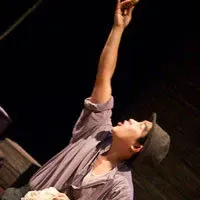
The Mooncake and the Kumara, a new play by Kiel McNaughton and Mei-Lin Hansen, uses the metaphor of food to portray their take on a piece of family history. It tells the story of Chao, a Chinese market gardener, and Alice, a young Maori girl living in Manawatu. By Mihka Chee
If you were a food, what would you be? Could you grow alongside a member of another food group, or even a foreign aliment?
The Mooncake and the Kumara, a new play by Kiel McNaughton and Mei-Lin Hansen, uses the metaphor of food to portray their take on a piece of family history. It tells the story of Chao, a Chinese market gardener, and Alice, a young Maori girl living in Manawatu. Set in 1920s New Zealand, the play could be seen as a comment on the rise of ethnic intermarriage between Chinese and Maori at this time. However, the tale of each of these couples is unique - especially when it must be condensed it into a 10-minute theatrical piece.
The difficulty of doing so is conveyed by Mei-Lin Hansen in this recent interview with me, her teina (younger cousin). To us, Chao and Alice were Goong (Cantonese for "grandfather") and Nan. Their partnership was the beginning of a now multi-ethnic family- one of many in New Zealand today whose mooncakes and kumara are gloriously mashed together.
"The Mooncake and the Kumara" is part of the Asian Tales: Native Alienz theatre production presented by the Oryza Foundation for Asian Performing Arts, and is showing at the Herald Theatre, Aotea Centre from 12 February- 21 February.
Mihka: The title of the play is great. How did you come up with it?
Mei-Lin: The title actually evolved out of the writing. When we first submitted to the Oryza Foundation we came up with a concept for a longer play (an hour and a half) about multiple stories of how Nan (Alice) and Goong (Chao) met... [then] Kiel and I worked separately on some ideas and then met to discuss them, and I think that's how the Mooncake and the Kumara came about - out of that discussion"¦Also, because the play was restricted by length (it's only 10 minutes!) we had to develop a narrative that had a beginning, middle and end - [it was] so hard to develop a relationship between two strangers in a short space of time - and we thought that the exchange of something at the end of the play would be a nice "suggestion" that the relationship between these two characters had the potential to grow into something else. We decided food would be a great thing to exchange, then we thought about foods that originated in the countries that they each came from and came up with "The Mooncake and the Kumara" - it has quite an evocative ring, I think. Lots of non-Asians don't know what Mooncakes are so it sounds quite magical, and lots of Asians may not know what kumara are"¦although, I think that's less likely. The type of gifts that were exchanged at the play's end was also influenced (obviously) by the setting (a market garden in Manawatu). Although, my friend Murry Edmond - who is also a dramaturg - asked me whether kumara could grow in a cold climate such as the Manawatu where the play is set. I've got to work on that. I think the title, whilst evocative also leans toward stereotype - or maybe just romanticism"¦but we had to start somewhere.
Mihka: What are some of the themes of the play, and does the title relate to them?
Mei-Lin: Well, again, the themes or concerns of this play actually came out of the restrictions or frames created by the Asian Tales project. Because the play had to be about Asian lives/stories, much of the play is told from the Goong character's point of view. It's about migration, the alienation that we imagined Goong might have felt in NZ and about finding a new home. It's also about language and communication which is something I'm really interested in - how did Nan and Goong communicate when they first met? And, more importantly for this writing project, how do you use multiple languages - Chinese, English and Ma;ori - to communicate with an audience whose first languages would be vastly different? It's about marginalisation and silence and two people, who are on the outskirts of society, coming to learn about and have an interest in each other. It's also about storytelling and the way we narrate our identities to describe who we are. The bulk of the play is made up of letters that Goong is sending home to his wife in China so there's supposed to be an element of storytelling embedded in that too. The title kind of relates to these issues but the 10 minute piece isn't really about food!
Mihka: Does it keep strictly to fact or have you developed your own take on the story? How much research was involved if you did base some on fact?
Mei-Lin: We need to do more research if we're going to expand the play. The whole kumara thing is a good example (see above). Also, I'd like to talk more to Mum (Te Puea Hansen, Alice and Chao's daughter) and some of [their other offspring] about the way Nan and Goong related and about how Goong composed and sent his letters back to China. [I'd like to know] details about the length of time it would take for letters to travel, about what language Nan and Goong spoke to each other in, about how Nan got from Waikato to Palmerston North, etc... As for "fact", hmmm. I don't really think there are any. We each have our own stories and versions of versions...and a play is really a re-presentation of something anyway...so, hmm, no, we didn't stick strictly to facts - I don't know what they are (especially as far as Nan and Goong go!)
Mihka: Obviously our family is very interested to see your play and how you've developed the story of Nan and Goong, but what did you do during your creative process that you think will make the story relevant to the wider audience?
Mei-Lin: This is a really good question Meeks! I'm not sure what Kiel will say, but personally, I don't feel that we did much at all to make the story more relevant to others. Haha. Generally I find that people are interested in family stories (and for some reason, in NZ anyway, our family story). I like hearing others' stories too. I guess you could say that the bits where Goong blabs on about "not belonging" could reflect the immigrant experience for lots of people.
Oh, and the other thing relates to using different languages. I asked our flatmate at the time, Vinnie Koh, to translate the English into Cantonese - so the opening passage is spoken first in Cantonese and then in English - it's kind of strange, I thought, having Chinese characters on stage, speaking English...so we tried to use Cantonese where we could. We also have the Nan character (Alice) using Ma;ori - so hearing these languages spoken on stage makes the play more relevant to a more diverse audience.
Mihka: Knowing a bit about Nan and Goong's story myself, I can imagine there could be many ways to depict it- a bit of suspense, comedy and so on. Is there some of everything in the play?
Mei-Lin: I wish! Haha. It's really hard to do it in 10 minutes. The pleasure though for me has been watching the actors inject a bit of comedy, delight and romance (rather than just poetry) into the play. I guess it's kind of a poetic exploration of Goong's inner thoughts - a kind of "expressionistic" piece, without being too abstract.
Mihka: Because it is such a personal story, were there any challenges you faced in writing it?
Mei-Lin: I think [that because] it's one generation removed, it has been easier to write...don't know if Kiel would agree. If it were about Mum and Dad, I don't think I would've found it easy at all, in fact, I probably would have avoided it! And also, we've used Nan and Goong as the skeletons or bones and then fleshed them out with other stuff, so, it's like it's not REALLY them. I do want to make the world more authentic though, especially the character who plays Goong's wife.
Mihka: Do you think it is a particularly "New Zealand" play?
Mei-Lin: Yes and no, it couldn't have happened anywhere else, because there's a Ma;ori woman in the play and at that time not many Ma;ori women were elsewhere, but as far as the story of a mixed race relationship and love and attraction to the "other" and difficulty communicating...all those things are not confined to NZ experience.
Mihka: Asian Tales: Native Alienz showcases work from Asian writers. Do you think the story will help others relate to the story in regard to their own cultural identity as Kiwi-Asians?
Mei-Lin: When we had the preview of the play in early December last year, there was a girl in the audience who was also Ma;ori-Chinese, she commented that she could relate to the play and to her own grandparents' story - which I thought was pretty neat. In turn, I'd like it if she told her story - wouldn't have to be in the form of a play, but there's something about hearing stories about those with similar cultural identities that I really like. Some comments from the preview suggested that the play wasn't relevant to them because it was based in the past!!! I'd like to be able to ignore comments like that. So, in short, some audience members will relate and others won't. I hope that it touches some part of Kiwi-Asians who watch it - especially if they can identify with the feelings of alienation/strangeness we've tried to put into Chao.
Mihka: Do you think others from a multicultural background would relate to it, and do you think it could influence them? If so, how?
Mei-Lin: I think rather than exploring multi-cultural identity, it explores the origins of multi-cultural identities - how they come about. So yes, I think others of multiethnic/cultural identity would relate to it, but (and again the 10 minute nature of the play rears its ugly head) there's not enough room to explore the "next generations" issues - we're more interested in this piece with looking at the issues of the earlier generation.
The Oryza Foundation and STAMP at THE EDGE® present Asian Tales™: Native Alienz - stories from the lips of Asia.
Thursday 12th February - Saturday 21st February 2009 (8pm)
Matinee Performances on the 14th, 15th and 21st (2pm), no show Monday 16th
Herald Theatre, Aotea Centre, THE EDGE®.
Tickets: $30-$35 ($10 discount for early bird ending January 31st & Under-25 standby tickets)
Bookings through 0800 BUY TICKETS (0800 289 842) or www.buytickets.co.nz
12/02/09