The kids are right
Written by
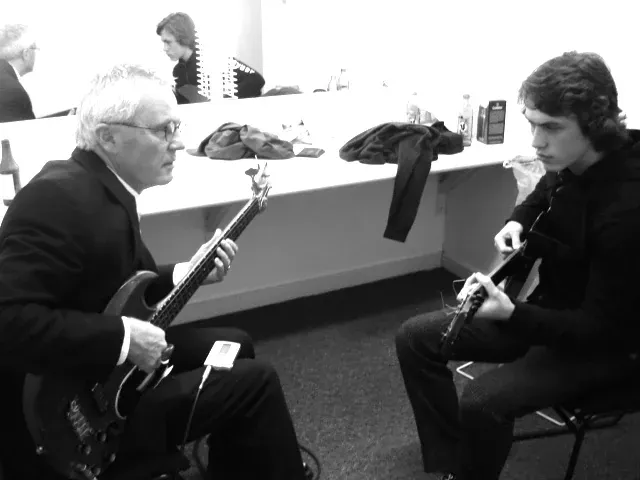
By Mike and Barney Chunn
"An upstart Crow, beautified with our feathers…supposes he is as well able to bombast out a blank verse as the best of you: and being an absolute Johannes far totem (Jack of all trades), is in his own conceit the only Shakes-scene in the country".
So said Robert Green in 1592, a renowned author in London at the time, to his fellow dramatists, in reference to a young literary upstart by the name of William Shakespeare. Green was apparently upset at Shakespeare’s parley with literature; that the Bard was disrespecting the established industry and the hierarchy within it, as it were.
This anecdotal evidence of generational conflict is an early example of a psychological trap still very common in the arts worlds today. That we have such faith and belief in our generation’s artistic integrity and honesty means it is a hard trap to avoid falling into. You grow up with such a sense of pride in and passion for the artists that shape your generation, that when compared to that of the next, you can’t help but judge unfavourably. And that being the case – are you foolish?
I (Mike) remember my dad and his friends, men who were by no means squares in their day – well, some his friends were - complaining about Bob Dylan’s singing style; how he had no class, no performance, when compared with Frankie – Ole Blue Eyes. Of course, the fact that my grandfather said the same about Sinatra when it came to comparing him with Enrico Caruso must not have registered too deeply into their psyche, and probably because they would have smiled quietly to themselves safe in the knowledge that Frankie was what they wanted to listen to, mainly because Frankie was singing to them, not to my grandfather.
Which is exactly how I felt with His Royal Bobness: I didn’t care what my dad’s mates thought. Dylan wasn’t singing to them, he was singing to me. I got him. I could hear those seven shots ring out on a South Dakota farm. I saw him standing over graves making sure certain people were dead. And the evolution of aesthetics was very much in my favour. Frankie looked like a businessman. Lennon and McArtney wore Cuban heels on their Beatle boots and mop top hair dos. No-one had done that before. (A voice from the sky – “what about Louis XIV’s mob?!!). And they smoked pot. (I can see the Tui billboard “The rat pack never smoked pot!” Yeah right!)
And so I see the younger generation of today standing in clothes that seem familiar and songs that have a resonance but, although my generation’s music may entice and interest them, we can’t expect them to actually stand beside Rolling Stones and Led Zeppelin albums as brothers-in-arms. I realise that the trap of generational patronisation and distaste can be an easy trap to fall into, but it’s a trap all the same and one to avoid. It is important to me to realise we do not necessarily know what touches the heart and soul of another social strata.
So what happens when I sit in a taxi and it’s playing Top 40 radio? I listen and wonder at the state of lyrics in modern pop music. That’s enough to keep me going and knowing. The top 10 proclaims a new single with its hooks abundant: ‘come on, rude boy, is you big enough?’ That taxi driver changed the station once we’d discussed those (seemingly – surely?) spontaneous nonsense lyrics and he summoned from a retro station an old familiar toon.
But then I think of lyrics in pop music for the majority of the 20th century. ‘When the moon hits your eye, like a big pizza pie, that’s amore’ or ‘yummy yummy yummy I got love in my tummy.’ And we haven’t snuck these out of some reject pile. They were HUGE hits. Even some Beatles tracks hang sadly in the past junk lyric pile. ‘Because the wind is high it blows my mind’. Indeed!
In the end it’s lyrics that carry the line of generations. And I must mention my father, Jerry. Not long after the Enz album Mental Notes was released he took me aside and said “This Phil Judd character. He’s as good as a poet you know. I play that record in the car when I’m driving around”. Jerry died a few days ago and I played his favourite Phil Judd lyric Walking Down A Road hoping he might catch those lines as he flew away.
“”…talking to the wind I drank the beauty
I found no time to count the hours….”
The resonance again. The lines of words that carry us on. Phil Judd was just twenty two when he wrote them. Barney – you’re twenty two. What about your songs?
I (Barney) believe deeply in the songs of my generation. They speak of things I believe in. They sound like me. They sound like something I want to be, helping me break free from the boredom and constraints of arbitrary and limiting rules. It’s not about hair or shoes. It’s a language and the impression they make on older generations – that’s for them to savour.
So to tip my hat to the past. As Willie Dixon, perhaps inadvertently mused, “the men don’t know, but the little girls understand.”