The friendship of Stephanie Dowrick and Michael King
Written by
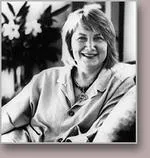
Sydney-based New Zealand writer Stephanie Dowrick had a long standing friendship with historian Michael King and has agreed kindly to allow us to republish a story she wrote about him for her regular column with the Sydney Morning Herald and The Age. It was first published in November last year. Stephanie was back in New Zealand over Easter.
Heaven Road. No exit.
On Tuesday of this week (13 April 2004), just a week after attending the funeral of Michael King and Maria Jungowska, I drove with a kind friend across the Hauraki plain towards Auckland looking for the spot where Michael and Maria had died. Sydney-based New Zealand writer Stephanie Dowrick had a long standing friendship with historian Michael King and has agreed kindly to allow us to republish a story she wrote about him for her regular column with the Sydney Morning Herald and The Age. It was first published in November last year. Stephanie was back in New Zealand over Easter.
Heaven Road. No exit.
On Tuesday of this week (13 April 2004), just a week after attending the funeral of Michael King and Maria Jungowska, I drove with a kind friend across the Hauraki plain towards Auckland looking for the spot where Michael and Maria had died.I knew more or less where it would be. I assumed the tree into which their car hurtled would be burned and that bunches of flowers would mark the spot.
It wasn't hard to find. I got out of my friend's car, stood by the tree, feeling flat as well as sad, angry, bereft. Then I looked up. Immediately ahead of where we were standing a modest road went off to the right. The signpost for it stood on the left-hand side of the road, just beyond where Michael's car was travelling as it swerved. The sign read: "Heaven Road. No exit." It was a Michael King moment. But he wasn't there to enjoy it.
Michael King was my oldest and certainly one of my most loved friends. In the article reproduced below (which I wrote late last year for my regular column in Good Weekend Magazine that goes out with The Age and The Sydney Morning Herald) I describe how Michael and I met in 1963 when we were both at secondary school and rather keenly opinionated competitive public speakers. And how we met again as professional writers in 1985 and began our "real" friendship. This was based on many things but part of my fascination was Michael's hugely contagious passion for New Zealand. He gave me (as he also gave the reading public) an incredible opportunity constantly to learn more about my homeland and to reassess what being a New Zealander could mean. I had left New Zealand early, largely because of private grief. Michael never criticised that or questioned it. Nor did he see me as a "lesser" New Zealander because of it. We also shared a great affection for Janet Frame: Michael as her close friend and biographer; I as her "renaissance" publisher, bringing her books back into print at The Women's Press (which I had founded, in London, in 1977) and then publishing new work as it appeared. But all of that, as much as it mattered, was secondary. What mattered most, at least to me, was his rare capacity for loyal and enthusiastic friendship. I loved that and I loved him.
To my great relief, Michael liked the article very much. I had sent him a copy somewhat nervously, explaining that sometimes we hold off saying the best things about someone until after they are dead. I hadn't wanted to wait. How glad I am.
This relief is muted, however. I was in Auckland over Waitangi weekend of this year but didn't see Michael then as I felt I needed to get back to my family in Sydney. Michael understood. He always did. He adored his own children and was exceptionally interested in other people's. We shifted the timetable. I was to lead a retreat at Mana Retreat Centre outside Coromandel over Easter. On Easter Monday, I would travel from Mana to Opoutere for a few precious hours with Michael and Maria. Those hours didn't happen.
Friends for life
New Zealand historian and biographer Michael King - who also happens to be a treasured friend of mine - has a particularly fierce form of cancer. But that's not why I want to write about him. His illness is largely his business. Nevertheless, because he is widely known in New Zealand, where we both grew up, he has talked about his attitudes towards life and death quite publicly, and I find them inspiring.
I met Michael when we were representing our Catholic schools in the annual diocesan public speaking competitions that each year took place in a different town in the lower half of the North Island. It's hard now to convey what restricted lives we lived in those far-off 1960s. We were chaperoned constantly. Girls' clothes were scrutinised for lapses of modesty. Dire warnings - many decidedly confusing - followed us wherever we went. But this only heightened the incredible excitement we felt when we actually got the rare chance to mix with the opposite sex, compete ruthlessly and flirt madly. The public speaking teams from each school were probably largely nerds, to use contemporary parlance. But we found each other dazzling.
Many years later, when I had already lived away from New Zealand for almost two decades, I went back to talk about my first novel, Running Backwards Over Sand. I had a long list of publicity engagements and was juggling this excitement with caring for my second baby. I probably hadn't read my publicity agenda carefully because suddenly "the next journalist" arrived, crossed the hotel room with his hand outstretched and said, "Don't you remember me, Stephanie?"
Of course I did. It was Michael, by now Dr Michael King, already the author of a number of highly praised books. And interestingly, even before I adjusted to his older, bearded face, I already "knew" his distinctive voice. This was not just because in public speaking we had to rely so explicitly on our voices, but because all voices are highly expressive, often "saying" far more than words can.
After that reunion, Michael and I became real friends. We took an interest in our separate families, visited when we could and celebrated as we both became better established in our writing lives. Writing can be a competitive, even mean-spirited business. But Michael supported my writing with boundless generosity, as he did for many others. He's in his 50s now. And "never better", other than having cancer.
Only weeks ago his new Penguin History of New Zealand was published. He has also just won the Prime Minister's Award for literary achievement (which includes his marvellous biography of Janet Frame). But the lumps in his neck continue to grow. What inspires me, though, and makes me proud all over again to have this good man as a friend, is his willingness still to see his life as fortunate and of a piece. He has said publicly, "I feel I've come to terms with the possibility of death and it honestly doesn't bother me at this time. Of course there are things that I would regret hugely, like leaving the people I love [but] I honestly feel that I've done the things I want to do - And by any accounting that is an extremely fortunate life."
My own cancer experience taught me that we can never know how we will respond to extreme adversity. I also discovered that our reactions can swing wildly. Nevertheless, Michael seems sustained by the conviction that he has lived fully. "For almost 30 years," he has said, "I have been able to get up in the morning and go to my desk and do things that excite me. There are so few people in the world who get to do that."
Treasuring the life we have, while we have it, is an essential task of living. Many of us fail to grasp this - and postpone living fully. I hope and pray that Michael lives on for decades yet, his speaking and writing voices splendidly intact. But even if he does not, his will still have been a most fortunate life, not because of his books and prizes, but far more simply: because he is a content man, cherishing life while he has it.
(First published, Good Weekend Magazine, Sydney Morning Herald, The Age,
15 November 2003)
--
Stephanie Dowrick
www.stephaniedowrick.com