The deal of the art: finding value in market failure
Written by
Gaps in the teeth
What is it to share private property? Let’s not call it communism: too many connotations. Instead, I call it the beginning of commoning.
No city or town council enjoys having empty shops and offices in its neighbourhood. They tend to look lost and lonely, and suggest the place has lost its way. When it happens en masse, people get twitchy, and feel compelled to act. But how? Political and business leaders alike are usually constrained by the same financial imperatives that created the buildings - and the problems - in the first place.
In 2008 the problem in Wellington escalated rapidly, with economic recession creating widespread commercial vacancies. Hampered further by the rise of online shopping, earthquakes, and global business instability, the retail vacancy rate in Wellington rose to 20% by 2012; one in every five shops labelled ‘for lease.’
Then-mayor Celia Wade-Brown described them as “gaps in the teeth of the city.” Wellington City Council wanted to shift the feel in the centre of town, and contracted Urban Dream Brokerage (UBD) to introduce ideas and projects that would create new purposes for empty properties.

UBD: "Our popular date-night relation choice: Mindfulness with Clay." Photo supplied.
The deal of the art
Central to our kaupapa was the idea that communities could share their ideas with the city. We weren’t calling ourselves dream brokers for nothing. If these buildings weren’t working commercially, we felt the people in the places who host these buildings should have first say in what they could be used for.
UBD was itself an offshoot of another public arts initiative, Letting Space. This partnership between me and Mark Amery had already commissioned a series of art works in vacant properties, so we already knew plenty of property owners.
These relationships were both playful and deadly serious. Our negotiations pitched rent free access to the buildings in exchange for the right to non-commercial and alternative voices. For the price of utilities, insurance and basic maintenance, the city re-claimed its cultural capital to fill the gaps left by market failure.
It was also clear that converting a moribund commercial space into a high profile artwork was a cheap-as-chips boon for their marketing efforts to attract tenants. Rate rebates (for properties used by non-profit organisations) further sweetened the deal. Smiles all round. And some of the owners even joined in the fun.
If these buildings weren’t working commercially, we felt the people in the places who host these buildings should have first say in what they could be used for.
Urban Dream Brokerage was the code breaker which enabled us to open source our relationships, by providing the opportunity for anyone to propose and idea. We employed the tenacious and clever Helen Kirlew Smith to help get projects over the line, and whose own formidable experience included GM for UK art performance group Blast Theory.
Then, it became a joy to receive a steady flow of projects, such as:
-
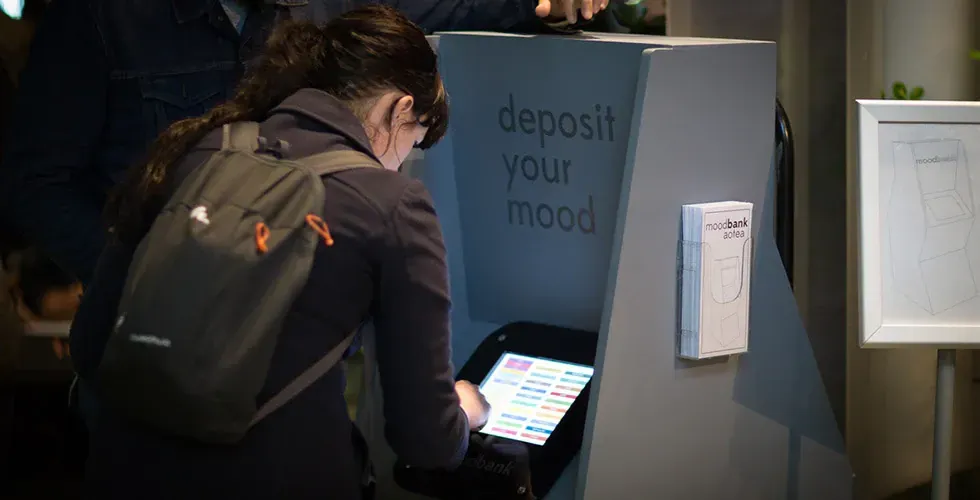
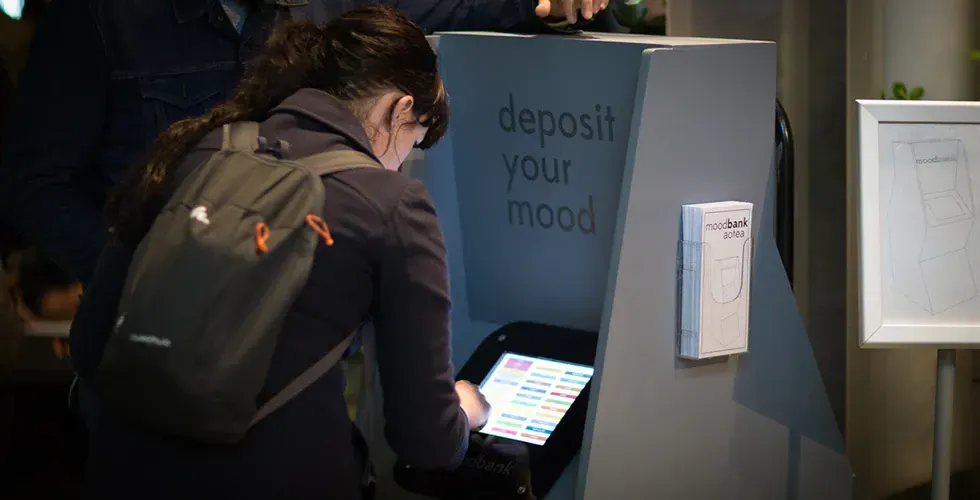
Mood Bank: an ATM capable of processing state-of-mind deposits and withdrawals
-
Homie’s cosy teahouse: a pay it forward koha cafe
-
People’s Cinema: a place to show and watch new films
-
The Hory: indigenous fashion activism writ large
We selected these projects through the online decision-making tool, Loomio, which allowed a panel of property owners, artists and council staff to assist us to choose the most viable proposals. We brokered over 50 projects in shops or offices and several others in open sites in the city.
This is what I called the beginning of urban commoning - where groups began to make projects together for the public, with all the openness of a retail store and all the creativity of art.

Barbarian Productions with UBD: Brides, 2013.
Expanding strategies
In 2016, UBD established a second branch, or more accurately, a franchise operation. Liking what they saw up north, Dunedin City Council supported the opening of a new Urban Dream Brokerage as a satellite project of Wellington’s office. There, projects that have their own flavour of dance, craft and fashion emerged. Following that, six-month pilots were also trialled in Porirua and Masterton. And now, the Dunedin office is flying solo, re-framed as the Dunedin Dream Brokerage.
It’s clear now that our role through UDB has been to act as the legitimator and lubricant. Our work was to persuade property owners that active, well maintained and utilised shops were better than vacant, cold, empty shops with nothing but ‘potential’ to rent tomorrow.
The temporariness of this usage clearly appealed to property owners. Some of the brokered projects lasted over two years but their occupation of a CBD site was based on a 30 day rolling license. At any point either the property owner or the occupier could give the other 30 days notice. Precarity was the trade-off for free access.
Artists and audiences both enjoyed the use of spaces that would not have been available otherwise. Artists often gained new skills, such as basic property negotiation and maintenance. Equally important, the newly released urban spaces connected artists with new foot traffic audiences.
End games
But the temporary must end. New, high paying retailers are taking on the empty shops, and other buildings have been torn down following the 2016 earthquake. In some cases whole buildings have been given over to new educational institutions (a Cordon Bleu School; Te Auahaa’s new performing arts school). 17 Tory Street is now a dog grooming shop: gentrification complete.
For now, the open-sourcing of the city’s streets is over for UDB - in Wellington at least. We have weekly emails from people still seeking our service. Temporary use will not be as easy for a long time because the supply of buildings is much reduced.
We need cities to actively and visibly distribute their decision making processes amongst the people who are most affected.
So now the problem is reversed: the shining city is occupied, new players weild new levers, and artists are now moving into smaller towns and cheaper studios. But the city is also seeing a new wave of artist run spaces: at least four in the CBD alone, and several new dealer galleries have popped up in recent months. Here in Wellington, UBD is closed for service.
Did we fail our community by not protecting the space for artistic expression? Tough call: things change.
Wellington City Council declares art a central component of the city’s vision. We say that if they’re serious about that, then bring our artistic skills into professional contexts. Our umbrella - the Wellington Independent Arts Trust - advocates for the inclusion of experienced artists on the steering committees of new municipal building projects. We’re also looking at ways to develop professional service relationships between artists and organisations who are dominated by spreadsheet thinking and who struggle to innovate.
We need cities to actively and visibly distribute their decision making processes amongst the people who are most affected. We need our cities to optimise their shared spaces and create urban commons.
This is not unique to Wellington or New Zealand. Cities and groups all over the world are working on similar projects and we are converting our tools into open source documents. We are collaborating with partners in Italy and Belgium to share some ideas which might develop the second phase of a shared city. Watch this space.
And the next time you see an empty, boarded up shop, ask yourself (or a local councilor): what else could it be?
Sophie Jerram will be speaking further on urban commoning at the Festival of Architecture, Friday, September 14, at Object Space.