The Creative Capital - Time to walk the talk
Written by
Courtesy of the Dominion Post - 19th November 2004
Providing Space for Art
by Mark Amery
The arts community have made it clear that the Wellington City Council has a significant job on its hand earning the Creative Capital badge it wishes to wear. It has been found wanting on a number of occasions in terms of its understanding of the diverse needs of both the professional and community arts, and is now having to come to grips with the message that more investment is required in development of the arts infrastructure in Wellington, rather than promotion, to stop existing creative capital eroding.
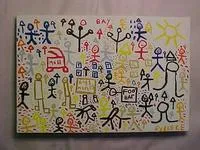
Image: Painting by Reece Tong of Vincents Art WorkshopCourtesy of the Dominion Post - 19th November 2004
Providing Space for Art
by Mark Amery
The arts community have made it clear that the Wellington City Council has a significant job on its hand earning the Creative Capital badge it wishes to wear. It has been found wanting on a number of occasions in terms of its understanding of the diverse needs of both the professional and community arts, and is now having to come to grips with the message that more investment is required in development of the arts infrastructure in Wellington, rather than promotion, to stop existing creative capital eroding.
Image: Painting by Reece Tong of Vincents Art WorkshopIronically, it's a different kind of development, property development (seen as much favoured by the last Kerry Prendergast-led council) that has been working against growth in the arts in Wellington .
Good urban planning is about providing a balance, recognising inner city living and the arts as reliant on the other - natural neighbours. People give up their gardens in the suburbs for more than just their apartment's proximity to work and the shops. But new apartment developments across the central city in recent years have come at the loss of artist studios and rehearsal spaces. Ours is still an urban culture in development, with seeding work required in the arts to ensure the creative capital the council talks of existing in its promotion in the present, actually exists for real in the future.
The announcement earlier this month by Mayor Prendergast of a new Wellington Arts Centre in the old Education Board buildings on Abel Smith Street acknowledges current dire space issues for artists, with the proviso of some 3000sq metres of it over a total of seven floors in two buildings, for artists' studios, practise rooms and offices. Much of this, it should be noted, is making up for space already lost, and no one should be fooled it's a one-stop solution to the arts community's many different needs. It's planning has been anything but visionary, with the council playing desperate catch-up in getting to know the arts community a little better. Managed well now however the arts centre should be an important step in the right direction.
One testament to a recent lack of long-term council vision has been the situation for Vincents Art Workshop. 20 years old next March and a winner of a Wellington City Community Award for Arts and Culture in 2001, this is a institution relatively unique in New Zealand for its provision free of charge of art workshops, materials and opportunities, in a relaxed, supportive environment. While it seeks to assist those on low incomes or with mental health problems, its strength lies in its connection with a much wider community, with an open access policy and focus on community interaction seeing artists of many different backgrounds and experiences involved.
As well as providing structured workshops, classes, and a gallery space you can visit, Vincents provides for all equipment and space for ceramics, sculpture, painting, and pottery (including a kiln), sewing and printmaking, and a much-valued darkroom.
Up until four years ago Vincents bustled as a stand-alone building in Victoria Street where allcomers felt welcome to wander in off the street. Four years ago it moved onto the fourth floor of a council-owned office tower across from the library, its rent heavily subsidised by the council but losing that all-important street frontage. These buildings have recently been sold by the council and Vincents has yet again been relocated with council assistance to the (oh-so-aptly-named) Prime Property Building even further away from the street, out the back of Press House on Willis Street. The council have subsidised Vincents' first year of rent in a three-year lease, but after that they face market rentals, a very scary fundraising proposition. The question now is how Vincents will survive being squeezed out of existence in the middle of Wellington prime real estate, without compromising its tried and tested principles.
To describe Vincents as a community service is to leave unacknowledged the work the Workshops have done in the development of some distinctive visual artists. To gain an understanding of the wide range of practise fostered by such a free, open access facility, you should visit Vincents' current large group show Exhibition Soup (St James Theatre, until 25 November). Certainly, there is plenty of the ordinary here, but its peppered also by plenty of the extraordinary. These are artists who have been given the time, space and encouragement to follow their intuition and imaginations.
Well known professional artists like Marianne Muggeridge are represented, and some Vincent artists that have already received recognition as self-taught visionaries with exhibition in major dealer galleries, like Martin Thompson and Colin Korovin. These two artists create unique worlds with biro on paper. Together with the impressive Reece Tong (represented by particularly strong painting and sculpture here), through text, geometry and symbols on flat surfaces they collapse together the personal and universal, creating new kinds of abstract architecture that symbolise moving forward into the future with hope and peace.
I love the irreverence for tradition with which so many of these artists tackle art, and the honesty with which they grapple with themselves through their work, which together can provide something so fresh: Steph Parkes' fractured re-readings of Renaissance art and religion through glass mosaics; the strong visceral sensations of Warren Ross's painterly abstractions, with a sense of internal landscapes meeting cityscapes; Lorraine Abernethy's paintings of high heeled shoes, their fantasia of exotic, organic shapes and colours are like Venus flytraps for the slender foot; the damaged romance at play in Jazmine Bel's collages, featuring gold coated coat-hangers, pink gauze and newspaper cuttings, including one of a Polish nun who, 17 times the legal alcohol limit, crashed a tractor into a car. This is the best possible place for new city apartment dwellers to do some Christmas shopping.