Te Awa Tupua - Voices from the River premieres at NZIFF
Written by
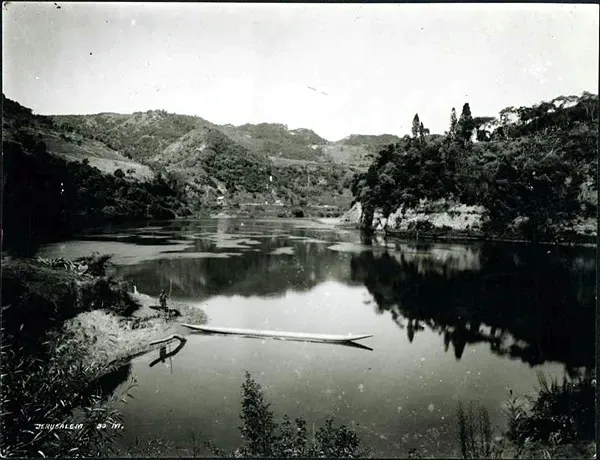
Te Awa Tupua - Voices from the River, the new documentary from Paora Joseph, the director of the revelatory Tatarakihi: The Children of Parihaka (2012), tells the story of his own iwi and their long struggle to regain guardianship over their ancestral taonga, the Whanganui River.
Te Awa Tupua - Voices from the River will have its World Premiere in this year’s NZ International Film Festival at Auckland’s Sky City Theatre on Sunday July 20 at 4.30pm, which will be attended by representatives of Whanganui iwi and followed by an audience q&a with them and director Paora Te Oti Takarangi Joseph, who is from Atihau-a-Papaarangi and Nga Rauru iwi.
The film is described by NZIFF as: “This beautiful film honours the power and poetry in the stories of Whanganui iwi, past and present, and their longstanding struggle to reclaim guardianship over their ancestral river.”
Director Paora Joseph says he was originally commissioned by the Whanganui Maori Trust Board to make a video record of a major four-day event which took place on the Whanganui River last year. Each day was designated to commemorate and celebrate a different aspect of life on the river:
- Pakaitore Day to commemorate the historic 1995 occupation of the land more commonly known as Moutoa Gardens.
- Iwi Summit Day to bring iwi together to discuss the Whanganui River Waitangi Tribunal Claim, the longest claim in New Zealand’s history.
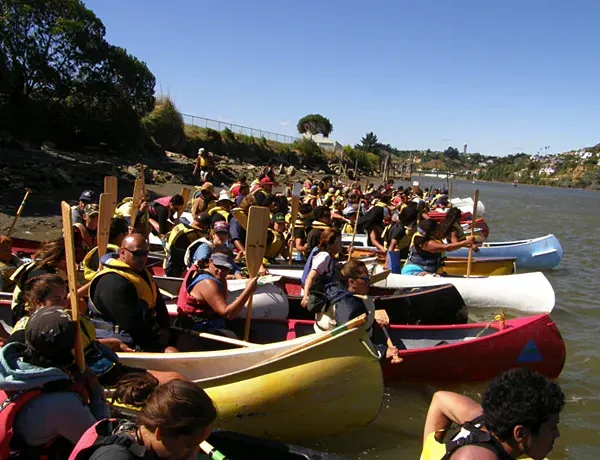
- Waka Ama Day was a sporting day mainly for young people to celebrate the age-old spiritual connection the iwi has with their river.
- Tamariki Day focussed on celebrating children, their value and the gifts they will bring to future generations.
As he was filming these events, Joseph became aware that there was a bigger story behind it all that was begging to be told. So, taking the 1995 Pakaitore occupation as a centre point, he has woven the past and present, the spiritual and the physical, into a gentle, yet emotionally stirring account. It features interviews with several iwi representatives who moved to national prominence through that headline-grabbing protest, which lasted for 80 days and was eventually resolved peacefully with dignity and mana.
The film explores the relationship of the iwi to the river through a Maori lens, threading archival footage through present-day interviews to reveal the motivation behind the occupation and the mood of that time. It also shows the present-day iwi drive to immerse the young in Whanganui culture and history and their commitment to protect the river for the future generations.
The central character is the Whanganui River, which was recently given a “legal personality” - recognition of the iwi proverb translated as “I am the River and the River is me”. Te Awa Tupua - Voices from the River leads the audience to realise how richly connected these people are to the river and that the health and well-being of the river and its people are deeply intertwined.
The NZ Film Commission supplied some post-production funding.
About the film makers
Director/Producer: Paora Te Oti Takarangi Joseph
Paora Joseph is of Atihau-a-Papaarangi and Nga Rauru descent, from Kaiwhaiki Pa and Putiki Marae, Whanganui.
In 1986, his first job was as a youth worker on the streets of South Auckland, which led him train as a clinical psychologist, a profession he still works in when not making films.
In Auckland, he worked as an actor with renowned Maori filmmaker Don Selwyn in some theatre productions. Selwyn encouraged him to become a director and he was later mentored by award-winning filmmaker Gaylene Preston in making Tatarakihi: The Children of Parihaka, which screened in the 2012 NZ International Film Festival. It was translated into French and featured in the Cinema Antipodes Festival there and won Special Recognition at the Balinale Film Festival in 2013.
Joseph worked in New Plymouth for WAVES Youth Health and Development Centre, often taking troubled youth to Parihaka as part of their healing. During that time, he made the Documentary Edge Festival award-winning short film Hiding Behind the Green Screen about marijuana addiction, based on one of these workshops. He also won the best up-and-coming director award at the same festival and the film was an official selection at the FIFO International Documentary Film Festival and the Duke City DocFest. His other film, Hikoi Wairua, was a journey with young people on the Whanganui River, made with his wife, artist Janine Martin.
He says his psychology work inspires his film work: “I have been listening to people’s stories for a long time in this healing profession. Film is another opportunity to heal because it can share human stories with a greater audience.”
Co-director: Janine Martin
Janine Martin is an artist of Ngati Moerewa and Ngati Rangi descent who grew up in Taranaki. She lived in Sydney for 10 years, where she designed and developed her own range of jewellery. She returned to New Plymouth (and Te Maunga Taranaki) where she studied painting and print making. She designed and made a range of ceramic tiles with Maori designs and words, which sold in design stores. She exhibited and sold her paintings and etchings in New Zealand galleries as well as abroad.
She and her husband Paora Joseph collaborated on the award winning documentary Hiding Behind the Green Screen where she was co-producer, co-editor and art designer. The couple also did Hikoi Wairua, a documentary about a group of troubled youth who canoe down the Whanganui river and Tatarakihi: The Children of Parihaka.
Martin’s art work now is multi-layers of different mediums, maps of memory, poetry, faith, and yearning.
She says working on films is a huge learning curve: “Film is so different from painting. It’s very challenging, learning how to weave the past and the present together in a dynamic and compelling way, to tell a very complex story simply. Film is such a powerful creative medium. It has a voice, it tells you what it wants to be. It’s like a living thing – it has a life of its own.”
Media Release: Te Awa Tupua - Voices from the River