TBI Q&A: Theatre director Willem Wassenaar
Written by
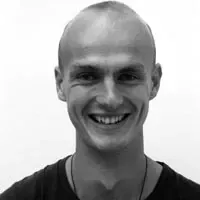
Willem Wassenaar can't cook or paint and claims to be "horrible" at sports. "Thank god I found theatre!" he says.
Originally from The Netherlands, Willem studied directing at Toi Whakaari and is co-founder of award-winning theatre collective Almost A Bird, currently performing A Streetcar Named Desire at Circa 2 in Wellington. "Human beings do the most beautiful, brave, flawed and unexpected things towards each other in order to achieve what they want," he says. "When a performance captures that, I feel that something real is happening."Willem Wassenaar can't cook or paint and claims to be "horrible" at sports. "Thank god I found theatre!" he says.
Originally from The Netherlands, Willem studied directing at Toi Whakaari and is co-founder of award-winning theatre collective Almost A Bird, currently performing A Streetcar Named Desire at Circa 2 in Wellington. "Human beings do the most beautiful, brave, flawed and unexpected things towards each other in order to achieve what they want," he says. "When a performance captures that, I feel that something real is happening."During what hours of the day do you feel most inspired?
I feel most inspired in the early afternoon. I need some time to warm up in the morning, but once I start properly, I guess I sense a certain fire inside myself (especially in a rehearsal space) that feels liberating and my mind and body will just flow.
How would a good friend describe your aesthetic or style?
Larger than life. Brave. Vibrant. Delicate. Explosive.
What aspect of your creative practice gives you the biggest thrill?
The discovery of new boundaries of human nature. In a rehearsal space I am always looking for ways that we can make ourselves bigger than we tend to do. I am looking for the extraordinary, but also the small moments that we do not seem to acknowledge in our normal, daily lives. When working with actors and feeling the excitement of these sensations and discoveries, I feel thrilled.
How do you think your environment affects your work?
To a huge degree. I feel it is my job to be sensitive to the world that surrounds me. Theatre is for me an expression. It is a way to reflect, to research, to investigate, to question and to provoke the things that I am confused, intrigued or amazed about. I react strongly to impulses from my environment, feel incredibly angry or sad about something. Theatre is for me a way to make sense of things - relationships and interactions. I cannot cook, I cannot paint or draw and I am horrible at sports - thank god I found theatre!
Do you like to look at the big picture or focus on the details?
I start wide, on a bigger scale, and slowly I work towards more details. Together with the designers and the entire team, I like to create a framework in which actors have room to play, feel free on the various performance nights. I want them to focus on what they are doing towards each other; in the relationship and interaction with space and their fellow performers. They need to connect and always have to be generous. To achieve that the work needs to stay alive, has to keep moving and we all need to take risks. Human beings do the most beautiful, brave, flawed and unexpected things towards each other in order to achieve what they want and when a performance captures that, I feel that something real is happening. An essence and truth is revealed that is almost impossible to notice in the outside world.
You studied directing at Toi Whakaari: NZ Drama School but you're originally from The Netherlands, where you worked as an actor, director and drama teacher. How do you think this has influenced your approach to theatre in New Zealand?
Art is a product of your own existence and place in the world; therefore my background of course influences me. I am happy to come from The Netherlands, I think the Dutch have a certain sensibility. I lived in America and Spain before, and when I came to New Zealand I felt a genuine interest from people here to experience where I came from. I did not have to adjust myself, but unconsciously this clash of two different cultures creates creativity. I started to question more who I was, especially when you are confronted with such a different lifestyle. I grew up in an urban environment, a faster turnaround society, with a more individualistic approach to life, whereas New Zealanders have a stronger connection to their natural environment and there is a certain stillness that cannot be found in Europe. I like to believe that I learned how to mix both.
You're currently directing A Streetcar Named Desire at Circa 2 in Wellington. What drew you to this classic play?
Tennessee Williams is a master when it comes down to delving into the very depths of human nature. He creates characters and contexts that produce a complexity of humanity I like to explore further in theatre. His work is cruelly honest and does not spare both audiences and artists. We cannot compromise and we will always find new things. A Streetcar Named Desire is for me a poetic, brutal and thrilling clash of two opposite worlds; the spirit versus the flesh, the imagination versus the mundane reality and love and compassion versus fear and guilt. It is a primal play. The (sexual) energy comes from a deep, uncultivated place within us. I think that sexuality and the traditional roles of males and females are underestimated in our world. I am not talking about sexuality in the way that that is portrayed in pop culture; Streetcar is dealing with sexuality in a much more sophisticated way and on a deeper level. And although gender roles might have blurred, I feel strongly that there is a secret longing for the archetypal portrayal of males and females and that these roles are still played in our society at this point of time. Streetcar is for us the ultimate opportunity to research our primal, animalistic instincts. How do (sexual) desires fuel our relationships?
You've worked on a number of shows now with Almost A Bird Theatre Collective, of which you're artistic director. What are the benefits and challenges of belonging to a theatre collective?
The benefits are that we do not have to compromise on our artistic integrity. Three years ago several people found each other with a strong passion and drive to make theatre. We shared the same dreams, and although we are now three years further down the track, we are still strongly connected in the way we want to make work and why we want to make it. We started by devising a show in a small laundrette in Newtown with a maximum of 12 people as an audience each night and this year we performed in various theatres across the country and at an international arts festival in Holland (Oerol). There is a strong sense of ownership in our work. We have the ability to make our own artistic choices and the communication lines are much shorter. We can be impulsive, spontaneous and flexible. When it works well, a collective creates freedom and a shared responsibility that feels very empowering for an artist. On the other hand it is important to secure that with a solid framework. We now experience that with our growth we need to formalise our organisational structure and especially our financial situation.
What's your number one business tip for surviving (and thriving) in the creative industries?
Passion is the most important thing. When there is not a genuine drive for a piece of work, when you do not care about the story that needs to be told, you are doomed to fall in the trap of phoney, dead theatre. And besides that, accept that you will not get rich by doing this, but do not undervalue yourself. Art is not a hobby, it is a profession and we deserve to be paid well. It is important. Maybe even more important than ever; the world keeps on changing faster, we are surrounded by more information and we need places for reflection and community.
Which of your projects to date has given you the most satisfaction?
It fascinates me that every time the whole cycle starts again, that you cannot rely on your previous work and that you always need to invest everything you have got. The Glass Menagerie has given me the most satisfaction in terms of creating a certain way of working and trusting a process, whereas Delicates (the devised show we made in a Newtown laundrette) was the wildest and most spontaneous rollercoaster I experienced.
Who or what has inspired you recently?
Dirk Tanghe, a Dutch director. I saw his production of Chekhov's Seagull in May this year. Genius. A one time experience that I could not get anywhere else and it gave me so much life and fuel to make theatre.
If you could go back and choose a completely different career path to the one you've chosen, what would it be?
Primary school teacher. Still I sometimes think that I made the wrong decision to pursue this career. At least my dad thinks so.
What place is always with you, wherever you go?
It may sound tacky, but I guess the fields behind my parents' farm. I once threw an iron ashtray at my brother; he was bleeding so badly, I was eleven. I remember and I can still smell how I ran into my dad's fields to escape. Freshly cut grass and I sang with a very, very bad accent Elton John's “I'm Still Standingâ€.
What's the best way to listen to music, and why?
In the car, on a long, straight desert road. Sunset.
You are given a piece of string, a stick and some fabric. What do you make?
A kite!
What's the best stress relief advice you've ever been given?
A spa at the Freyburg swimming pool in Wellington.
What's great about today?
We had the opening of Streetcar last Saturday. It is the first day off after production week and I feel excited to bring in some new provocations tomorrow. And only one more week until one of my best friends from Holland comes over!
27/11/07
A Streetcar Named Desire
When: 24 November - 22 December 2007
Where: Circa 2, Wellington
Bookings: 04 801 7992 or online.