TBI Q&A: Robin Scholes
Written by
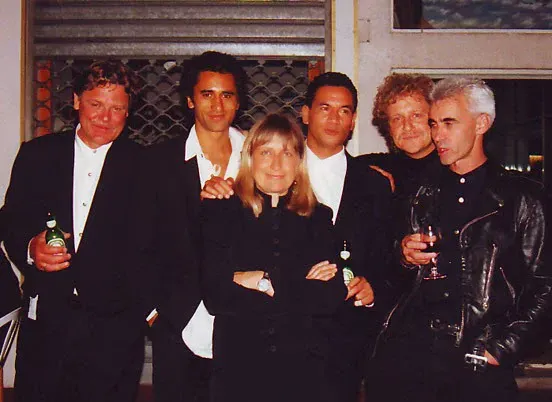

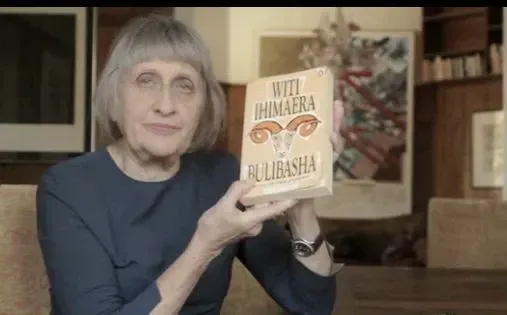
Twenty years after the release of Once Were Warriors, Lee Tamahori wants to make another film with the same team, including producer Robin Scholes. Robin tells us about the film The Patriarch, based on Ihimaera's novel Bulibasha, and the equity crowdfunding campaign to make it.
During what hours of the day do you feel most inspired?
Inspiration can hit at any time of the day, usually in response to seeing or hearing something that captures your attention. It can also come through going to a good movie, listening to someone who is inspirational but in reality it mainly comes about when you have to deliver something to deadline.
How would a good friend describe your aesthetic or style?
If you mean the type of story content I’m drawn to it’s chiaroscuro. This idea that you see the light best when it shines out of the darkness.
I like characters that hold contradictions within themselves, people who are complex and surprising, who appear to be one type of person and turn out to be completely different from what you expect.
If you mean my own fashion sense - if I was rich I would buy more Armani and Stella McCartney. As it is I love New Zealand designers like Juliet Hogan.
What aspect of your creative practice gives you the biggest thrill?
I write down the ideas that I’d love to make happen – I always get a thrill when that idea, that flimsy starting point, is transformed into something concrete, something that often takes hundreds of people to make and is complete only when its audience responds to it. Everyone in the business of ideas is familiar with this thrill and the risk inherent in it. The idea you chose has to be strong enough to go through months of the writing process and then more months of the funding process before it can be shot, edited and delivered to its intended audience.
Colin McCahon described his own process of conceiving and delivering an idea as a ‘leap of faith’. He had to have faith that his audience would understand what he was communicating through his art. That resonates with me.
You have to take a leap of faith with the ideas you chose. You have to believe that the idea you love will also be loved by its audience.
Unlike with McCahon, there are many minds involved in the creation of a film or television series.
A good idea is only as good as its execution. Usually everyone who works on the project – adds value and enhances the idea.
How does your environment affect your work?
Throughout my working life I’ve worked in places that are either huge open plan offices as with Communicado or small offices of convenience where we are shooting or post producing something.
Most people I know in the creative industries focus more on their work and less on their environment.
I would of course love to create an environment that would be more stimulating and beautiful but there never seems to be enough time, enough money or an available space, to do that.
Do you like to look at the big picture or focus on the details?
You have no option but to do both. It starts with a big picture, but in order to achieve this, it requires meticulous attention to detail.
What's your number one business tip for surviving (and thriving) in the creative industries?
Be grateful for being alive, doing something that you love with people you respect.
Which of your projects to date has given you the most satisfaction?
It’s always the project you are working on at the time.
At the moment we are working on a 6 hour drama series about a New Zealand family going through the experience of Gallipoli. The writer Gavin Strawhan and Director Peter Burger and I have worked together before, and we compliment each other really well.
Who or what has inspired you recently?
The Last Saint – a powerful film made with very little money and lots of talent and passion.
Charlotte Grimshaw’s books.
Lee Tamahori directing his latest film Emperor with Adrien Brody in various extraordinary locations around Prague.
You’ve played a major role in many of New Zealand’s most iconic productions in film and television, how did you find yourself in this line of work?
I started off as an Art Historian and studied early film makers.
I taught art history at Auckland University but also arranged film festivals and screenings at the university. I bought my own 16mm camera , a Beaulieu, and starting making a wee drama about the West Coast miners strike lead by Pat Hickey. I was then offered a job on an all women team put together to make a film for International Women’s year. John Barnett was the Executive Producer and Dierdre McCartin the Producer- that documentary lead to a series on women and to me leaving my job as a lecturer in art history to a researcher in Television.
You’re pushing boundaries once more by undertaking New Zealand’s first equity crowd funding drive with Snowball Effect, to find investors for a film called The Patriarch. The idea of equity funding is still very new in this country, why are you drawn to it?
It offers another means for funding films but it also offers a means through which you can connect with the future audience for the film. The funders will be connected into the whole process of making the film, including test screenings.
I think we’ll learn from their feedback and I hope their involvement will build a fan base and following that will help build buzz and attract an audience when the film is released.
It’s twenty years since you made Once Were Warriors with Lee Tamahori, why is the timing right to make this movie now?
Actually the timing was supposed to be 18 months ago but the film Lee has been working on, and is now shooting, was delayed.
The timing is right for Lee. He is passionate about Western films and Witi tried to capture the spirit of a Western in the book, Bulibasha. Lee’s father, like Witi’s came from the same area of the East Coast, so Lee has a deep connection with the characters portrayed in the story.
He really wants the film to pay tribute to the people he remembers growing up, especially his dad.
Film producers are almost the hidden element of film making. Is it a dark art or why is it not as well recognised as the role of the director?
Some Producers claim the limelight – it’s a choice really. I prefer to be behind the scenes. The role varies with film and television. In Film you are trying to support the Director in whatever way you can and in television you are working for the Commissioner and making sure you deliver to their brief and expectations.
You’ve just been at the Toronto Film Festival. What was your impression of the state of New Zealand film making at this point in time?
My timing was bad to see any films - but overall this has been a very exciting year with Taika’s What We Do in the Shadows doing really well at the Box Office, The Dark Horse, a beautifully crafted film also did well, The Last Saint and Housebound were innovative and broke new ground.
What place is always with you, wherever you go?
It’s not a place, it’s my late husband Ivano.
What's the best way to listen to music, and why?
Definitely live music – being part of the event and seeing the music being played as well as hearing it.
You are given a piece of string, a stick and some fabric. What do you make?
A protective backing for a plant on the side its exposed to the wind.
What's the best stress relief advice you've ever been given?
I’m sure I have been given such advice- and I’m not sure you can avoid or get relief from stress. I think you go through periods that are very stressful and periods that are less stressful – and the only relief is to deal with the root cause of the stress.
What’s great about today?
I’ve going home to Auckland after 18 days of being away cooking up some new projects.
What’s your big idea for 2015?
Working with a small group of inspiring people to make a lot more film and television happen.