TBI Q&A: Musician Ariana Tikao
Written by
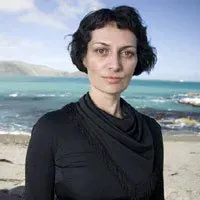
It's been a big year for Christchurch based singer-songwriter Ariana Tikao (Kai Tahu). She received an achievement award from Toi Maori at Pao Pao Pao and was nominated for Best Maori Pop Artist and Female Artist at the recent Waiata Maori Music Awards. Earlier this year she released her second solo album Tuia, in both Te Reo Maori and English.
Ariana says Tuia means stitched which is "a metaphor for the connections between people & places, in and across generations. It's about me celebrating my whakapapa from all around the globe."It's been a big year for Christchurch based singer-songwriter Ariana Tikao (Kai Tahu). She received an achievement award from Toi Maori at Pao Pao Pao and was nominated for Best Maori Pop Artist and Female Artist at the recent Waiata Maori Music Awards. Earlier this year she released her second solo album Tuia, in both Te Reo Maori and English.
Ariana says Tuia means stitched which is "a metaphor for the connections between people & places, in and across generations. It's about me celebrating my whakapapa from all around the globe."Ariana is also part of folk fusion group Emeralds & Greenstone, who are releasing their debut self-titled album next week.
During what hours of the day do you feel most inspired?
Either when I first wake up, or in the middle of the night.
How would a good friend describe your aesthetic or style?
This is what one of my bestest friends had to say:
"Ariana is a true cross-cultural spirit, gathering waifs and waiata from her people's legends, and binding them with visceral, intimate and unique creations of poetry and song. With depth of knowledge, character and gravitas, Ariana has a way of embracing history for our future that is profound, meaningful and exquisite."
What aspect of your creative practice gives you the biggest thrill?
Creating something totally new in the studio, or having the audience right there with me in a live performance.
How does your environment affect your work?
I'm a mother of two, so my kids definitely affect my work, both inspiring me, and distracting me. I love living in Te Waipounamu, close to where my tipuna lived, loved, fought & are now at rest.
Do you like to look at the big picture or focus on the details?
Depends on the picture. Sometimes the big picture is not such a pretty one.
What's your number one business tip for surviving (and thriving) in the creative industries?
Make friends & keep 'em. Do it for the love of it.
Which of your projects to date has given you the most satisfaction?
All of my past work is important as it is an expression of who I was at the time. But if I had to choose, I'd say Tuia, the album, and the video that Louise has done for me.
What is the meaning behind the name of your second solo album 'Tuia'?
It means 'stitched' and is a metaphor for the connections between people & places, in and across generations. It's about me celebrating my whakapapa from all around the globe.
Who made the video clip for the song Tuia?
Louise Potiki Bryant, an enormously talented Ngai Tahu dancer, choreographer & videographer based in Auckland. She works mainly with Atamira Dance Collective.
Why was it important to do a bilingual album?
I have been writing songs in both languages lately, and with the theme of the album, it couldn't have been any other way.
What are some of the challenges and rewards of being a singer/songwriter in New Zealand?
Challenges: Smaller numbers in terms of potential audience here, geographically distant from where the big population is, what I do is not easily categorised, this can sometimes be a challenge for other people, as they like to put things in boxes. Rewards: Being unique when we do go to other places, lack of pretense in NZ, it's easier to make connections with people.
Who did you collaborate with for this album?
Leyton, from Epsilon Blue produced it and played much of the music on it. Also Richard Nunns played the taonga puoro.
What was your involvement in the self-titled debut album for Emeralds and Greenstone?
I came up with the initial concept of Emeralds & Greenstone as a way of exploring Celtic & Maori music. I approached Laura Tomlin after I saw her performing songs in Gaelic in 2005. We worked on the concept together, and invited other musicians in as a project for the Christchurch Jazz Festival in 2006. We had such positive feedback from the audience & media, and so the project continued. All four of us in the group have written material included on the album, and also some traditional songs from here & there.
Who or what has inspired you recently?
Being at Pao Pao Pao & sharing the stage with some amazing Maori musicians. Ruia in particular really inspired me. His music & his message is what we need more of in this country. Spread the word -
If you could go back and choose a completely different career path to the one you've chosen, what would it be?
Well, I'm a libarian in my day-job, I possibly would have stuck to being a librarian earlier on (I went away from it for a few years). I also did a PG Dip in Museum Studies, and was planning on working with our taonga inside museums. That's not that different to what I'm doing now though is it? I'm just working with a different kind of taonga.
What place is always with you, wherever you go?
Horomaka (Banks Peninsula)
What's the best way to listen to music, and why?
Either late at night, with no-one else around when I can lie down and concentrate on the subtlety & let it wash over me. Or else big, loud & raucus with the kids - with everyone doing a silly dance & singing along.
You are given a piece of string, a stick and some fabric. What do you make?
Probably something that didn't end up looking like anything. I'm not very good with crafty things. I recently planted a vege garden though, so maybe I'd use it all there - supporting growing beans with the stick, tying them to the stick with the string, and covering up strawberries with the fabric so the birds don't eat them first.
What's the best stress relief advice you've ever been given?
Don't do it. Did I listen? No!
What's great about today?
My plants are still alive, & it rained last night.
What's your big idea for 2009?
Eat home-grown veges. I watched a DVD recently about Cuba and how they survived when they were totally cut off from the world & had very little access to fossil fuels. A big part of what they did was grow their own food, as the shops were bare. They planted in all of the spare land, and basically became self-sufficient. It's called The Power of Community - How Cuba Survived Peak Oil. It's a very inspiring doco!
Image: by Pat Shepherd
Thursday 4th December 8 pm
The Great Hall at the Arts Centre, Christchurch
Tickets $15/$12. Doorsales from 7.30 pm.
Pre-sales from Arts Centre Information, t. 366 0989
27/11/08