TBI Q&A: Monica De Alwis
Written by
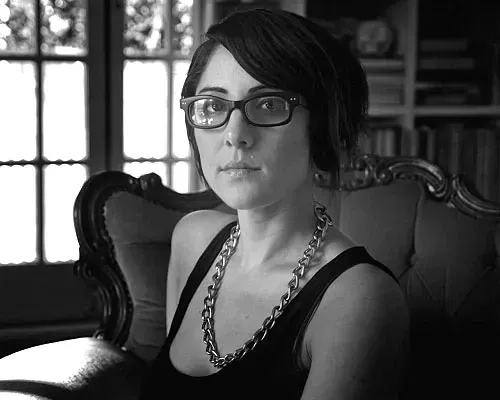
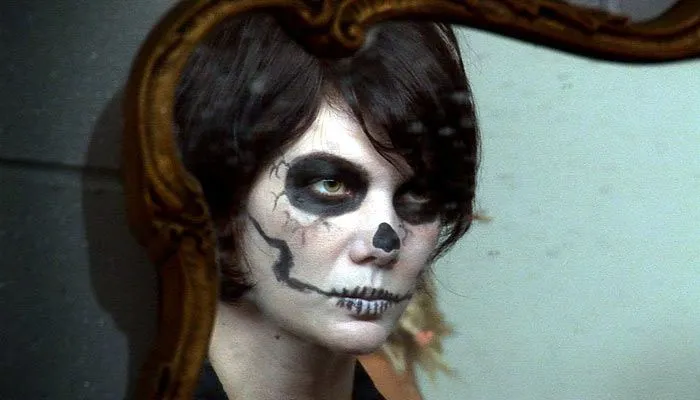
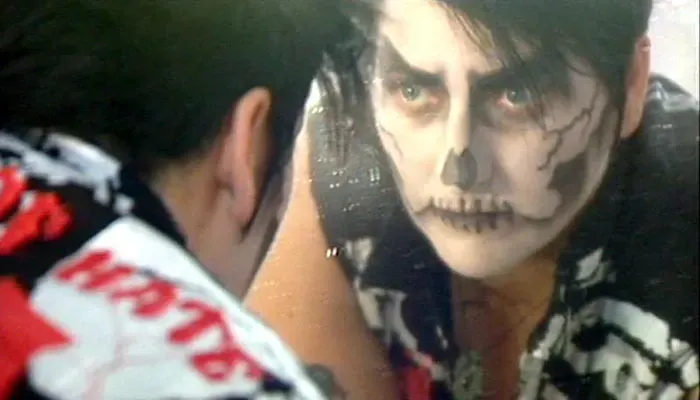
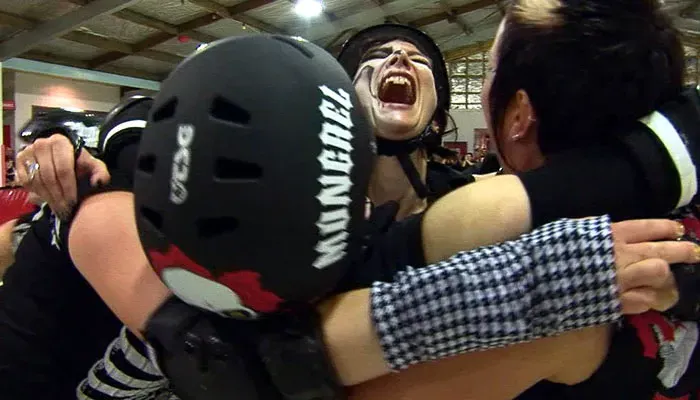
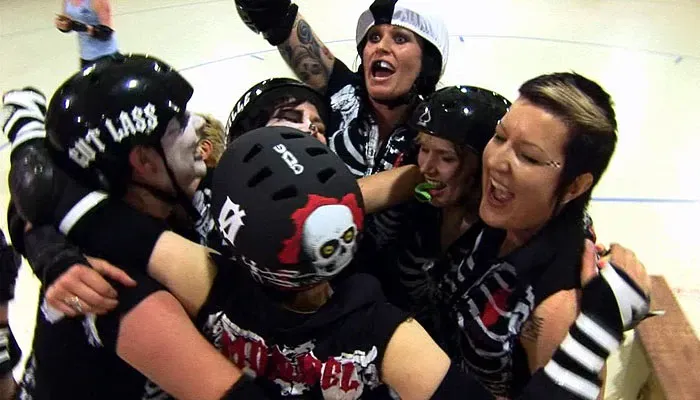
While delving into the full-contact world of NZ’s first Roller Derby league, director Monica De Alwis was also documenting a response to a need 'for a productive outlet for physical aggression in women, with an identity designed and defined by women.'
"In the film it’s clear, thrashing out these concepts is no easy task.”
While delving into the full-contact world of NZ’s first Roller Derby league, director Monica De Alwis was also documenting a response to a need 'for a productive outlet for physical aggression in women, with an identity designed and defined by women.'
"In the film it’s clear, thrashing out these concepts is no easy task.”
Monica tells us about her first self-funded, micro-budget, feature length doco Pretty Brutal, premiering at the Documentary Edge Festival on Friday April 12.
"Between slams to the concrete, Pretty Brutal is at its heart, a bittersweet story about ambition, obsession and trying to connect."
During what hours of the day do you feel most inspired?
It depends on stimulus. Early morning is good though because it’s cool, quiet and my mind feels fresher.
How would a good friend describe your aesthetic or style?
My partner says I’m warped! Style is a performance and I like the fact it can be played with.
What aspect of your creative practice gives you the biggest thrill?
I find myself in the most unexpected situations. I feel privileged that I get move in different worlds and have insightful conversations with a whole spectrum of folk that I may never have encountered had I not been making films. Thrilling is the inception of good idea, that activates my thinking and adrenaline till the wee hours, or finding a stimulating and productive collaboration, and of course seeing something through to completion.
How does your environment affect your work?
I’ve had to train myself to adapt – a low budget project has meant several compromises and re-locations throughout the process. I don’t mind a change of scenery. I do love quiet when I’m writing and the chance to move around and get outside in nature when I need to nut something out.
Do you like to look at the big picture or focus on the details?
I feel I’ve developed skills for both and I like being able to switch between the two. I’ve found that essential when working across the roles of shooting, editing, directing and producing. I do get a sense of satisfaction from being able to step back, see things in perspective and see how to keep a project moving in the right direction.
What's your number one business tip for surviving (and thriving) in the creative industries?
I have a few. Find and connect with your audience early on. Choose your collaborators wisely, feed the relationship professionally and ensure it’s rewarding and sustainable for both parties. Learn to know when it’s not working. Feed your mind and your practice laterally - keep being curious.
Which of your projects to date has given you the most satisfaction?
I will feel more confident about the next project I take on, because of the skills I’ve accumulated through many firsts and essential challenges on all projects to date. Being able to transfer this body of knowledge into something new and feeling I have a better hold on what to expect and prepare for will give me the greatest sense of satisfaction. On the other hand every project is and should be a learning curve of some sort and I am satisfied when I am learning.
Who or what has inspired you recently?
Communities who take a leap together, making determined commitments to sustainability and confronting the wider impact of our lifestyles.
Tell us a bit about your background.
As a kid I lived in Sunnynook, a slightly less shiny suburb on the North Shore of Auckland. I grew up in a cross-cultural household; my Dad is Asian and my Mother Kiwi. I got to move in different worlds through childhood and I appreciate that. In primary school, I guess my lean toward documentary making began. I spent hours over newspaper articles, deducing a speech on marine conservation. At 9 years old I spoke at the Southern Ocean Whale Sanctuary Conference in front of 400 international delegates, an inspiring experience.
I was torn about what to study after high school. I tossed up journalism or art before landing at Elam, University of Auckland. I was one of few girls studying Intermedia; exploring sound, moving image, photography and early transmedia concepts. Here I realized the outcome of my studies should be in the film industry. I was attracted to the ways the medium could connect with an audience and also allow me to be involved with lots of different subjects and environments throughout one career. I’ve worn many hats and worked across several production roles on my way to gaining a holistic sense of the film making process and finding my strengths.
Tell us a bit about your documentary
Pretty Brutal is my first self-funded, micro-budget, feature length doco. It captures a microcosm of the world’s fastest growing female sport, delving into the full-contact world of New Zealand’s pioneering Roller Derby league. We follow unconventional sportswomen at an intimate level as they are challenged to work and train together as sisters in a democratic community, before switching to fierce adversaries on the track!
I think my documentary exposes some ideas about how women in our culture are represented in relation to the concept of aggression. When Derby started here, outside reactions to the sport exposed a very different perception in comparison to the widely legitimized view of males being aggressive in a sports context. I think this film unearths some negative stereotypes that are really due for a rethink. I believe that’s one of the reasons the sport suddenly took off.
Its identity may be in flux but I definitely think it was a response to a need; for a productive outlet for physical aggression in women, with an identity designed and defined by women. In the film it’s clear, thrashing out these concepts is no easy task. The ensuing group dynamics will hold relevance for anyone who has gathered under a banner, perhaps even some importance for younger women coming out of school and entering new social situations. Between slams to the concrete, Pretty Brutal is at its heart, a bittersweet story about ambition, obsession and trying to connect.
Why is documentary important?
Documentary is cultural history preserved – without it we lose an important means of reflecting on our past and determining our future. It has an incredible ability to engage people directly and enable discussion and action beyond the cinema environment. In long form, documentaries can give us a chance to understand something in a layered and dimensional way that TV will not allow. I think it’s important to remember this when glued to the box. It enables the telling of independent perspectives that will otherwise be marginalised. It can make us feel connected or different in unexpected ways, and given documentary’s capacity to travel, it can bring us greater understanding about facets of the world we may not otherwise have the means to see. It’s a privilege to feel what it might be like to walk in someone else’s shoes, even if vicariously.
What do you think of the new documentary funding?
I think it’s great that NZ on Air and the NZ Film Commission have responded to the concerns of the industry about the state and importance of documentary in New Zealand. Thanks to all those who have fought for this. I wish the fund had been around when I started on my first documentary feature! The fact there was little or no documentary funding for first time directors, who did not have big names attached to their projects, was both disheartening and fortifying. I understand funding in these circumstances is a risk for investors but the lack of support also deters a lot of people from starting or staying with documentary.
What else is needed to support documentaries in NZ?
More platforms. More jobs. Work needs to be done to position the idea of quality local documentary content amongst wider audiences, to create awareness and in turn appreciation. By that I don’t mean more putting more crappy reality shows on TV. I think the argument that ‘the demand isn’t there’ is misguided. Amongst some broadcasters and agencies, I think there needs to be a shift away from judging documentaries purely in terms of their ability to generate commercial revenue (in a conventional sense). This view obliterates many culturally valuable stories that should be told and impacts on innovation. I feel it would be good for certain funding bodies to loosen the criteria around local filmmakers having to focus on a New Zealand based subjects. Stories told by New Zealanders about many subjects will give us more international exposure. I think how kiwis see the world is just as relevant and valuable to explore.
Tell us about your other upcoming projects.
I have a documentary idea that is in its infancy but I have two goals first and foremost; go overseas and find work opportunities and inspiration, to see how the skills I have gained will translate in another context. Secondly, to develop a complementary business plan, somehow related to what I do, that will help make documentary filmmaking a more sustainable profession for me. I’d like to strike a balance between doing something that will positively benefit others and allow me to survive at least! The last few years of self-funding have been a massive challenge. As Annie Goldson put it when talking about being a documentary director in the current climate, “you need another string to your bow”.
If you could go back and choose a completely different career path to the one you've chosen, what would it be?
Probably something in the sciences, biology/ecology related.
What place is always with you, wherever you go?
Rugged New Zealand coast and country.
What's the best way to listen to music, and why?
Music can be and should be enjoyed in many ways…preferably as non-compressed as possible.
You are given a piece of string, a stick and some fabric. What do you make?
A disguise.
What's the best stress relief advice you've ever been given?
Still waiting for it…or maybe still waiting to put it in to practice! I used to train in the martial art of wushu and my coach would say “let motion create emotion”, that has stuck as something that helps relieve anxiety.
What’s great about the Documentary Edge Festival and Forum?
My experience of the forums has been that they are cutting edge events with international and local relevance. I have undoubtedly improved my practice with the knowledge gleaned. The festival and forum can provide a much needed point of connection in a career that can sometimes involve long periods of isolation. It strikes me when I meet several people who’ve made similar mistakes and faced the same hurdles individually - I can’t stress enough, the value in having these opportunities to learn from your peers. Auckland and Wellington are so lucky to host the festival. The chance to have meaningful and catalytic experiences from around the world bought to our doorstep is a privilege. To be watching in a social context that facilitates discussion beyond the screen is so different to watching in isolation at a home computer. Make the most of it while it’s here!
What’s your big idea for 2013?
Going forward, it’s important for me to reassess, understand and define what values and principles are now important to me in business and find a way to put them into practice.
* * *
- The Big Idea is proud to be a Media Partner for Documentary Edge Festival 2013.

This work is licensed under a Creative Commons Attribution-NonCommercial-NoDerivs 3.0 New Zealand License.