TBI Q&A: Michael Bennett
Written by
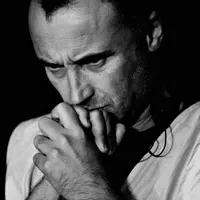
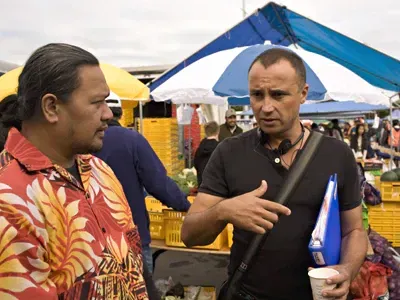
Michael Bennett describes himself as a filmmaker and ‘lifelong distance running addict’. It’s a handy combination when venturing on your first feature film.
In this TBI Q&A he talks about the gestation of an idea, the marathon 12-year journey to make Matariki and how he nearly gave up.
“But the idea had its hooks in me. It wasn't letting me go and I wasn't letting go either.”
- Read Michael Bennett's answers to The Big Idea community question about making Matariki in the comment box below.
* * *
Matariki is a multi-narrative film - a movie about New Zealand today, here, now. 'On a starry night in South Auckland a young car thief nicks an apparently abandoned car, unwittingly starting a chain of events that changes his life and the lives of many others, forever.'
Matariki debuted at the 2010 Toronto International Film Festival and comes to our screens from November 18.
During what hours of the day do you feel most inspired?
Very early morning. I love running as the sun comes up, I love working as the sun comes up. At that hour you own the world. It's you and the birds. Unless you're running down K Road, then it's you and the winos and the street sweepers and the trannies. Which can be even more inspirng.
How would a good friend describe your aesthetic or style?
Energised. Heartfelt. Unpredictable. Funny-sad.
What aspect of your creative practice gives you the biggest thrill?
Finding the idea that lays its spores inside you. For me it's like John Hurt in Alien. A seed gets planted, it gestates deep down inside doing whatever it's doing - growing, getting stronger. Sharpening its fangs. Then when the time is right it bursts out of your abdominal cavity in a chaos of energy and noise and chattering teeth.
How does your environment affect your work?
The internal environment matters way more than the external. If I've had a great run and the neurons are fully oxygenated, everything flows. If the right song is playing on high repeat in my head, everything flows.
Do you like to look at the big picture or focus on the details?
Big picture first. I work and rework and rework and rework the structure of a screenplay til I know the architecture, til I know how the thighbone connects to the hipbone et cetera. When the superstructure is robust, you're so much freer to concentrate on the minutiae, on the beautiful detail – because you know you're building on solid ground.
What's your number one business tip for surviving (and thriving) in the creative industries?
Remember the giddy thrill of when you discovered the thing you love doing. The first song you wrote, the first time you lifted a paintbrush, the first bit of clay you sculpted, the first time you directed a real living breathing actor. Every time you go out to bat, make sure it feels like that first time. I understand well-regarded sex therapists offer very similar advice.
Which of your projects to date has given you the most satisfaction?
The first one. And the last one. And the next one. We're the privileged ones. We get paid to dream. Getting up in the morning is satisfaction.
Tell us a bit about Matariki - from conception to inception.
Matariki is a multi-narrative film - a movie about New Zealand today, here, now. On a starry night in South Auckland a young car thief nicks an apparently abandoned car, unwittingly starting a chain of events that changes his life and the lives of many others, forever.
The film began life as a one-man play by Iaheto Ah Hi, about his real-life cousin who was a one-man teenage crime wave. This guy was completely obsessed with fishing, if he'd grown up in the islands he'd have been a master fisherman. But he grew up in urban New Zealand and became a master car thief. He didn't go hunting turtles and sharks, he went hunting Bluebirds and Subarus. I fell in love with this as a thematic ground zero for a movie - someone with big dreams and potential but who is heading fast down a slippery slope taking him far away from what he could be.
Working with Gavin Strawhan, this storyline became the spine of the movie, and we interwove other stories around it. Stories about people in the same place and time – and stories about characters all facing similar crises in their worlds.
Conception to birth was a marathon all of its own. I first saw Iaheto's play 12 years ago. Film development is inevitably a long-haul process, and this was no exception. Over those 12 years, three times I gave up, three times I felt like life is just too short, getting a film on its feet is just too bloody hard - three times I literally threw the script away. But the idea had its hooks in me. It wasn't letting me go and I wasn't letting go either.
The doubly cool thing is that 12 years after I saw Iaheto's play, when the film goes into the cinemas next week Iaheto is up there on the big screen, playing one of the main characters, the beautiful big-hearted Tyrone.
Who or what has inspired you recently?
My girlfriend Jane. She manages to simultaneously be an amazing artist, a great parent and a free spirit, day in day out. I'm looking for a medal if I get close to achieving any one of those.
If you could go back and choose a completely different career path to the one you've chosen, what would it be?
There's a tiny Kenyan hill-tribe, just a couple of thousand people, which almost every marathon record holder comes from. In the next ten years someone is going to run a 1:59 marathon for the first time in human history - and it's going to be one of those guys. 42.2km in under 2 hours! Good God. Being Kenyan isn't actually a career path, but if I could do anything else...
What place is always with you, wherever you go?
90% of my dreams are set in the house I grew up in, still. I can still see every fleck of rust on the clothesline I used to ride my red trike around. It's weird how that stuff sticks.
What's the best way to listen to music, and why?
Inside my head. If I've found the right song for a sequence in a screenplay I'm working on, it's so much easier to write great scenes. If I've got the right song in my head when I'm running, gravity melts away and you fly. But it has to be playing on the internal turntable, not on speakers or earphones - has to be working its stuff from the inside out.
You are given a piece of string, a stick and some fabric. What do you make?
[1] I bind the fabric with the string to make a small but remarkably realistic Scarlett Johanssen doll. [2] I beat the doll repeatedly with the stick from sheer frustration that so much talent and beauty could reside in one human being.
What's the best stress relief advice you've ever been given?
“Stop annoying me. Go for a run”.
What's great about today?
Another day, another grey hair. That's a good thing. I want to get the Richard Gere thing going. In a barrel-chested Maori kind of way.
What’s your big idea for 2011?
After 2007, I vowed I'd never let the All Blacks break my heart again. Never. Never ever ever. In 2011 I'm completely ignoring the World Cup and devoting all that time and energy and passion to my work. And I fully intend keeping that vow at least until kick-off of the first game.