TBI Q&A: James Brown
Written by
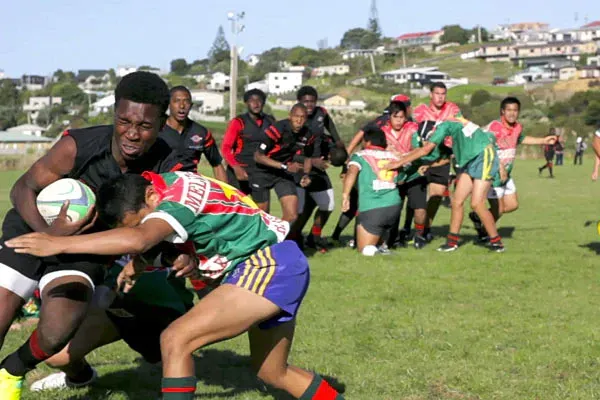
Red White Black & Blue follows thirty eight South Los Angeles high school students as they fly to New Zealand to play rugby.
Director and Editor James Brown tells us more.
During what hours of the day do you feel most inspired?
Morning and night I really get going, I have a creative burst after the morning coffee and get another energy boost around 7pm which can go into the morning. The middle of the day is “the slog”.
How would a good friend describe your aesthetic or style?
A match up of emotive and analytical, cinematic images with a dynamic structure that pulls on the audiences emotions.
What aspect of your creative practice gives you the biggest thrill?
Finding a magic moment in interview, and finding a place for it that works. That’s what it’s all about, finding moments that speak volumes and “teeing them up” through editing. I know I’m always looking for something that hits me on an emotional level.
How does your environment affect your work?
I work well under pressure, but always try to avoid the production environment. Getting lost in production worries really affects my creativity. In terms of editing I like a quiet, dark environment. I like working with a director and feel most comfortable when they are there working on their own emails etc as they often are, weighing in from time to time. When directing and editing I find I need to go into a hole for a week at a time and just hash it out, then I try to get on-going feedback from people I trust.
Do you like to look at the big picture or focus on the details?
I try to separate these where I can. If editing with a director I let them focus largely on big picture, and I facilitate the details. If directing and editing I work iteratively, I edit from detail to detail then I watch down with a notebook, and try to observe as an audience member, and allow myself to think about a wide range of possibilities, I write a list of things to try and specific fixes I need to address, and then I get back into the detail.
What's your number one business tip for surviving (and thriving) in the creative industries?
As a freelancer I find it very beneficial to have a wide skill set, with one chief skill. I am an experienced editor and am building my skills to become among the best in the industry. But I’m also a serviceable camera person which means I can take on directing roles as well and fill gaps in people’s production pipeline. This keeps you working which means you can value your time accordingly, it’s all a juggling act.
Which of your projects to date has given you the most satisfaction?
Red White Black and Blue has been the highlight of my career so far, to get paid to direct a story is a real privilege and feel very lucky to have had the opportunity to tell the stories of these really inspirational young scholars – at the same time I’m very proud of what I achieved with the film, in a short time frame.
Who or what has inspired you recently?
My wife Natalie inspires me. She is a writer and we talk a lot about how to tell good stories, I have learnt a lot from her experience in writing fiction that has been invaluable in building engaging narratives from documentary footage. I am very lucky to live with a creative peer with a work ethic that always encourages me to do more, and who can, in times of creative strife, point me in the right direction or tell me when something sucks.
Tell us a bit about your background.
At school I always thrived in art and maths. I studied at Elam School of Fine Arts where I found film making and fell in love with editing. Without realising it I’ve become someone who uses maths to create art. I am primarily a documentary editor and have been for about 10 years. On the rare occasion that I get to direct I always take the opportunity. Before directing Red White Black & Blue I had directed a few educational art documentaries and a featurette about the role of art as a tool of development in Africa. As an editor I have worked with some of New Zealand’s top documentary film makers and in 2010 got a big break as primary editor on Annie Goldson’s Brother Number One.
Tell us a bit about your documentary
The film follows a girls’ and a boys’ rugby teams from South LA playing a tour of New Zealand against kids who have lived and breathed rugby culture from infancy. Rugby is growing fast in the US but is still an outsider sport, for these students it is very tightly linked with their education. A tradition of rugby has survived in the US in Ivy League Universities, and so is associated with academic excellence. During the tour students find out about their college applications successes and failure. For the characters we follow the struggle of the game and the tour brings to the surface the complex struggles of the their own lives, personal conflicts, troubles at home, the vulnerability of becoming an adult, the frustrations of being a teenager as well as overcoming stereotypes surrounding where they come from.
Why is documentary important?
The film is important for a number of reasons. Primarily it addresses a new, hopeful chapter for African American youth living in the inner city, portraying these young scholars as articulate and thoughtful people who are going to contribute incredible value to their community. Secondly it’s important to the world of rugby, watch out! Now that 7s is being played in the 2016 Olympics the US may turn out to be a threat. They have a lot of talent to draw from, and they like to win medals.
What do you think of the new documentary funding?
I think the new documentary funding is a great idea. Documentary film makers are a dedicated bunch, but often without a lot of capital. A small amount of funding up front can get a film going and growing – enabling film makers to move the project to a stage where they can get something shot and in turn encourage more interest in their film.
What else is needed to support documentaries in NZ?
I find short, low cost events like DOC2DOC are great for all. Anything that can create a more integrated social environment between often solitary film makers, our projects are about collaborating with the right people, so meet-ups are a great way to find people you work well with.
Tell us about your other upcoming projects.
I’m currently completing an edit on another film with Annie Goldson who is co-directing with Kay Ellmers called He Toki Huna – New Zealand in Afghanistan. It will be screening on Maori TV the day before Anzac Day. It’s a critical review of our involvement over there and will raise some eyebrows and most importantly stress the importance of transparency when a government decides to go to war. I am also working on a follow up film about the ICEF Rugby program and their recent tour of China.
If you could go back and choose a completely different career path to the one you've chosen, what would it be?
Politics…
What place is always with you, wherever you go?
I don’t place a lot of importance on place, patriotism or nostalgic notions of paradise – There are the voices of people who are important to me that are always with me and inform my choices in film making and in life.
What's the best way to listen to music, and why?
I always go for speakers, or headphones.
You are given a piece of string, a stick and some fabric. What do you make?
My brain’s left hemisphere is on overdrive at the moment, as I’m doing graphics which is very technical – so all I can imagine doing is hoarding the string and fabric in a drawer for when I’ll “need it one day” and throwing the stick for my dog.
What's the best stress relief advice you've ever been given?
I don’t need stress relief, I have a dog.
What’s great about the Documentary Edge Festival and Forum?
It’s really a festival that cares about its film makers, I’ve been amazed by the amount of support and involvement the festival has provided. Without this festival many great emerging film makers would struggle to get their work seen in New Zealand, it’s a career builder.
What’s your big idea for 2013?
I’m just really excited about the growing technology around film making, the tools are becoming so accessible, and really high production levels are available to talented film makers on any budget. It’s a really great time to be telling stories.
* * *
- The Big Idea is proud to be a Media Partner for Documentary Edge Festival 2013.

This work is licensed under a Creative Commons Attribution-NonCommercial-NoDerivs 3.0 New Zealand License.