TBI Q&A: Goethe-Institut Director Christoph Muecher
Written by
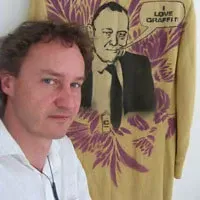
Named after Germany's national poet Johann Wolfgang von Goethe, the Goethe-Institut operates on behalf of the German Government and initiates cultural exchanges in 82 countries. The New Zealand branch of the Institute is located on Cuba Street in Wellington where Director Christoph Muecher is based. "It is our job to help communicate a more detailed image of what's going on in contemporary Germany by bringing relevant projects or artists from Germany to New Zealand."Current projects include "Common Ground" at TheNewDowse, a collaborative exhibition from Germany's Via Grafik and NZ's Cut Collective, and The DOCNZ Goethe-Institut Documentary Scholarship. The eight-day Berlin Bonaza, organised with Mighty Mighty, is currently on in Wellington until February 28. During what hours of the day do you feel most inspired? I have always been an evening person. When the world finally gets quieter the "big ideas" come out of their hideouts. How would a good friend describe your aesthetic or style? "On the safe side" What aspect of your creative practice gives you the biggest thrill? "Meeting people" closely followed by "meeting people" How does your environment affect your work? The vibes of Cuba Street help liberate the ideas otherwise held in hostage by paperwork and EXCEL-files. Best ideas are fuelled by the morning coffee from People's, Midnight or Floriditas and fresh fish for lunch at the Matterhorn. Do you like to look at the big picture or focus on the details? Definitely big picture - I am very grateful for a great team assuring that important details are not forgotten. What's your number one business tip for surviving (and thriving) in the creative industries? Be well connected but work on your contacts from the depth of your heart and never as part of a learned strategy. Which of your projects to date has given you the most satisfaction? Organizing a world wide arts program around the soccer world cup in Germany 2006 Who or what has inspired you recently? Alex Monteith's video installations at the Film Archive Wellington and St. Paul's Street Gallery Auckland have been a stunning aesthetic experience. What does your job involve? In our "globalized cupboard" there only seems one tiny drawer left for each culture and civilization. In the case of Germany the image is far too often still marked by the war. It is our job to help communicate a more detailed image of what's going on in contemporary Germany by bringing relevant projects or artists from Germany to New Zealand. These could be touring exhibitions or musicians that help focus on certain aspects of the cultural life in New Zealand that aren't that well known. Probably more important and successful are projects that are conceived through intensive dialogue with our New Zealand partner institutions. The exhibition "Common Ground" at TheNewDowse is a good example. Sitting together with the curators from TheNewDowse we discovered that in both our socities street art is becoming more and more important. So we decided to bring a relevant artist - Leo Volland from Via Grafik - to New Zealand and team him up with the amazing guys from Auckland's Cut Collective. Not only the result of this cooperation is very inspiring but we are also very much interested in the process of these co-productions as this paves the way to a deeper and better understanding. How long have you been doing this job? 15 years: after short training intervals in Montreal and Abidjan (Ivory Coast) I spent 5 years in Tokyo, 6 in Munich, our headquarters and so far 4 in New Zealand. German artists/musicians etc come from Germany to here but does it also happen the other way round? It is a rather recent development that the exchange happens more and more in both ways. Some art forms are rather difficult to move. It is incredibly difficult to getting a whole theatre production from Berlin to New Zealand. And even the 4 people dance company of leading German dancer Susanne Linke who will be part of the Auckland Festival next month can be really expensive as part of their luggage is......a bath tub. So sometimes it could be much more effective to inviting a key person of respective New Zealand scenes to Germany and invite them to see a large variety of productions and meet there counterparts over there. Given the distance between our countries and the effort to travel we try to work on longer working experience such as residencies. 2007 it has been possible to integrate two young New Zealand curators in the team of the Documenta, the world's leading show on cutting edge contemporary art. This year together with DOCNZ we will be inviting a New Zealand documentary film maker to live and work in Germany for three months. The experiences and networks created through these exchange forms are often the best and most credible ways to link two countries. If you could go back and choose a completely different career path to the one you've chosen, what would it be? Being a soccer pro or a cello player What place is always with you, wherever you go? My first student flat - awayyyyy from home What's the best way to listen to music, and why? With closed eyes (why trying to watch music?) in a large cathedral (you can almost hear the architecture) You are given a piece of string, a stick and some fabric. What do you make? A mess What's the best stress relief advice you've ever been given? Start the day with an hour reading of good literature - unfortunately gravity keeps me in bed, the eyes closed, and it doesn't work What's great about today? Berlin pop legend Gudrun Gut confirming her coming to NZ in February. What's your big idea for 2009? Driving home to Germany once my posting has come to an end... Related stories Berlin Bonaza Common Ground - street art comes inside The DOCNZ Goethe Institut Documentary Scholarship 20/02/09