TBI Q&A: Filmmaker Gerard Smyth
Written by
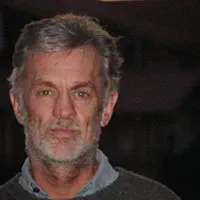
Barefoot Cinema producer and director Gerard Smyth initially wanted to document a potted history of the last 30 years of New Zealand film through the eyes of pioneer shooter Alun Bollinger. But as he got to know the Bollingers - 'AlBol' and wife Helen 'HelBol' - he realised they were also pioneers of how they live and relate to the land.
Smyth says despite the challenge of turning his camera on a 'legend' AlBol made everyone feel at ease.
"AlBol kept out of the production - he reckons he had little trouble not having to work on resolving productions issues. But as an interviewee he was a treat. He could talk and at the same time, observe how the light might be falling - a small shuffle to the left to help the cameraman out!"
Barefoot Cinema: The Life and Art of Cinematographer Alun Bollinger screens as part of the International New Zealand Film Festivals at Dunedin on August 4 and Christchurch on August 14 and 15. Barefoot Cinema producer and director Gerard Smyth initially wanted to document a potted history of the last 30 years of New Zealand film through the eyes of pioneer shooter Alun Bollinger. But as he got to know the Bollingers - 'AlBol' and wife Helen 'HelBol' - he realised they were also pioneers of how they live and relate to the land.
Smyth says despite the challenge of turning his camera on a 'legend' AlBol made everyone feel at ease.
"AlBol kept out of the production - he reckons he had little trouble not having to work on resolving productions issues. But as an interviewee he was a treat. He could talk and at the same time, observe how the light might be falling - a small shuffle to the left to help the cameraman out!"
Barefoot Cinema: The Life and Art of Cinematographer Alun Bollinger screens as part of the International New Zealand Film Festivals at Dunedin on August 4 and Christchurch on August 14 and 15.During what hours of the day do you feel most inspired?
When I am most fresh. So the mornings work for me. I aspire to the discipline of going to bed early, rising early and having work that requires concentration over by early arvo. But unfortunately documentary participants don't ascribe to the same rules!
How would a good friend describe your aesthetic or style?
Observational perhaps. Intuitive maybe. Analysis of me, is not my best thing.
What aspect of your creative practice gives you the biggest thrill?
Not sure whether it's the moment of finding the unexpected shot-it's primal stuff-the thrill of the hunt, or whether it's the magic of an edit -that wonderful moment when sound and picture join and grow something entirely new. There ain't no bigger thrill!
How does your environment affect your work?
Hopefully hugely - I have no other choice if I want to sense the worlds of the stories participants. And at the end detachment is equally difficult. Sometimes I find myself shedding a tear for something I shot 23 years ago. I directed a documentary about a famine in North Africa in 1985. That sadness stays. And equally I remember the joyful times- the wonderful people-the adventures in unfamiliar places.
Do you like to look at the big picture or focus on the details?
On one hand prep research informs of the bigger picture. But in the field I guess the trick is to be able to observe the unexpected. So the bigger picture changes. Preconceived notions do not always gel with the stones that one turns over!!
I think my challenge forever - and one which I accept - is to work without a 'central authority' - instead it's the joining together of a myriad of details that, like a tapestry, go to make the whole.
What's your number one business tip for surviving (and thriving) in the creative industries?
Tell the yarn that moves you. And allow yourself to be utterly engrossed in that story. In my experience that commitment is your best bet in finding a budget.
Which of your projects to date has given you the most satisfaction?
In 1995 I spent the best part of a year inside an institution for the intellectually disabled. It was rumoured to be closing. Parents wanted it left open. Health Professionals wanted it closed. Politicians were confused. But no one was asking the 600 residents who I found were overwhelmingly desperate to leave.
The resulting documentary 'Out of Sight' played at a special screening at Parliament. I am told it helped closed that sad and archaic institution. That was satisfying.
In what ways has Alun Bollinger inspired your work? - Ruth Wrenn
I have known of Albol since NZBC days in the late 1960s. His reputation went before him. In those days television here was modelled off the BBC and that off the English Civil Service. One up, one down. Rules and regulations. Albol was not only known as a great shooter, he was a one man advance party building an alternative to the stiff English culture. His turning up barefoot to the NZBC and his subsequent departure led to the very beginnings of our extraordinary film industry.
How did the idea for a film on Alun come about, did he agree to it straight away?
Nope he did not agree straight away. Nor did he disagree. I drove, I think, four times 'over the hill' -from Christchurch to the West Coast (600 kilometres return), over a year, before we shook hands. I think they thought (and hoped) I would eventually tire of asking.
Initially the idea was as a potted history of the last thirty years (since Sleeping Dogs) of New Zealand film, through the eyes of a pioneer shooter. But as I got to know the Bollingers -AlBol and wife Helen 'HelBol' I came to understand that they were not only pioneers in film, but also in how they live in and relate to this land.
Why was it important to you to make this documentary on Alun Bollinger?
I see the Bollingers as significant New Zealand characters because of their optimism. In that sense I see them as visionaries-as leaders.
Had you worked with Alun Bollinger before?
Nope. But we had come across each other over the years. For instance I remember working alongside in the Springbok tour. Amongst the chaos of test day in Christchurch we said gidday and swapped a bit of gear.
Did you approach this documentary differently because of his knowledge of filmmaking and the industry?
Initially yes. He is a legend. I felt the responsibility to get a few thousand facts right. But as so many in the film industry will testify, AlBol is much loved for his ability to make everyone and anyone feel at ease. And before long we (the film crew) and the Bollingers were all, I think, engrossed. We worked slowly. There was so much to talk about. AlBol kept out of the production - he reckons he had little trouble not having to work on resolving productions issues. But as an interviewee he was a treat. He could talk and at the same time, observe how the light might be falling-a small shuffle to the left to help the cameraman out! And of course he and HelBol have for so long worked in the world's of Film making-of story telling, (Helbol often in costume departments) that they were both wonderful yarn tellers.
Did you learn anything from this experience, personally and professionally?
Hopefully. Professionally I am - even after 30 something years - always in learning mode. I have always found it hard to shake the idea that I am at my first day at work. Maybe it's a defence against growing a 'style' - but it can be a bit of a curse at times. Personally it's hard not be around such a neat family without some of their wisdom rubbing off. I speak for all the crew when I say it was such a pleasure to hang out at Blackspoint on the South Island's West Coast.
Who did you interview for the film and why was this important?
Geoff Murphy - a co pioneer.
Gaylene Preston - long time conspirator and family friend.
Vincent Ward - 'he is such a visual director' says AlBol.
Peter Jackson - because he and AlBol are mutually respectful allies.
How did Alun Bollinger respond to the film?
He says it works. He goes on about the music not being his cuppa. But the Bollingers are very humble fellas. Maybe they are not too concerned with how it has turned out.
What were the challenges and rewards of making this documentary?
The challenges were enormous for me. I wanted to make something delightful - not a record of cinema of unease - but as Helbol-the one liner Queen of Blackspoint says -'Cinema of Ease.' Positive insight. The reward was being with an audience, who I sensed, just might have been delighted.
Barefoot Cinema: The Life and Art of Cinematographer Alun Bollinger at the International New Zealand Film Festivals
Monday, 04-Aug-08, 8:15 PM, RIALTO, DUNEDIN
Thursday, 14-Aug-08, 6:15 PM, RIALTO 2, CHRISTCHURCH
Friday, 15-Aug-08, 12:00 PM, RIALTO 2, CHRISTCHURCH
Related story: Barefoot Cinema: The Life and Art of Cinematographer Alun Bollinger
31/07/08