TBI Q&A: Filmmaker Chaz Harris
Written by
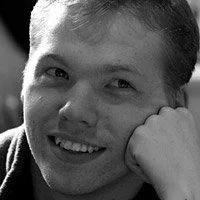
Filmmaker Chaz Harris released his indie short film The Shoe Box online so it could reach a wide audience with the click of a button. The film is loosely based on the period following his dad's death in 2005 and Chaz said as we can all relate to the loss of someone we love, he wanted the distribution method to allow anyone, anywhere to see it.
"The major con is that you're not really going to make any money back. You need to give your IP (intellectual property) away for free, but it's a long-term benefit thing, you hope that if you give something good away free, the right people will realise what you achieved with very little and wonder what you could do next time with more."Filmmaker Chaz Harris released his indie short film The Shoe Box online so it could reach a wide audience with the click of a button. The film is loosely based on the period following his dad's death in 2005 and Chaz said as we can all relate to the loss of someone we love, he wanted the distribution method to allow anyone, anywhere to see it.
"The major con is that you're not really going to make any money back. You need to give your IP (intellectual property) away for free, but it's a long-term benefit thing, you hope that if you give something good away free, the right people will realise what you achieved with very little and wonder what you could do next time with more."His achievements were recognised when he was nominated for SPADA New Filmmaker of the Year in 2007. The Shoe Box, produced through Wellington-based Seriously Entertainment, has also been selected to screen on Rialto Channel beginning with a television premiere at 8pm on Sunday February 8.
During what hours of the day do you feel most inspired?
I'm kind of a night owl so I usually find I can focus better at night when there are going to be no interruptions or distractions.
How would a good friend describe your aesthetic or style?
Most notable for creating work that is quirky yet has mainstream appeal due to the use of universal themes or issues that everyone can relate to. Another friend said enthusiastic, charming and genuine. At first I thought she had misinterpreted the question, but she explained it's because I approach my creative work in a similar way to my friends; with enthusiasm, charm and a genuine love of what I'm doing.
What aspect of your creative practice gives you the biggest thrill?
Someone having an emotional reaction to something I made or instigated. Whether they like it or not, the fact it provoked some kind of emotional response means I've done my job. That sounds like I enjoy starting fights doesn't it? Er - well, what I mean is there's nothing worse than an audience who is bored or nonchalant so if they go either way that's fine with me.
How does your environment affect your work?
I am not usually that impacted by my physical environment, I just need it to be free of distractions but if I am inspired enough, I can write down ideas or work anywhere. My spiritual environment is more important as I don't like being around negativity, it's draining and sucks the energy out of you. It's very hard to be inspired when you are around that and I like to have fun. If you can't have fun and a laugh with people especially when you're working long hours, then where's the motivation to get up in the morning?
Do you like to look at the big picture or focus on the details?
I think one of the most important things for a director to remember is to never lose sight of the bigger picture and get pre-occupied with detail, that's micro-managing. Having said that, I like to immerse myself in knowing enough about the details so I'm aware of how they impact the bigger picture, they go hand-in-hand. I get scared when I hear of directors who don't know (or want to know) how a seemingly small detail or decision they want to make might have a much larger impact on the bigger picture. If a producer is going to say no to something I want to do, I want to already understand why rather than throwing a tantrum.
What's your number one business tip for surviving (and thriving) in the creative industries?
In terms of business, I would say make sure there is an audience for what you're making. It's a supply and demand situation - if you create a product that nobody is going to want or need to pay for then you're not going to make money. In terms of surviving/thriving in the business of the creative industry, I think that is even more important. I always think to myself "who is going to want to see this" before I put pen to paper. If you don't start with your audience in mind, you may end up pleasing only yourself and one customer won't sustain a business. However, you also need the secret ingredient; be passionate about the subject matter. It's a bit like making lemonade - you can have the right formula but without that extra boost of bubbles, at the end of the day it's just flat lemonade.
Which of your projects to date has given you the most satisfaction?"The Shoe Box" because it was not only an intensely personal story, but also I think everyone identifies with the loss of a parent - either as their worst nightmare or something that's already happened to them. It was a challenging experience and there were times my co-producer Anna Paganelli and I weren't sure how to keep it going, which makes it all the more satisfying when a channel like Rialto wants to screen it.
What were the challenges and rewards of making The Shoe Box?
The biggest challenge was operating on such a low budget. Trying to finance a film independently rather than through the more established/traditional routes is tough, but when it's a short film with no promise of any return on investment it's a very hard sell indeed! The best rewards have been audience reaction, one of our Executive Producers is a relative of my producing partner on the film Anna Paganelli. He had lost his wife eighteen months before seeing the film and said he was an emotional wreck after watching it. As an audience member and a substantial investor he related strongly to the subject matter so as a storyteller it's lovely to hear your work has touched someone you've never met. Another challenge and reward was getting a product placement sponsor - challenging because many companies we asked just ignored us and rewarding because we found a very supportive partner in Kumfs Shoes.
Why did you decide to release the film online - what are the pros and cons of this approach?
I always regarded the film as a non-festival one. I got persuaded to apply for several festivals but wasn't really convinced it would get in and even the NZ Film Festival didn't accept it which I think surprised a lot of people. I think perhaps the reason is that our film is too commercial, it's almost too universally appealing for the academic/artistic community to fully embrace it. We had discussions early on about this and agreed the film has something for everyone. We can all relate to the loss of a parent or someone we love and that meant our distribution method had to allow anyone, anywhere to see it. The other factor is that we know a lot of people scattered across the globe and wanted to instantly let them see the film at the click of a button - that's the power of the internet. The major con is that you're not really going to make any money back. You need to give your IP (intellectual property) away for free, but it's a long-term benefit thing, you hope that if you give something good away free, the right people will realise what you achieved with very little and wonder what you could do next time with more.
What advice could you give to others thinking of doing the same thing?
Know your audience, that dictates the best way to reach them. If you are making a commercially appealing short that people in England, America, Australia or China will all relate to - then do it! It's the cheapest way to get noticed with YouTube and other media platforms which are also free and it's the most effective way to reach the masses. Once you know your target audience, make sure you get your marketing/branding right too. If your film is presented in a professional way it has a better chance of getting past a few more people and ending up with someone who might be in a position to offer you work.
Did the success of the film online contribute to getting a TV premiere on Rialto?
I'm sure it didn't hurt that the film already had a presence, but ultimately I hope it was the strength of our cast and the story/film itself that were what convinced them to screen it.
What are your upcoming projects and future plans?
I have so many ideas it's quite insane. It would be nice to have something to focus on, but you have to keep your fingers in a lot of pies until something happens to funnel your attention. I'm trying to focus on developing two American-based comedy features at the moment, they are both in re-writes. However, even though they are set in the US, I'd hope to be able to at least partially film and post-produce these in New Zealand. I've also developed an online teen comedy/drama series called "Ei8hteen" as I think local content for teen/youth audiences here is particularly lacking. I tried to get that made last year but for now the script is waiting for the right time and money to do it properly. I guess in terms of "what next", I'm at a crossroads waiting to see which light goes green.
What challenges does the film industry face in New Zealand?
I think the biggest challenge facing the industry is for independent content creators to truly be independent and not rely on government for funding as much as they do. If the funding was chopped in half tomorrow, I sometimes wonder how many would survive without. I'm sure that opinion won't be popular in some circles given the current economic environment, but I've observed that many other emerging artists seem to be finding ways to do things differently. In some ways, I think creative freedom and content ownership are more valuable than a generous production budget - but maybe that's just me. There don't seem to be very many local producers developing/creating truly internationally viable content and that reflects the real challenge of capital raising and holding equity in the final product. If you have something the other markets really want, you'll be in a better position to negotiate a deal that means you retain some profit participation or ownership in it
Who or what has inspired you recently?
People who defy the traditional way of doing things always inspire me. I liked what Ed Zwick and Marshall Herskovitz did with "Quarterlife" where they made an online series, released it online and then sold it back to TV after it had been rejected the first time around. I like it when people defy those who tell them they can't do something and then go out there and prove them wrong. It's people saying no that separates those who can stick at it, and those who give up. For me, after a couple of days of depression and throwing darts at their photo, that puts the fire in my belly and makes me determined to prove them wrong. I think my film career over the last nine years is certainly the product of a thousand no's coupled with a few people saying yes at the right time.
If you could go back and choose a completely different career path to the one you've chosen, what would it be?
When it comes to being a filmmaker, you don't sit there and decide it as a career path because there really is none. It's an obstacle course in a minefield that you try to navigate and finish with all your limbs intact. I think if you're going to be a filmmaker, actor or work in the industry at all it's just something you know you have to do and know you won't be happy doing anything else, that's why I've never had a back-up plan. If I didn't have that little voice in my head, I'd probably be a Marine Biologist or an Archaeologist - dinosaurs got me into this whole mess after all.
What place is always with you, wherever you go?
The Empire State Building in New York. I carry a photo in my wallet of my family when we went there for my dad's 60th in 2005, it's the last holiday we had together a few months before he died.
What's the best way to listen to music, and why?
I love seeing film music played by a live orchestra, I saw a John Williams Tribute concert at Canary Wharf in London a few years back and it totally took my breath away. I also like listening to my iPod/iTunes while I'm writing as I usually create a soundtrack for most of my films before I start writing a script or outline. Music helps me visualise or get into "the zone" whatever that is. For example, I downloaded a three minute piece from the original score of "Blood Diamond" after seeing the film. I felt so inspired by it that I played it on repeat and four hours later I had finished the script for "The Shoe Box".
You are given a piece of string, a stick and some fabric. What do you make?
A flag, don't ask why, I'm British.
What's the best stress relief advice you've ever been given?
"Nobody's gonna die, so don't panic!".
What's great about today?
If today doesn't go as planned, tomorrow's another day!
What's your big idea for 2009?
To finally get paid for what I love doing most! Wait, that's more of a plan - but a plan is a big idea right?
Related story
NZ indie short ‘The Shoe Box' screens on Rialto
22/01/09