TBI Q&A: David Parrish
Written by
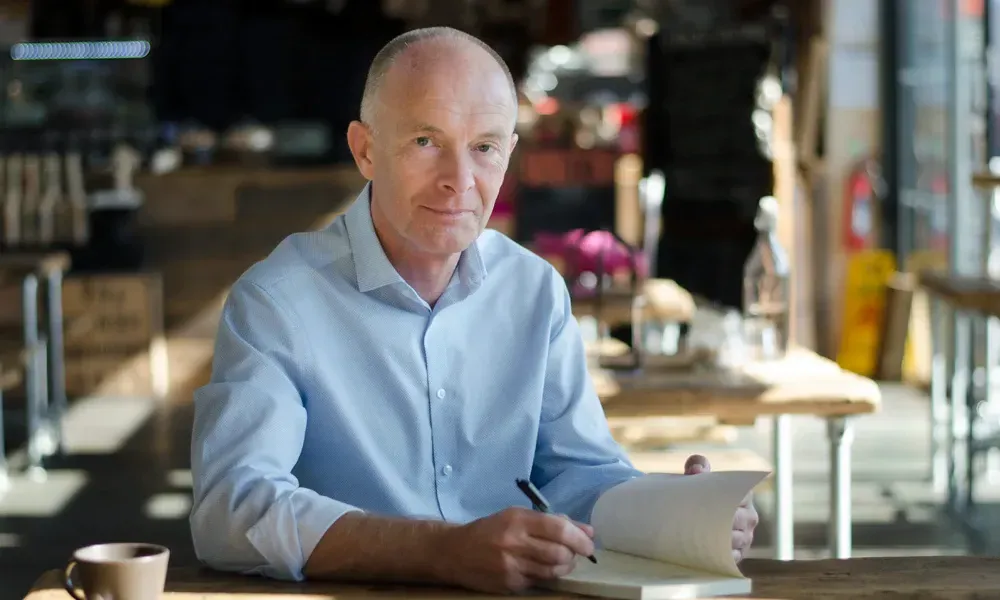
David Parrish travels the world talking about the business of creativity. On the eve of his visit to New Zealand, David tells us how his first enterprise, a community bookshop, focused on social good and was 'anti-business'.
“However, over the years, working in creative, cultural and social enterprises I came to realise that it’s very useful to know about business stuff!”
While his work is about empowering creative entrepreneurs, David is also always working on his own business to make it more scalable and says his next big idea is to “generate more income while I sleep”.
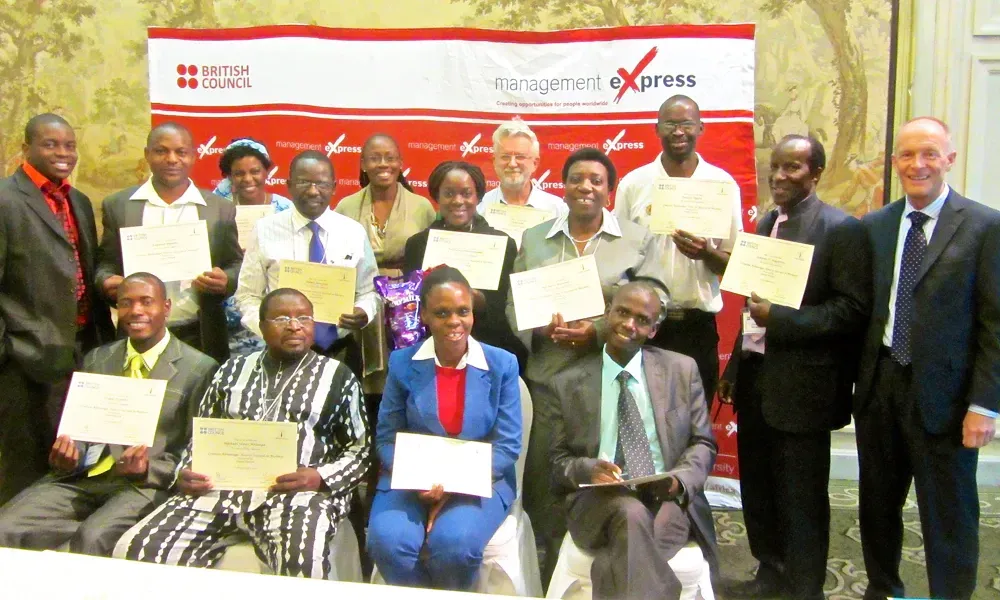
David has worked in more than 30 countries in six continents, and in this TBI Q&A he tells us about the common issues creatives face.
We'll bring you more insights from his workshops in Auckland next week (both are full). There are still spaces for his Whangarei sessions on Marketing: from strategy to sale, hosted by The Big Idea and Creative Northland on August 4.
During what hours of the day do you feel most inspired?
I have become a ‘morning person’. I tend to get up early (about 6am) and feel inspired. Then (once my coffee kicks in) I often do my best work in the mornings too.
How would a good friend describe your aesthetic or style?
Words such as ‘empathetic’, ‘helpful’ and ‘inspiring’ have all been used to describe my personal style - and my work. At the same time, ‘resilient’, ‘determined’ and ‘gently powerful’ have also been used. I’ve never been described as ‘aggressive’, ‘stupid’ or ‘loud’.
What aspect of your creative practice gives you the biggest thrill?
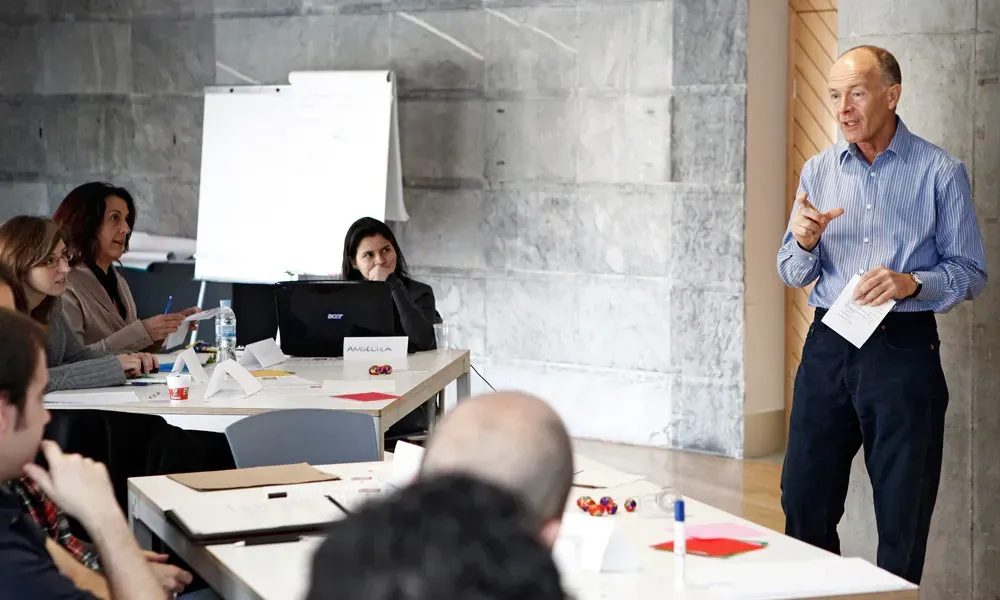
Empowering others. Much of my work is helping people use their creativity not only in the studio but also in the office, in other words, in the way that they develop their businesses. Some of my best creativity is helping creative entrepreneurs to devise clever business models, strategies and techniques.
How does your environment affect your work?
I’m increasingly aware of the impact of different environments on my work. I enjoy working alone but also need to interact with others and be amongst people. I’m lucky enough to be able to change locations frequently. I know all the best cafes for meetings, wifi or working quietly.
Do you like to look at the big picture or focus on the details?
I do details well but I’m very much a big picture person, prompting my clients (and myself!) to step back and ask the big questions about what success means, what we are trying to achieve, what’s changing out there in the world. The larger strategy should come first.
What's your number one business tip for surviving (and thriving) in the creative industries?
Define success in your own terms. Use the tools of business to achieve the success that you define for yourself. You don’t have to follow conventional business dogma, objectives or methods. Be creative in using business techniques to fit your own values and goals.
Which of your projects to date has given you the most satisfaction?
Writing my book T-Shirts and Suits: A Guide to the Business of Creativity and seeing it published in translations around the world. Also, publishing it as a free eBook to share with creative entrepreneurs internationally. Unlike other projects, the book continues to inform and inspire.
Who or what has inspired you recently?
I’m inspired and excited by the opportunities of using digital media to increase our impact, reach and income using a variety of business models. This opportunity applies to my clients and also to my own business in terms of eBooks, audio books, videos, apps etc.
Tell us a bit about your background.
My first enterprise was a community bookshop, focused on social good, not profit, and indeed we were ‘anti-business’. However, over the years, working in creative, cultural and social enterprises I came to realise that it’s very useful to know about business stuff!
You're a poet with an MBA. How did that happen?
I write short poems and once had a haiku published – so I’m a ‘published poet’! After working in cultural enterprises I also needed to know more about the business side of things so went to university for the first time aged 35 to study for an MBA.
You travel extensively working with artists and businesses in the creative economy. What problems do people have in common and are there answers that are universal?
Common problems world-wide are marketing, raising finance and the protection and management of intellectual property. The answers are essentially very similar but the specifics vary according to the culture, economic situation, infrastructure, legal code and technology in each country.
The concept of the 'creative economy' and 'creative industries' were seen as driving a new type of economic growth 10 years ago. How do people react to those concepts now?
In the UK, these concepts are still valid and contribute significantly to economic growth. Other countries have developed their creative economy differently or are just now beginning to focus on their creative industries, for example in Ukraine, where my books will be published later this year.
They say not all customers are good customers. How do you know which are the best customers and potential customers to aim your marketing effort at?
The best customers are those that value what you can uniquely offer and are prepared to pay the proper price. This entails understanding your competitive advantage then involves focusing only on the customers who value it. Good customers aren’t always conveniently located so we need to go and find them.
Sometimes people expect artists to work for free or a small fee, thinking it’s a passion instead of profession. What are some ways artists could respond to this?
1. Say ‘No’ to free or underpaid work.
2. Proudly raise your prices then find the customers who truly value the uniqueness of your work.
3. Communicate what’s in it for the customer, not just what’s in it for you.
4. Don’t follow the herd over the cliff.
If you could go back and choose a completely different career path to the one you've chosen, what would it be?
I admire the way architects combine art and science and sometimes wonder if that could have been my career. Teaching appeals, though I wouldn’t want to work in a conventional school set-up. In many ways, my advice and training work, empowering creatives, is a kind of teaching.
What place is always with you, wherever you go?
My English home town of Bury. They say you can take the boy out of Bury but never take Bury out of the boy! I love it and hate it but it’s where my roots are. At certain times I ground myself by going back there, to the market at its epicentre.
You are given a piece of string, a stick and some fabric. What do you make?
My first impulse would be to make and fly a kite. So please give me suitable fabric, a strong stick I can cut into two, and a very long length of string!
What's the best stress relief advice you've ever been given?
Be fully present in the here and now. This is central to ‘mindfulness’ and takes away the stress of wanting to change the unchangeable past and speculating about the unpredictable future.
What’s your big idea for 2016?
To make my one-person business even more scalable and less vulnerable, by condensing my knowledge and creativity into more ‘products’ that allow me to help creative entrepreneurs in several places simultaneously and generate more income while I sleep.
* * *
David Parrish MBA MCMI MIC MCIM FInstLM FRSA Chartered Marketer
As an international conference keynote speaker, David informs, entertains and inspires creative entrepreneurs to become even more successful by using smart business models, strategic marketing and profitable growth strategies.
He is the author of two books: T-Shirts and Suits: A Guide to the Business of Creativity and Chase One Rabbit: Strategic Marketing for Business Success, which are available also as eBooks and in several translations.
His direct experience as an entrepreneur is complemented by academic qualifications and professional accreditations.
David’s work is internationally respected and he has assisted businesses and organisations in the UK, Belgium, Brazil, Canada, Chile, China, Colombia, Croatia, Denmark, Egypt, Finland, France, Germany, Holland, India, Italy, Jamaica, Korea (South), Lithuania, Morocco, New Zealand, Norway, the Philippines, Portugal, Romania, Russia, Singapore, South Africa, Spain, Sweden, Switzerland, Taiwan, Thailand, Turkey, United Arab Emirates, USA, Vietnam and Zimbabwe.