TBI Q&A: David Malacari
Written by
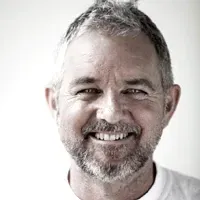
When David Malacari joined Auckland Arts Festival, a dead pot plant greeted him at the front door of a ‘pokey, poisonous office that bled despair into the air’. He got rid of the plant and found a new office - and a new energy and enthusiasm.
As he prepares for his last festival as Artistic Director, David reflects on his time including “convincing Auckland that it wanted and needed its own festival."
David joined the festival in late 2004, and led the organisation as both Artistic Director and Chief Executive for four years. In 2010, the roles were split and David continued as Artistic Director.
The fifth Auckland Arts Festival takes place from March 2-20, 2011.
During what hours of the day do you feel most inspired?
3 a.m. is often a good time, though if I don’t have a notebook by the bed, ideas often disappear. Perhaps that’s best. Some of them don’t seem quite so clever by the light of day. The next best time is early in the day – before the office fills up with noise, activity and process. By 1 pm I need a sleep. Bring back the siesta. Nothing good happens in the early afternoon.
How would a good friend describe your aesthetic or style?
Catholic, but not Roman. I respond to very contemporary work and concepts, but I also love extraordinary artistry from whatever period. I love language and music and the music of language.
What aspect of your creative practice gives you the biggest thrill?
As a Festival Director, the biggest thrill comes from finding a new idea, or a new concept and knowing that you want it – must have it, for the next Festival. Or seeing the work of an artist you have not previously known and wanting to tell everyone about them. Knowing that it is something or someone really, really special and that without the Festival, Auckland audiences would never have the opportunity to see it.
How does your environment affect your work?
When I started at the Festival, we were in a pokey, poisonous office that bled despair into the air. There was a dead pot plant by the front door which had been there for some time but no-one was able to see it. After a couple of days, I asked if someone could get rid of it. Nothing happened. Eventually I took it down to the street and left it by the side of the road myself. A couple of weeks later we found new accommodation. The change in attitude amongst the staff was incredible. There was new energy and enthusiasm from having left the ghosts and evil behind.
Do you like to look at the big picture or focus on the details?
As Chief Executive, I had to be across some of the details. But as Artistic Director it’s definitely the big picture. Although when I am writing, it’s the details which are important. Details and nuance.
What's your number one business tip for surviving (and thriving) in the creative industries?
For me a reasonable reserve of patience and a pathological avoidance of panic.
Which of your projects to date has given you the most satisfaction?
The body of New Zealand work we have commissioned and presented in Auckland is very gratifying. The introduction to Auckland audiences of artists like Ea Sola, Ishin-ha, Ronnie Burkett and Heiner Goebbels is also something of which I am proud.
Who or what has inspired you recently?
Most recently revisiting the work of Maguy Marin, one of the great French dance-theatre artists. Her work May B is thirty years old and is a seminal creation.
What does your role as Director include?
The corollary to having responsibility for selecting the program is to be able to convince others of its – what? Importance? Interest? Enthralling ness? Relevance? The role encompasses politics and marketing and communicating your own enthusiasms and passions to others and providing a context for the choices you have made so as to give those choices an architecture which then becomes the program.
How/when did you become involved in the Auckland Arts Festival?
I was hired in late 2004 to manage the delivery of the 2005, program and then to create a philosophy and artistic plan for the future of an event which, until then, had only been thought of in terms of its next event, rather than as an ongoing organisation.
How have you, and the festival, evolved since then?
We made strategic plans and debated what we could or should be to the community – how best to achieve our goals – what we could add to the cultural landscape of this wonderful city. The Festival gained a reputation and a loyal following which grows each Festival. We have come to understand more about Auckland’s culture and try to respond to it. We have increased in size, to better service a complex city; we have introduced new ideas and concepts – a development program for new work (like The Arrival), a deliberate plan to engage with work from the Asia – Pacific. In 2011 we are introducing White Night, modelled on a concept which is spreading around the world from Paris and Toronto, on which all of the cities and galleries are open and exciting, buzzing until late in the night.
For me personally, it has been a fantastic opportunity to discover Auckland and its communities and to try and open doors into those communities so that more and more people have a go at an artistic experience, or a performance, or an exhibition.
What have been some of the highlights and the challenges (including economy)?
Presenting three outstanding programs to a growing audience has been a privilege. We are still a young festival, but we are also presenting unique opportunities to Auckland to see some of New Zealand’s and the world’s greatest artists on our stages. Bringing Robert LePage and Heiner Goebbels to Auckland for the first time have been highlights. Presenting Japanese company Ishin-ha and co-commissioning French Vietnamese artist Ea Sola was thrilling.
Convincing Auckland that it wanted and needed its own festival – that there is no such thing as a national festival because each festival is so firmly rooted in its community. This idea has now been well and truly embraced by the arts community and our audiences. At the same time we have been dealing with low budgets and the need to convince funding agencies and politicians that the Arts are good for life, good for business and good for cities. We always need to do more, we always want to do more, in this city of thrilling ethnic diaspora, disparateness and diversity. Auckland.
Add to that the challenges of trying to make a budget balance but not by being too ambitious in your box office targets, or trying to find sponsorship in the current climate. Sometimes there’s a great sense of achievement to be had in making two columns of numbers balance!
Why are you moving on – what are you doing next?
In this part of the world we like to change directors every two or three festivals. It provides a certain guarantee of artistic renewal and the presentation of a different viewpoint of the nation’s and the world’s arts and culture.
My own future is unclear. I’ve got a lot more yet to contribute, whether with another Festival, an Arts Company, or working with artists. But I would also like to spend some time writing.
How do you compare or collaborate with other festivals in NZ and internationally?
We are always trying to share work with other festivals if it helps with the freight and transport costs. It’s not always possible. Every Festival in every city has its own needs and its own artistic agenda – but sometimes sharing significant work is the only way of making it financially viable. We have collaborated with festivals in Hong Kong, Sydney, Perth, Amsterdam and with theatres in Groningen, Paris and Montreal to commission and present international work.
As far as commissioning new work from New Zealand artists, we have worked closely with the festivals in both Wellington and Christchurch to commission new work and ensure that all New Zealanders have the opportunity to see it. When we commission or encourage new work it’s very important to the artists that their efforts and creativity get as much exposure as possible. That’s why artists perform. It’s a small country and great work produced here in one city deserves to be seen in the others. We also spend a lot of time talking up our commissions and the work of New Zealand artists with international colleagues and festival directors in the hope that our artists will go on to present themselves to audiences everywhere. The take up from last Festival’s commission The Arrival is something that we are very proud of. They are great artists and it’s a great production and only fitting that it should travel the world.
How does the Festival generate opportunities for New Zealand artists?
A Festival is like a big spotlight, which shines on the arts for a brief time. There’s a lot of press and advertising and talk and engagement across art forms. The New Zealand artists in the program are featured in a booking guide and on web sites that are widely distributed – including international distribution – giving them great coverage. During arts festivals audiences are often more ambitious and more open to new experiences – providing an opportunity for our artists to meet that enhanced awareness with more ambitious ideas of their own.
In addition we commenced a program called Watch This Space in 2005, which was designed to identify new works and ideas and support their development and commissioning for presentation in the festival. This has been a successful way to encourage ideas from local artists, which find a perfect context within an international arts festival, and has resulted in some incredible work – including The Arrival, Sleep Wake, The Kreutzer and 360.
In what ways is the Auckland Arts Festival unique?
The most obvious way is that it is Auckland’s. It belongs here, to the city. All the best arts festivals in the world are built on the culture of their city and use the city’s particular character to underpin their cultural events. Auckland is so obviously a city of the Pacific. It is so obviously a great immigrant city. It is so obviously a city with a strong Maori culture. It is so obviously a modern metropolis. The Festival reflects those things. We look to our Pacific neighbours, to Australia, the Pacific Rim, East Asia and the home cultures of our diverse ethnicities, to supplement the dynamic artists from our back yard to present a festival that is important to us and to outsiders for the same reason – it’s grown in Auckland!
What are some of the highlights of the 2011 Festival?
That’s like asking which is your favourite child. I would come up with a different answer each time I was asked. Right now I would say the Bolivian La Odisea and Maguy Marin’s May B alongside Douglas Wright’s Rapt. Yesterday I might have said Smoke and Mirrors and The Vietnamese Water Puppets. Tomorrow it might be The Lautten Compagney and Ihimaera.
How do you measure the success of the Festival (audience and artists etc)?
The two key questions I ask are; have we contributed to Arts Development in New Zealand – i.e. have we introduced new ideas and concepts and artists? And, have we contributed to Audience development in New Zealand – i.e. have we encouraged some new audiences to see things they might not otherwise have seen, to think about arts and culture in a slightly different way; have we thrilled someone or opened their eyes to a new experience?
If so, then we have been successful.
If you could go back and choose a completely different career path to the one you've chosen, what would it be?
It’s hard to imagine doing anything else. I like to work with my hands. Perhaps a cabinetmaker or boat builder. On the other hand, if I didn’t have to pay a mortgage I would like to write all the time.
What’s your big idea for 2011?
My big idea for 2011 is an annual Auckland White Night, with the streets full of families and people interested in the arts wandering from gallery to museum to performance late into the night and celebrating life in a vibrant and cultural city.
Further information/bio:
David Malacari has over 30 years experience in the cultural sector as a general manager, festival director, writer, program manager, actor and lighting designer.
He began his career as an actor before moving into stage management and technical production. He was Production Manager at the TN Theatre Company in Brisbane before becoming Stage Manager and then Production Manager at Sydney Dance Company where he worked on many of their signature works and was lighting designer for the landmark production, Some Rooms.
David wrote the script for the company’s first cabaret presentation at Kinsella’s in Sydney, Flashbacks, and has written and presented film and book reviews for radio programs and newspapers in Perth, Brisbane and Adelaide.
David worked as a Locations Manager in the Australian Film Industry in the eighties in Sydney before becoming a writer/producer of corporate videos and documentaries.
In 1990 David moved to Adelaide to join the Adelaide Festival. He worked for the Adelaide Festival for over 12 years in a number of roles, including that of Program Director. During his time at Adelaide Festival he directed and produced festivals of Australian performing arts in India, New Horizons (1996), and London, Heads Up (2000).
In 2001 he became the founding General Manager of Windmill Performing Arts, a company formed to produce significant work for children and families, where he remained for three years producing tours of North America, and Japan.
David joined Auckland Festival in late 2004, and led the organisation as both Artistic Director and Chief Executive for four years. In 2010, the roles were split and David continued as Artistic Director.