TBI Q&A: Carla van Zon
Written by
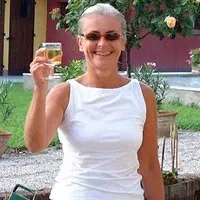
Familiar to many as the former face of the NZ International Arts Festival, Carla van Zon has established a fascinating career over the years working tirelessly for the arts. Her newest project aims to lift the profile in NZ of our closest neighbour: New Caledonia. Along with co-director Briony Ellis, she has selected artists, writers, musicians and dancers who will perform in NZ during 2007. Not surprisingly, van Zon lists "the ability to work hard" as one of three essential attributes for an aspiring Artistic Director.Familiar to many as the former face of the NZ International Arts Festival, Carla van Zon has established a fascinating career over the years working tirelessly for the arts. Her newest project aims to lift the profile in NZ of our closest neighbour: New Caledonia. Along with co-director Briony Ellis, she has selected artists, writers, musicians and dancers who will perform in NZ during 2007. Not surprisingly, van Zon lists "the ability to work hard" as one of three essential attributes for an aspiring Artistic Director.During what hours of the day do you feel most inspired?
I come up with my best ideas either in the middle of the night or when I am driving in the countryside, or on my bike (nearly always when I don't have a pen with me, although train journeys are also very good times). I am not inspired at a particular time of day but by the space to think.
How would a good friend describe your aesthetic or style?
Orange.
What aspect of your work as an artistic director gives you the biggest thrill?
Attending performances of work by great artists. Experiencing the range of feelings and the thrill you get when you are in the theatre at a great performance.
Discovering performance work of an artist that I have never seen or heard before.
Sitting in the auditorium and seeing an audience experience things that I felt the first time I saw the same performance.
How has life changed for you since leaving the New Zealand International Arts Festival, which you were Artistic Director of for six years?
I spend more time with my husband out of town in Otaki on some land we bought.
I have the beginnings of a vegetable garden for the first time in 15 years.
I have a library my husband built for me.
I cook huge meals.
I bicycle.
I have less money yet it seems like I am working twice as hard.
I work from home.
I don't travel as much.
I don't attend as many shows.
I don't go to as many functions.
I miss my international friends and colleagues.
What appealed to you most about your current project, the New Caledonia Season?
That I could learn something new.
That the project was of value.
That it was a challenge.
Few New Zealanders would be familiar with New Caledonian art and culture. What do you think are the most interesting aspects, and are there similarities between the indigenous cultures of both countries?
Contemporary arts and culture are inherently affected by the past and the present, particularly in geo-political terms. While there is still a strong traditional culture in New Caledonia, in terms of kawa and what is happening in the villages in terms of lifestyle, there is little movement happening in the development of the arts.
Both countries have tangata whenua, indigenous peoples, who have been colonised. This creates some similar tensions - repressions and desires - which can be expressed through art. Also, many of the contemporary art forms relate to traditional art forms, so we see carvers and visual artists who have a strong linkage to the past.
However, the differences are that the Kanak people are Melanesian, there are 27 different languages and the coloniser was French. There was no official treaty and New Caledonia is still a colony of France. So there is no unifying language except for the coloniser's language.
In addition, it is difficult for the Kanak to have supportive relationships with other indigenous peoples of the Pacific or the Americas, such as Maori or Samoan, because they do not have a language in common.
The majority of Kanak peoples still live outside the only city, Noumea.
Like New Zealand, there is a very small market for the arts - in fact much smaller than NZ as there are only about 260,000 people in NC in total. Of this now less than half are Kanak.
Contemporary art - particularly performance art - is quite limited. Popular music is almost all reggae in style with a Kanak beat and this is the music of independence. Bob Marley is a hero and the song "I want to be free" is heard all around the country outside of Noumea. The theatre and dance is more limited, with few playwrights. However, there is some exciting work developing - we have had one play by Pierre Gope produced by Radio New Zealand, and it will be serialised for a series of New Caledonian writing to be broadcast in November.
There is no national Kanak arts body, like a Te Waka Toi or a Toi Maori Aotearoa, which funds and promotes Kanak performance art.
There is no performing arts school, drama school, dance school, or visual arts school at tertiary level. There is a music conservatoire but it is not a full-time tertiary institution, and it mostly specialises in classical and jazz. There is little in composition or the creation of new music.
The choices are to study abroad or to make their art without further studies. If they go abroad, this generally means France. The other alternative is to learn English and come to NZ or Australia. The ideal choice, of course, would be to study in New Zealand in an environment where indigenous arts are more acceptable, at a place like Whitireia. Only one NC artist I know has done that - Patrice Kaikilekofe - and he has been instrumental in trying to make relationships with both Maori and Polynesian artists in NZ. Unfortunately, although New Caledonian, he is not Kanak but Wallis Fortunian.
So overall, I think there are more differences than similarities. A big part of the Season has been to expose New Zealanders to NC, the art the people and to create some understanding, but also to allow NC artists the opportunity to interact with NZ artists, particularly Maori and Polynesian, and to have their work exposed to a different audience.
The Season runs from February till November this year. What's on the calendar this month?
We open two exhibitions opening:
The first, War in Paradise, has been curated by Brett Mason (the director of Museum of Wellington City and Sea). Briony [Ellis] and I went to the NZ graveyard in Bourail. We walked down beside the crosses on the graves and saw the wall with the names of the fallen and were moved to tears. We then went on to the Museum at Bourail, where they were exhibiting a number of photos of NZ forces in Bourail. They wanted to exhibit these in NZ. Briony and I were fascinated, and wanted other New Zealanders to experience what we had felt walking in the cemetery and to see these amazing old photographs. Briony's grandfather had been in NC during the war so it was very special for her. Last November, I took Brett and photographer Paul Thompson to NC and from this trip Brett developed the exhibition.
The second is KANAKart - Ancestral Body. The Committee in NC who had been working on the Season long before Briony and I were involved had always had in mind to have an exhibition of Kanak Art. Briony and I spent time looking at work in the Tjibaou Centre, meeting artists, and I went up north to a big Kanak music festival where I also met a number of artists.
From these experiences, we decided to approach Helen Kedgley at Pataka, as we felt this was the best art gallery in New Zealand for this type of exhibition. Helen came up to NC with me and met Gilbert Bladinieres, the local curator who had been working on the exhibition, spent time at the Tjibaou Centre and the Museum of New Caledonia, meeting people at both institutions and talking about the potential of an exhibition. As well, Helen and I went up north to an artists' workshop organised by Patrice Kaikilekofe in Hienghene. Here Helen met Micheline Neperon, Yvette Bosquet Steve Thomo and other artists whose work features in the exhibition. The exhibition features traditional Kanak art of great antiquity and beauty and some wonderful work by contemporary artists.
Following these two exhibitions we have a Kanak choreographer, Richard Digoue, coming to create a new work on Atamira Dance Collective which will premiere at the end of September in Auckland. This show will partner with a season of the Karbal Noumea Ballet. See our website for more details and some great photos.
What's been the biggest challenge for you putting these events together?
Only having a very small team of people working on the ground here in New Zealand to put the Season together and to do all the work behind the scenes to make it happen. Luckily, they have all been dedicated and have worked longer than the hours they are paid to work.
Another big challenge has been that the majority of artists in NC do not speak English. While Briony speaks some French, mine is not very good, and neither of us are fluent enough to cope with some of the technical and legal details involved in the creation of the Season.We are very lucky that we have a colleague at the Department of Regional Cooperation in NC, Rodrigue Tiavouane, who has very good English and is himself Kanak and can communicate with artists from all over NC.
What attributes do you think are essential for an artistic director of a festival or event such as this?
An open mind and willingness to look at things from a different point of view.
A sense of what will communicate with people.
The ability to work hard.
How do you think your environment affects your work?
I can work more intensely, be more focused and find new ideas if I'm in an environment that has fresh air, natural lighting and something to look at out the window. Here today in Otaki I can see paddocks with sculptured apple trees, Kapiti Island, mountains, blue sky and fluffy clouds and everything changes all the time - with the light and the seasons.
Do you like to look at the big picture or focus on the details?
Both, although I prefer to look at the big picture and come up with the ideas than to have to do the nitty gritty. But I can do details when required.
Who or what has inspired you recently?
I generally think of this in terms of art, so here goes…
Internationally, Sidi Larbi Cherkaoui's new work Myth, which I saw the premiere of in Antwerp in June, was a real highlight for me.
Some of the New Caledonian artists like Kanaky painters Yvette Bosquet and Micheline Nepron, Wallisian composer and sculptor Patrice Kaikilekofe, sculptor Norma Song and choreographer Sthan Kabar-Louët who all work against the odds to create some fantastic pieces of art that are both beautiful and at times political. I have great admiration for them all.
Some New Zealand artists whose work, in different ways, has been a part of my life over the last year: the music of John Psathas, choreographer Shona McCullagh's new work Mondo Nuovo, visual artist Michel Tuffrey's First Contact series and an upcoming work which is part of BATS Stab season, which I can't mention yet because it isn't launched until September - but the short showing done a few weeks ago was astounding.
The other area of inspiration is always the landscape - walking, bicycling and at times driving through areas of this country and abroad. The Maniatoto was the big discovery this year in NZ and the coast of Cadeques in Spain my moment internationally. These two places lifted my spirits, made me feel alive and inspired me with dreams.
If you could go back and choose a completely different career path to the one you've chosen, what would it be?
I wouldn't change the career I have had but other things that I would like to do or would have been interesting to do are:
Be a travel writer or photographer.
Produce and direct a travel programme for TV.
Produce movies.
Work in race relations area, particularly using the arts as a tool for greater understanding (and world peace! Well, that's what one always wants, isn't it.)
Do volunteer work abroad for 6 months when I turn 60.
Be a lawyer, in a courtroom. Maybe a public defender.
Direct an international arts festival.
What place is always with you, wherever you go?
No place, just people - my husband, parents, sisters, nieces and nephews.
However, in saying that, I guess no matter where I go and where I have lived I have always been tied to the land of Aotearoa.
What's the best way to listen to music, and why?
It depends on the music, the artist and the mood but it would include:
Live in a concert hall.
Live outdoors at a Festival.
Recorded (although my own jazz band would be nice) on Saturday evening in the front room of our classroom in Otaki with the table moved back so we can dance.
Live is always better than anything recorded.
You are given a piece of string, a stick and some fabric. What do you make?
A flag for the gate to ensure people know where to come for the party.
A sun shade for people to sit under.
A bag.
A cape.
A wind break for small plants and trees.
A hanging on the wall.
A net to catch fish or crabs.
What's the best stress relief advice you've ever been given?
When people tell you to take it easy, it never works. My only stress relief really is to travel or to do physical exercise.
What's great about today?
It's sunny and I am in Otaki looking out the window from my computer, wondering if I should just go on a little bike ride to get some vegies. ( I just did this, picked fresh limes down the road and feel much better.)
21/8/07
Interview by Cass Hesom-Williams