TBI Q&A: Artistic Director Lissa Twomey
Written by
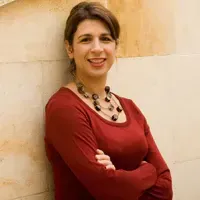
The launch of the 2008 New Zealand International Arts Festival programme is just around the corner, and this time it's an Aussie that's in charge. Artistic Director Lissa Twomey has worked in the performing arts for more than 12 years, including time as the Associate Director of the Sydney Festival. Though no stranger to our shores - her husband was born in NZ - she admits that moving outside her comfort zone geographically has been a challenge, with lots to learn about our art and audiences. The programme's a closely guarded secret till 1 November, but Twomey offers a few tantalising hints as to what's in store -During what hours of the day do you feel most inspired?
I'm not sure that there is a particular time of the day when I feel most inspired - ideas usually come to me at the oddest hours, often in the middle of the night. The fear of forgetting something often keeps me awake, so I've a pen and paper by my bed so I can jot things down and get back to sleep.
How would a good friend describe your aesthetic or style?
Clean, contemporary and with a soft edgy twist.
What aspect of your role as artistic director gives you the biggest thrill?
There are many aspects in my role as Artistic Director that thrill me, but one of the biggest rewards is when, after seeing dozens of shows, you find one that is outstanding. I see hundreds of shows and the 'hit' rate is not high! Another big thrill is when the house-lights come up at the end of a performance of something I've programmed and I can see the smiles on not only artists' faces, but also the beams of excitement on the audience's faces.
How do you think your environment affects your work?
Environment definitely has an impact on creativity. A bustling office is not the place to research, read, listen to music etc. As such, I find it necessary to lock myself away at times. When I travel, I find that I'm quite stimulated not just by the work I see, but also the places, artists and people I encounter.
Do you like to look at the big picture or focus on the details?
I do both. To formulate a well-balanced programme that will deliver in terms of artistic breadth but also box office potential, you have to continually look at the big picture. However, the detail all adds up to be part of the big picture. I'm not a hands-off manager and at the end of the day, when the lights go down in the theatre or auditorium, I want to know that we've done everything we can to ensure that the audience has an enjoyable and memorable experience.
You're launching the programme for the 2008 NZ International Arts Festival on 1 November - can you give us a few hints as to what's in store?
I'm incredibly excited about the 2008 programme and can't wait to share it with you all. We have already released three productions; the most talked about production presently on the theatre circuit Black Watch, the long-awaited New Zealand premiere of two dance-world stars - Akram Khan and Sylvie Guillem - in Sacred Monsters, and a collaboration of two icons of the music world, Philip Glass and Leonard Cohen, entitled The Book of Longing. I can't really offer any further specific hints prior to the launch, but you can expect to be entertained and challenged by great stories, current issues affecting us in the world and of course you can expect to have fun!
Prior to this you were Associate Director of the Sydney Festival. How do you think New Zealand audiences differ from those in Australia, and how does the programme reflect this?
I probably don't need to state the obvious, but will anyway. In terms of numbers the audience base in Australia is much larger. Having said that, I think that New Zealand audiences have an enormous appetite for the Festival. Despite the fact that Sydney has a population of around the same size as that of New Zealand, the 2006 New Zealand International Arts Festival sold more tickets than the 2006 Sydney Festival. This has something in part to do with the Festival's status and the fact that it comes around only every two years. There is also a very real sense of pride and ownership of the Festival amongst audiences here.
What's been the biggest challenge for you putting the 2008 Festival together?
The biggest challenge for me in putting the programme together was moving outside my comfort zone in a geographical sense. That is moving from a city where I knew the cultural landscape backwards, and having to very quickly develop an overview of not only practicing artists, but those who'd gone before and what audiences have seen to date.
What attributes and skills do you think are essential for an aspiring artistic director to cultivate?
Persistence, discernment, patience and stamina. My advice would be to see as much work as possible in all genres and not to underestimate the business side of it all. There is a lot more involved than one Artistic Director saying to an Artistic Director of a performing arts company "I like your work, please come to my festival".
Who or what has inspired you recently?
I've just been listening to a wonderful Persian singer called Haale, who with her electric band and percussionists borrow from both the ancient song and poetry of Persia. Her current EP has visuals by Shirin Neshat, possibly the most well-known Iranian artist worldwide and another favourite of mine. Neshat's photographs and films portray the emotional space of exile - she is an inspiration and role model for Iranian people internationally.
If you could go back and choose a completely different career path to the one you've chosen, what would it be?
I'd like to try my hand at being a pastry chef!
What place is always with you, wherever you go?
I travel a lot, and whilst my family are not a 'place' so to speak, I take them with me wherever I go. They are constantly on my mind.
What's the best way to listen to music, and why?
It depends on the type of music. I can't listen to classical music unless I sit down and concentrate. If I'm cooking for pleasure on the weekend, I like to listen to contemporary or jazz music. I find planes a great place for listening to music - there are not that many spaces where you are completely free from mobile phones, the internet and other disturbances.
You are given a piece of string, a stick and some fabric. What do you make?
I've already worked with that combination. I recall making a bear trap with my son a few years ago - to trap his toy grizzly bears!
What's the best stress relief advice you've ever been given?
To step out of my world and think of those less fortunate than us. It works a treat and makes you think what really matters in life.
What's great about today?
As I write this I'm about to board a plane and travel back home to Wellington.
23/10/07