TBI Q&A: Alyx Duncan
Written by
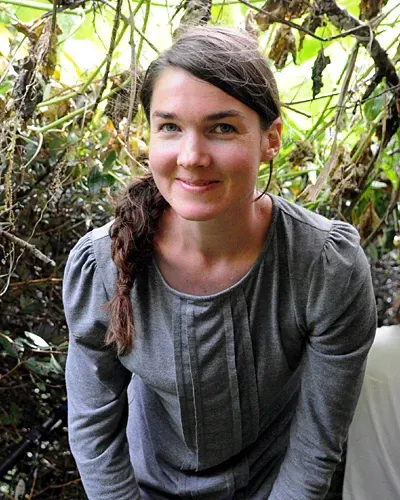
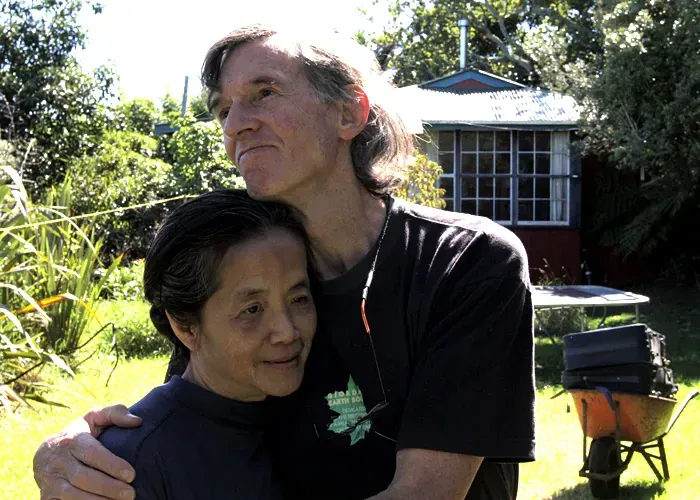
Filmmaker Alyx Duncan tells us how The Red House started out as an experimental documentary, following her father and step-mother selling and packing up the family home, but instead became a fictional story.
"Once we started shooting I found my lens was increasing drawn to the real people and so we moved to devising a fictional story more focused around characters they could play, even though they’re not actors and in fact are very private, shy people."
The Red House played at the NZ International Film Festival 2012.
***
During what hours of the day do you feel most inspired?
Late at night just when I’m drifting off to sleep, and also first thing in the morning (but only if I make myself write in a journal when I first wake up).
How would a good friend describe your aesthetic or style?
Impossible to answer that myself!
I asked my friend and she sent me this:
“aesthetically beautiful, self assured, and quietly intelligent”.
That’s what friends are for :)
What aspect of your creative practice gives you the biggest thrill?
When I’m in the thick of an idea and that moment when I realise it’s actually happening and coming together. And then when it’s nearly finished and I can see what it is.
How does your environment affect your work?
I think my environment is quite affecting and informs all my work - the current space I’m in at the time and all the history and past that has gone before.
Do you like to look at the big picture or focus on the details?
A bit of both. I tend to notice the details first and then figure out how they fit the big picture.
What's your number one business tip for surviving (and thriving) in the creative industries?
I think collaboration is really important, especially in a small market like New Zealand. Supporting your peers and colleagues in the industry and building relationships with like-minded people with a range of complementary skills
Which of your projects to date has given you the most satisfaction?
I’m thrilled to have completed my first feature film The Red House
Who or what has inspired you recently?
Driving outside of Palmerston North with John Downie and watching the wind turbines turn on the hilltop.
Tell us a bit about your background.
I grew up on Waiheke Island in the Hauraki Gulf. I studied dance in the Netherlands for a year and then returned to do an undergraduate degree in contemporary dance at Unitec in Auckland. I completed my Masters of Theatre Arts in Directing at Victoria University and Toi Whakaari in 2010. For the past decade I’ve been working between the dance and film industries as a choreographer for television commercials and teacher of performing arts and film studies at several tertiary institutions. I’ve directed several short films, music videos and live performance pieces.
Tell us a bit about your film, from inception to conception.
About four years ago now my father and step-mother informed me they intended to sell our family home and move overseas. I wanted to explore the emotions this experience conjured and I started developing an experimental documentary. It was to be located in the real environment of my childhood home, with the house as the main character. The emphasis was meant to be on the house getting packed up, all of the physical things that tie you to a home and influence your memory and identity. The human characters (my parents) were really only there as background ‘extras’.
However, once we started shooting I found my lens was increasing drawn to the real people and so we moved to devising a fictional story more focused around characters they could play, even though they’re not actors and in fact are very private, shy people. There’s something very intriguing and honest about the movement of people within their ‘natural setting’. It’s quite different to actors on a set.
The script-writing process was partly one of devising. We used a digital camera as a tool to create rough scenes. Then we scripted, and re-shot the scenes, using the real people as building blocks to reach a poetic truth. Though the film springboards from some basic aspects of Jia and Lee’s lives, it doesn’t replicate actual events in their lives.
The resulting feature-length drama is a story about the endurance of love in the face of cultural transition, environmental upheaval and the universal process of aging.
What do you hope the audience takes away from it?
I wanted the film to encourage people to enjoy taking time to think, to slow down, to daydream for a moment and allow themselves to re-discover their emotions and feelings in amongst the turbulence of daily life.
If you could go back and choose a completely different career path to the one you've chosen, what would it be?
I’m loving the one I’ve got right now. Film allows me to be really curious, about people and the world. So if I was to start again I’d probably just go about it with more precision, read and write more, and listen more closely in scriptwriting class and give myself permission to be more curious sooner.
What place is always with you, wherever you go?
Waiheke Island. I’ve spent a lot of time out of New Zealand over the past few years and it has really cemented the concept of ‘home’ for me. While working on a television commercial in Egypt (before the uprising), I had this realization that wherever I am in the world I always hold this small island in the centre of my being, which somehow keeps me feeling safe and stable wherever I go. It’s really there at the core of my identity and instills in me a sense of well being.
What's the best way to listen to music, and why?
With your eyes closed in a room without too many physical obstacles. So you can let it move you without breaking things.
You are given a piece of string, a stick and some fabric. What do you make?
A temporary dwelling.
What's the best stress relief advice you've ever been given?
You have a lot to do during your lifetime and your body alone cannot contain all the energy you require to achieve these things. Therefore you need to learn to draw energy from the earth and let this support you to do what you need to do.’ Beto Teixeira
What’s great about the NZ International Film Festival?
What’s not? It’s so wonderful to have the chance to see amazing, inspiring films from the world’s best filmmakers on the big screen. New Zealand really embraces the festival and comes out in droves to attend so you have this real sense of community and a proper lively buzz. And Bill Gosden and his team do such great work in supporting local filmmakers. Long may the festival prosper!
What’s your big idea for 2013?
Compressed time.
THE RED HOUSE - TRAILER from Alyx Duncan on Vimeo.
* * * The Big Idea 10th Birthday Questions * * *
What does The Big Idea mean to you?
Industry initiative * egalitarian * people’s space
What changes have you noticed in film in the past 10 years?
A lot!! Technological advancements now mean more people can shoot more easily without lots of equipment and crews. Film is getting less and less of a priority to finish to. Festivals project digitally. Unfortunately the digital revolution has also meant side effects such as Kodak’s closure earlier this year – a sad moment for the generations that grew up on film.
What are some of the opportunities and challenges for the next decade?
Working within our local communities. Reorienting to a petrol free life.
Alyx bio:
Alyx is a filmmaker and choreographer in genres spanning live performance, installation, video-dance, music video, documentary, television commercials, and experimental feature film making. The Red House is her first feature film. Alyx holds a Masters of Theatre Arts (Directing) with Distinction from Victoria University and Toi Whakaari and a Bachelor of Performing Arts (Contemporary Dance) from Unitec, New Zealand.
Her research investigates human perception in relation to place, culture and political context. Alongside her industry work she has taught papers in dance, digital video, and theatre studies at various tertiary institutions in New Zealand and China. Alyx is currently working on a documentary Return to the Planet Mongo, which, like The Red House is being produced between China and New Zealand. She also has a short dance film The Tide Keeper in post-production.
- The Red House played at the NZ International Film Festival, with screenings to come at Dunedin on Friday 17 August and Christchurch 19 August.