TBI Q&A: Abby Cunnane
Written by

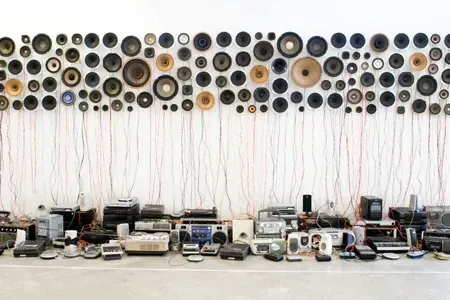
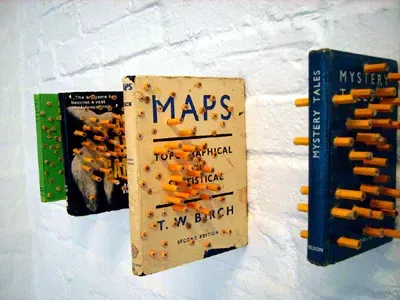
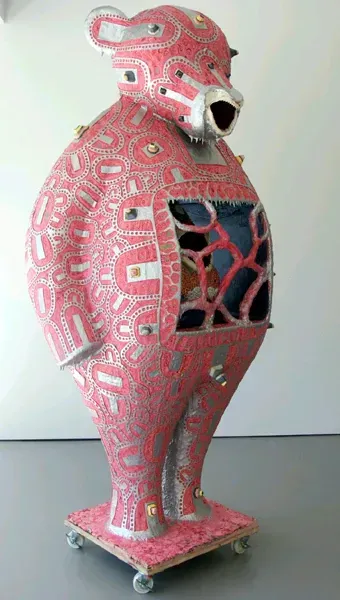
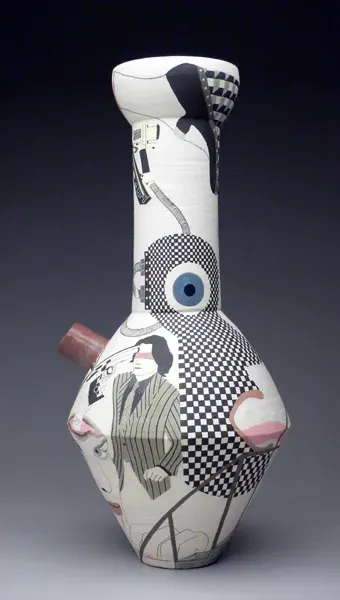
Spilling out of City Gallery Wellington into its non-spaces, surrounds and the city, The Obstinate Object: Contemporary New Zealand Sculpture brings together recent work by New Zealand artists working in a variety of sculptural modes, with a wide range of materials and concerns. Each reinforces the ‘object-ness’ of sculpture as a pressing concern. We hear from co-curator Abby Cunnane.
"The exhibition takes the gallery building itself as the most obstinate object of them all. It's important that this be acknowledged as a kind of container or object which the sculptures in the exhibition come into confrontation or engagement with."
During what hours of the day do you feel most inspired?
Early morning and late night - I’d happily edit out most of those in between.
How would a good friend describe your aesthetic or style?
Non-new, colourful, boyish.
What aspect of your creative practice gives you the biggest thrill?
Working directly with artists. Beginning new projects. Writing, especially before the first edit begins.
How does your environment affect your work?
Working around other people who love what they do gives you a lot of energy, and makes hard work satisfying. Working collaboratively is good. Most people who visit galleries are looking for something new or thought-provoking; it’s a rewarding direction to focus your efforts, and brings you into contact with a lot of interesting and interested people.
Do you like to look at the big picture or focus on the details?
Details are all. Good big pictures rely on the details being pored over by some poor pedantic small-picture person…
What's your number one business tip for surviving (and thriving) in the creative industries?
Go and see everything you can, talk about it with everyone (drink coffee).
Which of your projects to date has given you the most satisfaction?
Working on the most recent Hirschfeld Gallery exhibition A Mobile Library, which involved sourcing a temporary library of small press art and design publications from individuals. The range of artists, designers and bibliophiles involved in this project made it an interesting and enjoyable challenge. Having books and readers in the gallery is always good.
The development, with co-curator Aaron Lister, of upcoming City Gallery exhibition The Obstinate Object: contemporary New Zealand sculpture (opening this week) has been a really absorbing and satisfying time also, involving over twenty five artists and some really ambitious and exciting new projects by local sculptors. It’s always a real buzz seeing new work come into being, and there’s several which I’m hugely anticipating seeing complete.
What are some of the highlights?
One highlight of this exhibition is the reappearance of artist Don Driver's sculptural installation Ritual. The work was originally commissioned by the National Art Gallery in 1982 as part of a series of artists’ installations, and belongs to Te Papa Museum who have generously loaned it for this exhibition. The oldest work in the show, Ritual - which includes a full size farm dray, ten 44-gallon drums, a group of farm-implement brandishing dolls complete with goats skulls, and a soundtrack of drums - transforms and challenges the character of the gallery itself. Deeply unordinary, Ritual is a highly charged experience, channelling the talismanic power or energy contained within objects, an idea that resonates through many of the works in the show.
How does the exhibition challenge the boundaries of sculpture?
The Obstinate Object includes a range of sculptural practice that is defined by its focus on objecthood, that considers how ideas around the object - making, materials and physicality, the relationship between an object and its audience - are evident in contemporary and recent works. It plays with traditional boundaries of sculpture, on the one hand suggesting that sculpture is something to be made and physically encountered by its audience in real space and real time, on the other offering a range of experiences and works that may be outside of 'sculpture' as it is conventionally defined. Jewellery, ceramics, an inflatable interactive work, a waterfall, and digital models that can be freely downloaded online all fit within this elastic definition of the sculpture as object.
The exhibition is pushing outside the gallery space. Why was this important?
The exhibition takes the gallery building itself as the most obstinate object of them all. It's important that this be acknowledged as a kind of container or object which the sculptures in the exhibition come into confrontation or engagement with. Regan Gentry's waterfall spouting from the upper storey on the west facade, Scott Eady's work on the front lawn, the permanent light installation Fault by Ralph Hotere and Bill Culbert, all directly address the building itself, and show how objects jostle and demand space and attention on physical as well as visual and conceptual terms.
In addition to this, and as a key part of its push beyond the gallery, The Obstinate Object participates in a project 'The Active City: a season of sculpture', with other local galleries and institutions, each focused on an aspect of sculptural practice occurring in Wellington during the International Festival of the Arts.
How does this exhibition 'empower the sculptural object'?
The exhibition suggests that sculpture remains a vital form, and that the object has new significance in recent practice. It brings into visibility an expansive range of exciting recent sculpture, asking audiences to consider 'object-ness' as essential to the experience of contemporary sculpture.
Tell us a bit about your background
My background is in art history and english, which I studied through Victoria University. After graduating I worked with a publisher, and then the Wellington Sculpture Trust, and on an internship with a public arts organisation in the States. I started work at City Gallery in 2007. Presently I’m in Edinburgh for the year.
Who or what has inspired you recently?
Travel abroad. Most especially gallery bookshops, and museum architecture. The Natural History Museum in London. A beautiful Lygia Pape exhibition at the Serpentine Gallery, and Tacita Dean’s film work for the Turbine Hall at the Tate Modern.
If you could go back and choose a completely different career path to the one you've chosen, what would it be?
I’d like to be a pilot like my dad. I still haven’t ruled it out…
What place is always with you, wherever you go?
The West Coast where I grew up, near Raglan.
What's the best way to listen to music, and why?
Live and loud. In the dark, all the better to listen. Or while running, for the beat.
You are given a piece of string, a stick and some fabric. What do you make?
A kite – okay, try to make a kite. (It may not look like a kite, or fly.)
What's the best stress relief advice you've ever been given?
Include things you’ve already done when making a list, just so you can cross them off. Drink tea.
What’s your big idea for 2012?
Write something every day. Learn sign language.
* * * The Big Idea Birthday Questions * * *
What does The Big Idea mean to you?
A point of connection for like-minded folk. A useful, highly accessible resource, and a place to read Mark Amery’s art reviews when far from home.
What changes have you noticed in galleries in the past 10 years?
Less seriousness, more collaboration, more work which looks to the archive, or beyond the gallery walls.
What are some of the opportunities and challenges for the next decade?
Ensuring there is time and space for research, writing, publication, and critical discussion. Maintaining free access to exhibitions and events. Using online space to its potential.
- The Obstinate Object: Contemporary New Zealand Sculpture, co-curated with Aaron Lister, on until 10 June 2012 City Gallery Wellington