TBI Interview with urban planner Ludo Campbell-Reid
Written by
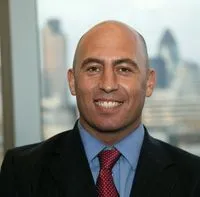
Green, connected, compact and human: that's Ludo Campbell-Reid's vision for Auckland. The Big Idea's Chris Bell asked our new urban design manager what he likes about the city and how he deals with the public's often negative response to urban design.
British urban designer Ludo Campbell-Reid became Auckland City Council's urban design manager on 15 May this year...Green, connected, compact and human: that's Ludo Campbell-Reid's vision for Auckland. The Big Idea's Chris Bell asked our new urban design manager what he likes about the city and how he deals with the public's often negative response to urban design.
British urban designer Ludo Campbell-Reid became Auckland City Council's urban design manager on 15 May this year...having been the chief executive of Urban Design London, a not-for-profit company established by the London boroughs. In London he was also involved in the Canary Wharf development on the River Thames and before that played a part in the master planning for the Victoria and Albert Docks in Cape Town. In 2003, he was shortlisted for the London Planning Awards in the category of best public sector planner.
Campbell-Reid aims to initiate a "design-led" approach to the future development of Auckland, promoting urban design at all levels within the council and the wider community, "while maintaining the vibrancy, culture and growth that characterises this unique city", he says.
It's no secret that his first few months in the job have been dominated by the controversy surrounding the location and design of the stadium for the 2011 Rugby World Cup. Since Auckland City Council was strongly in favour of the controversial waterfront stadium option, The Big Idea wanted to hear about the part Campbell-Reid played in that discussion, as well as about the bigger picture €” the future of Auckland's urban design.
Considering the confusion and high emotion of the stadium issue in Auckland what elements of best practice in international urban design could be applied in ensuring the best decisions are made for Auckland?
There are numerous examples of best practice in stadia design we could draw inspiration from. In particular, there are some beautiful designs that came out of Korea's hosting of the world cup football. Turning to Auckland, Auckland City Council supported a preference of a waterfront location with considerable conditions (including strong requests for an improved architectural design and a site location further eastwards, away from heritage precinct of Britomart and historic 'finger wharves'). The Auckland Regional Council, on the other hand, opted for Eden Park, primarily due to the potential impact on port operation and environment. The decision has subsequently been made by government to progress with the option to redevelop Eden Park for the Rugby World Cup in 2011.
You must be thinking this is 'baptism by fire' €” as a newcomer, has there been anything you could contribute to the discussion, given the objectivity of your position?
In some ways, yes, my inbox was under siege, but I was promised an exciting time by the Mayor and the executive team, and I've certainly got that! I feel the future for Auckland lies in the potential of the place. Over the course of the next decade or so, Auckland will take its place as a great world city, the first city in the Pacific. We're already in the top five for places to live in terms of quality of life, so we're some way there already. This overall vision is very real. Commitment from the mayor, councillors and executive team is strong, substantial funding is in place and I certainly wanted to play a key part in working with my colleagues and others (public and private) to shape it. Admittedly though, I did not think that the excitement would reach the fever pitch that it did during the last month or so. But debate is good and should be embraced.
How do urban planners and designers weather negative public reactions to urban planning?
Such is the nature of the role that there are inevitably going to be those that agree and disagree. But I try to stay objective, honest and true to my beliefs and expertise. Design by committee seldom works and urban renaissance requires major change, upheaval and growing pains. There will be successes and failures. More often than not, planners are blamed for the mistakes and others take the credit when things go well. Nevertheless, Aucklanders are totally passionate about their city, and this passion is infectious. This is one of the overarching reasons why my family and I left London to be part of the buzz and excitement here.
Where do you stand in relation to Auckland City Councillor Richard Simpson's comment that "Auckland is a city within a park €” this thinking needs to be the basis of Auckland's future urban planning directions"?
I had not heard that €” I probably should have €” but it is a good one and conjures up some evocative images for me, even of Samuel Taylor Coleridge's Xanadu, perhaps. As a newcomer, Auckland is renowned for the unsurpassed beauty of its natural environment but the quality of the built environment lets the side down somewhat. My overall objective is to ensure that the built eventually complements the natural. I am passionate about Auckland becoming a far more 'green' (more sustainable building techniques and so on, and also physically greener with more vegetation and fauna), 'compact' (more dense in the CBD and around transport nodes in our growth areas), 'connected' (better connected from a public transport point of view) and 'human' city (more emphasis on the pedestrian, in terms of accessibility, safety and walkability and a stronger movement to connect people and culture with place). So you see there are some strong similarities in our vision.
What lessons learned from your experience of transforming Cape Town's waterfront and London's Canary Wharf do you believe can be transplanted to Auckland?
Regeneration takes time. People need to be patient. Renaissance doesn't happen overnight. It's also quite a painful process, full of successes and failures. Both of the above projects required considerable private sector investment and expertise, clear public/private partnership approaches and an overriding emphasis on high quality public realm. That is our approach here, too.
You've said good urban design is often simply about doing the everyday, mundane things properly." Can you elaborate?
The science of urban design is highly complex, but at a base level it is fundamentally about clean, uncluttered, attractive, safe, accessible, well-maintained streets and places. Often, to achieve success requires no more than good common sense. We tend to over elaborate and over-design our cities often in response to whims and fashions. This is a dangerous approach when a city may lack a dominant historical vernacular. I support buildings and spaces of 'all time' rather than 'of the time'. 'Keep it simple' is the way to go for Auckland, but with moments of contemporary design excellence by the best designers.
Can you provide any examples of what you consider to be particularly good and bad urban design in Auckland currently?
My appointment was as a direct result of public dissatisfaction with the quality of recent developments and one of the recommendations of the Mayoral taskforce on urban design. Auckland City has listened to the public and I've been appointed to move Auckland forward €” not dwell on the past, but to learn from it.
To what extent do the creative arts and popular culture influence your urban design decisions?
Urban design is all about people. As Shakespeare said [Coriolanus, Act 3, Scene 1]: 'What is the city but the people?' It is therefore critical that as urban designers we respect and understand the needs and aspirations of the people. A high quality, built environment can catalyse the creative sectors. They are inextricably linked.
Who are your main external influences?
[Jose] Oriol Bohigas, former director of public works in Barcelona during the 1980s, Santiago Calatrava, Rudolph Giuliani and Nelson Mandela."
What's the juicy part of being an urban designer?
The whole part.
7/12/06