TBI Interview with Paula Middleton, Director of British Council NZ
Written by
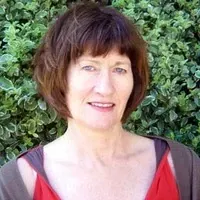
Her career has taken her to Africa, Europe and North America; from libraries to the World Bank, but in 2004 Paula Middleton came home to New Zealand to take up the post of Director of British Council New Zealand.
The Big Idea's Isaac Davison talks to Paula about the Council's history, programmes, and the differences between working in New Zealand and Nigeria.Her career has taken her to Africa, Europe and North America; from libraries to the World Bank, but in 2004 Paula Middleton came home to New Zealand to take up the post of Director of British Council New Zealand.
The Big Idea's Isaac Davison talks to Paula about the Council's history, programmes, and the differences between working in New Zealand and Nigeria.Isaac Davison: What gave you the confidence to make the shift from librarian to international director for the British Council?
Paula Middleton: Both occupations focus on the sharing of ideas. My work in librarianship helped me develop ideas around organising, and sharing information. Working for the British Council is a natural extension of this.
What does a cultural mission hope to achieve?
Unpacking the world culture is a fascinating occupation. It all comes back to knowledge, ideas, and people. In the 110 countries in which the British Council has officers we respond to the cultural environment by working with governments, NGOs and communities.
We work with creative partners to make connections between New Zealand and UK talent, often using festivals as platforms - like AK07, The International Arts Festival, and the Reader and Writers Festival,
What is the British Council's history in New Zealand?
The Council has been in New Zealand just over 60 years. It grew out of a time in world politics when Britain wanted other nations connected in a colonial network. The Council was instigated to create an enduring appreciation for British democratic values -
And are there remnants of colonialism in the British Council today? Or is the Council continually shifting?
It has definitely shifted. The reason why the Council has endured for 70 years is because its initial principles of networking are still prevalent in the modern world. It has changed to meet the world's changing face. But it is still very much based on working and changing with people.
We do not like to just write a cheque for someone else. We feel it is important not only to encourage creative ideas, but to sustain them. We ask, "How can we expose as many New Zealanders as possible to these ideas?".
The individuals we bring to New Zealand, often as part of festivals, are diverse. The key is that they are all good communicators. In the Writers and Readers Festival we are bringing over Paul Broks (lecturer in neuropsychology), Matthew Colling (art critic), and Richard E Grant (writer and director), all of whom are great communicators.
Can you tell me more about the Antenna programme?
Antenna is a product developed by British colleagues. It works with creative partners in feeding arts - music, new media, and visual media - and technology from the contemporary UK to the 'new' generation in New Zealand.
Antenna recently hosted Japanese/British film-maker and animator Joji Koyama (Wolf Wan Bau) in New Zealand to screen his work and run some workshops, and also Jason Groves from Shynola, a music video and animation company.
The British Council's role in Antenna was brokering and co-ordinating the UK arts talent and distributing it through the Council's global network.
What did you look for in the applicants for your design scholarships?
We look for talented individuals in tertiary level education, usually in fashion and product design, who will make the best of the opportunities that we open up for them in the UK.
Does the UK lead the way with programmes based around creative industries?
There are very exciting ideas in the UK currently around the regeneration of cities, and the critical role of the arts in that regeneration.
How does working for the British Council in New Zealand compare to your posts at Nigeria and South Africa?
In Nigeria the British Council's role in creative industries was a development programme. In South Africa, we had a new, post-apartheid environment to work in, and our emphasis was on new technology. In New Zealand, on the other hand, the Council focuses on the knowledge economy, and that is why we love working in creative industries.
This is my dream job - bringing New Zealand closer to my privileged experiences around the world.
Find out more about British Council events, Design Ambassadors programme and scholarships.