Surviving the Provinces
Written by
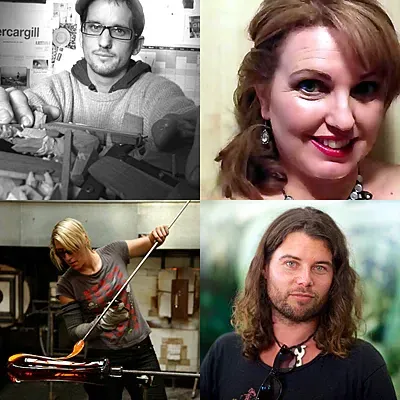
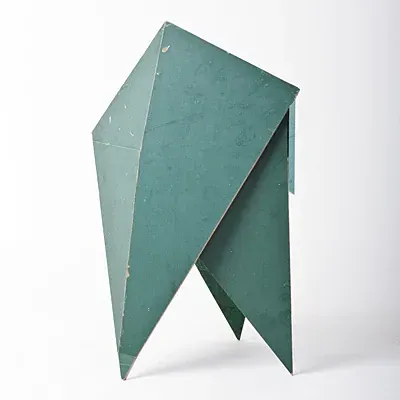
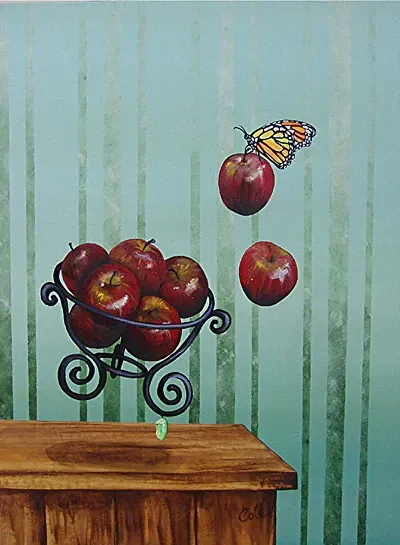
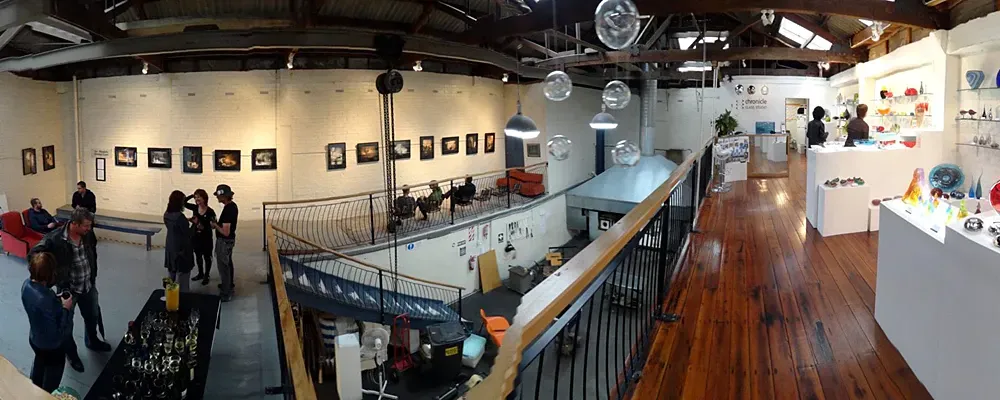
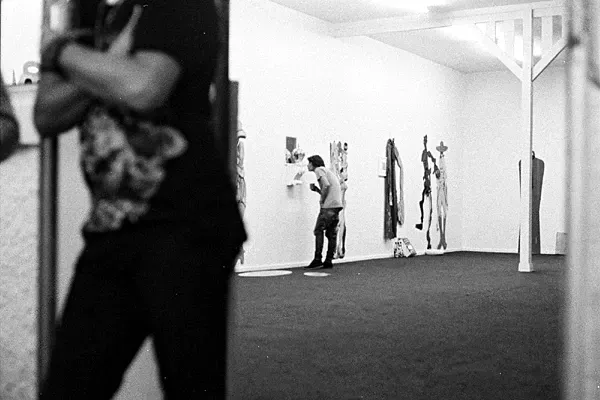
Artists and creative professionals gathered in Hawke's Bay recently for a Winter Art Symposium.
Four of the speakers in a panel discussion 'Survival Stories in the Provinces' tell us about where they live, reaching wider audiences and staying connected.
Artists and creative professionals gathered in Hawke's Bay recently for a Winter Art Symposium.
Four of the speakers in a panel discussion 'Survival Stories in the Provinces' tell us about where they live, reaching wider audiences and staying connected.
We hear from Hawke's Bay sculptor Ben Pearce, Waikato visual artist Collette Renee Fergus, Wanganui glass blower, Chronicle Glass director Katie Brown and Gisborne art dealer gallery director Paul Nache.
Winter Art Symposium: Te Ukanga Toi Auaha - Sustaining the Creative Arts, on July 12-14, is a collaboration between Hastings City Art Gallery and EIT’s ideaschool.
* * *
Do you see yourself as a local artist? Tell us a bit about where you live/work and why.
Ben: No. I choose to live in Hawke's Bay due to a large affordable studio. I have a day job working for a designer which gives me income to cover all my day to day costs. My art is then my practice and I do not rely on it to put food on the table. This gives me freedom.
Collette: Hamilton - Waikato is where I am based. I have lived in other cities including New Plymouth and Auckland. Waikato is where my family is based and I call it home because it is what I know. I am aware that the bigger cities are seen as the place to be for being successful with your art but I have never had an issue with that.
Katie: I have been based in Wanganui for about 11 years. I first moved here to go to New Zealand's only Glass blowing school and then I travelled the world, working with many well-known glass artists. When it was time to set up a studio I felt Wanganui was the place to be. It has a large hub of talented artists and I knew I needed to be around that sort of energy.
Paul: Definitely local as I was born here plus geographically Gisborne has strong magnetism for me. I wanted to open a gallery away from distractions, political, geographical, financial and trends - so I could concentrate on creating new ways to deal art around lifestyle, not demand.
What are the barriers and advantages to being in the provinces?
Ben: There are no real barriers. The internet has changed everything. Do we call a New York artist, a New York artist or an American artist? No one thinks very much about where you are from especially when you make a break for the international art scene.
I keep in touch with people and travel often for shows too which keeps me in the loop. It's a huge advantage being slightly disconnected from the art world's hubs. It's easy to compare yourself with others which leads to boring work. I know there are benefits such as a wider community or a wider audience so being in Hawke's Bay I do have to work harder on that. Although it's amazing how often people do not go to openings right on their doorstep.
Collette: The biggest barrier to living in the provinces is the cost of freighting artwork especially if you are rural, other than that I can only see advantages as access to the internet allows any artist access to the world. Smaller cities and towns also mean a more laid back approach to life which works well with creativity.
Katie: The barriers for me are in sales. I always thought it didn't matter where I set up in New Zealand the customers would come to me but this is not always the case.
The advantage was I could afford to build a studio in a small town, I simply couldn't have set up it in a big center, the overheads would have been prohibitive.
Paul: The obvious disadvantage is not having a regular flow of actual art people (i.e. collectors, curators, writers, critics, media and institutions) coming through the gallery - however an upside of this is that artists are in abundance. There are no actual barriers, it's such a global game now and if you have the correct combination of skills and motivation, geographical location is not an issue.
For me one of the major advantages of being located provincially is not being so financially constrained by overheads, enabling me more time to collaborate with my artists and communicate to my patrons, and of course share with my family. The roll the internet plays in the art world has changed all that, we rely on it through social media, websites and forums on a daily basis. Art is everywhere.
In your experience, how necessary is it to leave the provinces and move into a city of scale to advance your career?
Ben: Not at all. It does not matter where you live you still have to work hard. People making the calls and running the galleries will see what you're doing eventually. It takes time to grow a practice. It's up to you how much you want to be actively involved. I fluctuate from highly social to a recluse. I tell you I'm much happier when I'm in communication with people.
Collette: I found moving from a small city to one of NZs largest cities worthwhile at the time I did, as I was still young and learning my craft so I had more access to advancing there. Being in a small city again I don’t feel the need for that as my focus is more on exhibiting and creating rather than learning and I can do the that anywhere, what with easy access to courier/freight services and the internet, the world is my oyster.
Katie: In my experience it hasn't changed my career, I think if you have the capital to do it go for it, but if not you have to come up with other ways to push yourself out there to the nation. I am constantly promoting myself through my website, exhibitions, magazines and I've found word of mouth always to be my best marketing tool.
Paul: Cities have population, artists need audiences and dealers need sales. Leaving the province to establishing business in a main centers is not essential but it can be a good way to reinforce your reputation and commitment to the industry. It is also a great way to network. I also enjoy the opportunity to work alongside my peers in a neutral environment like an art fair.
Art fairs have become increasingly important, they've changed the gallery structure to the point now whereby some overseas galleries place 100% focus on attending and exhibiting internationally. I can do both, as it's affordable (in the provinces) to keep the gallery space open, host regular openings while exploring opportunities at art fairs and hosting pop-up styled shows in the cities.
What are some online places to reach audiences outside of the regions - how important is this?
Ben: Really important, but once again a body of work is important to gain an idea of context. And most people will only ever see an artists work through the internet so good photography is essential, if you can't do this then pay for it. It's funny but facebook is actually really great...but you really need a website to direct people back to.
Collette: Online communities like The Big Idea, Creative New Zealand, Artists Alliance, even Facebook, Twitter and Linkedin are useful for artists in general, it doesn’t matter where you are situated, most artists tend to work in isolation anyway so being a part of these online communities can be a lifeline with a wealth of knowledge one can tap into quickly.
Katie: I've invested a lot of time advertising on google. I find people today are searching the net for a wide range of products and this has helped my increase sales remarkably. Also having a business Facebook page has helped. I always try something new to see how it can improve my business and if it doesn't I will move onto the next idea. I spend time with different marketing professionals to advise me.
Paul: Great art is always great art but these days it is best to cover all platforms, become a multi-tasker.
Facebook; Theartstack and Tumblr are global social juggernauts that remain effective and easy to use. But I think it's for the individual to decide how they portray themselves across those mediums.
There are also websites like Ocula but you will need to have an established history within the industry to be invited to join, much like the art fairs. The model has changed, you barely need to physically be in the gallery anymore as art dealing is much more mobile orientated. I run my entire gallery off an iPhone.
What are some other strategies for marketing and accessing audiences when geographically isolated?
Ben: Having a website/tumblr/facebook. Entering competitions is by far the best way to guarantee your work is constantly being scrutinized by New Zealand's top art people. Another essential is to produce catalogs as much as possible as these live on much longer than the show.
Collette: Try to get involved with art shows and competitions as it gives you access to exhibiting in other areas along with others as well as a chance to sell your work, make contacts and gain a wider audience.
Katie: In my field I've found advertising through the Glass Festival which we run every year which brings about 4000 people to Wanganui. Teaching glass blowing for the general community and overseas. Being in 11 galleries through out New Zealand. Working with architects and interior designers. Which has helped me to promote myself in other areas TV and radio.
Paul: You are welcome to google paulnache as a case study and see what comes up. The phrase 'out of sight, out of mind' directly applies to the art world. You have to remain visible by using a combination of marketing tools, not just social media websites. Advertising helps to document the event/work and provide context but it also somehow validates it. As a dealer I still place a great deal of emphasis on the exhibition opening as word of mouth is still a very strong medium in this industry.
Please share your ‘surviving the provinces’ story.
Ben: I'd be wasting your time answering that as I don't feel its something to endure. My advice is to find one good friend where you live, one good cafe and one good secret spot in the wildness where no one can find you. Turn off your cell phone and draw.
Collette: I'd always wanted to go international but didn’t have access to travelling much so I got in touch with friends and family overseas who were able to mediate for me with galleries etc. It enabled me to feel safe with sending work overseas and making sure I got paid.
I also bit the bullet and entered international shows and competitions along with advertising my work on as many sites that I could which allowed me access to a wider audience and the ability to sell internationally. I don’t feel living in the provinces has held me back in any way shape or form as the internet has allowed me to virtual travel and get the more exposure with the click of a button than I ever could physically travelling.
Katie: Wanganui has been a affordable place to set up with lots of local support. We had a rent break for eight months and it's opportunities like this that I feel we couldn't have had in larger cities. Because we set the studio up as a tourist attraction it's pulled people and tourists from around New Zealand and overseas to come and watch the process and this is what has kept our business going.
Paul: I consider myself geographically blessed to own a gallery in a place like Gisborne however I have been through an earthquake, a global recession and a dissolution of a business partnership since opening. With resourcefulness, determination, innovation, and the ability to utilize technology I have been able to raise my profile. I have also educated new markets about work through media like social network websites to increase networks. In isolation, what else is there to do but work... and surf?
What’s your big idea for 2014?
Ben: To build a small two story studio from fully recycled materials with a radio mast.
Collette: I'd like to work more on my international exposure in 2014 especially the US where I have some new contacts able to help me break into that market.
Katie: My goal is to keep the studio running through these tough financial times and to produce more one off chandeliers for clients around New Zealand and overseas. My dream is to expand the operation and have another studio just as successful.
Paul: I might become an artist and not tell anyone.
* * *
Ben Pearce
Born in 1982, Palmerston North, New Zealand. Pearce completed a Bachelor of Fine Arts in 2003, majoring in sculpture at Wanganui Quay School of Fine Arts.
Exhibiting regularly in New Zealand, Pearce has work held in the public collection of the Sargeant Gallery, Wanganui, and in private collections throughout New Zealand, England and the United States of America. Pearce’s work is also held in the James Wallace art collection after becoming a finalist in the Wallace award in 2008, and in the 2009 awards Pearce's work Cavern No.1 won people's choice.
Recently Pearce has been included in Warwick Brown's new book Seen this Century, which features 100 artists, and his work Great Grandfather Clock won him the 2009 Waikato youth award. He has just had work included in Group shows exploring contemporary sculpture at The Suter Art Gallery and The City Gallery Wellington.
Collette Renee Fergus
A long artistic heritage almost guaranteed Collette would have an interest in art and so it proved. At 11 she sold her first artwork, a watercolour of Mount Taranaki/Egmont. She exhibited often and at 17 had her first solo exhibition in Auckland.
Known for her modern, contemporary work, Collette has two distinct styles: her serious, abstract works and a fun, contemporary surrealist style. Collette is also a popular commission artist with an ability to accurately interpret clients’ wishes. Her artworks sell worldwide, including in Britain, Germany, Russia, USA, Canada, Cook islands, Spain and Australia, as well as from galleries throughout New Zealand.
She has a popular website; dedicated to the growing interest in her art. www.collette.co.nz
Katie Brown
Since Katie graduated in 1999 from the Wanganui Glass School with a Diploma in Glass Design and Production,
she has worked and studied under internationally renowned glass artists in the USA and England.
In 2004 Katie returned to Wanganui to set up Chronicle Glass Studio with her business partner. This highly successful studio is the only one of its kind in the Manawatu-Wanganui region.
Katie has being involved in glass for the past 16 years. Tutoring glass blowing workshops in Canada and traveling the world to meet other glass blowers has been an amazing part of her journey. She also supports students through mentoring and when graduated offers employment.
Promoting Wanganui as the center of glass and the annual Glass Festival has always been important to her and she is currently the Wanganui Glass Group President.
Being a lighting designer is where Katie's greatest passion lies. She enjoys working with architects and interior designers on commercial projects. Many of her chandeliers can be found in restaurants and private homes in Milan, Perth, London, Florida and New York as well as throughout New Zealand.
Paul Nache
Paul graduated from Massey University and decided to become an art dealer after being inspired by what he was part of in Wellington at the time. Favouring Gisborne as a destination over main centres, he built the gallery upstairs in a historic building that overlooks the centre of the city, a couple of blocks away from the Pacific Ocean and the historical landing place of Cook.
He established the regions first and only contemporary art dealer gallery representing a family of prominent artists from around the globe. His focus at present is to collaborate more with artists, curators, galleries and even collectors on various projects, installations and exhibitions outside of Gisborne with the intent to further broaden his networks and increase the market for his gallery and artists.