Strong year for capital arts
Written by
By Mark Amery
The year in the arts in Wellington has felt marked by regrouping and rearrangement: artists exploring new ways to work together, and galleries exploring different ways to utilise their spaces and play a public role.
We saw a host of new staff in our public galleries. At City Gallery in particular this felt like a changeover year, with much play with a diversity of material and forms and how it might be presented. Te Papa meanwhile finally got the rearrangement of its upstairs space right, and has joined others in producing a faster changing exhibition programme. Galleries like CGW, Pataka and the Dowse continue to curate impressive ever-changing suites of shows, with some of the highlights often in the smallest rooms.
The Academy of Fine Arts has had a strong new lease of life under Warren Feeney and his team, identifying the gaps in representation and filling them. New Academy director Claudia Arozqueta leaves Enjoy Gallery in great heart. This year’s Enjoy programme was studded with great shows, among them those by Yona Lee, Sheilah Wilson and the Mata Aho Collective. Up the hill the Adam has smartly drawn together international connections. Powerful work by Francis Alys, Leiko Shiga, Martha Rosler and Jacqueline Fraser stayed long with me after leaving.
Much was made of Hamish McKay gallery’s reduced hours and, appropriately, the celebration of Peter McLeavey with the launch of Jill Trevelyan’s biography. This might leave the impression that the private gallery scene in Wellington is in retrenchment, but this wasn’t my experience. Younger galleries like Robert Heald and Bartley and Company have been consistently strong, representing new generations of artists, and The Young in Mount Victoria and Cecil Veda in Miramar have emerged with strong programmes.
I’ve written less than I would have liked on exhibitions at more established dealers. Maintaining the capacity to surprise with verve, standouts have included Raewyn Atkinson, Jenny Bornholdt and Shona Rapira Davies at Bowen Galleries, and John Walsh, Star Gossage and Max Gimblett at Page Blackie.
The rich potential for artists to work together taking over vacant spaces in our city, employing them in innovative ways was realised by projects like the Peoples’ Cinema in Manners Street, Occupation Artists in Willis Street’s Grand Arcade and Barbarian Productions’ Brides in Bowen House.
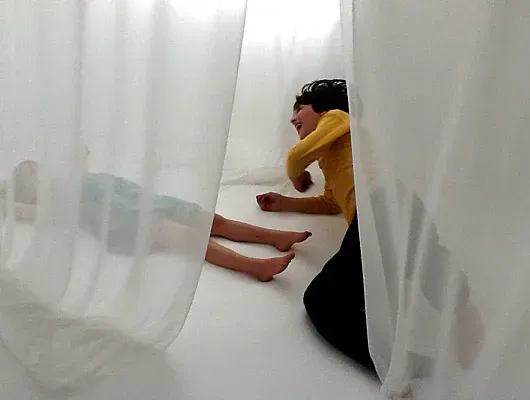
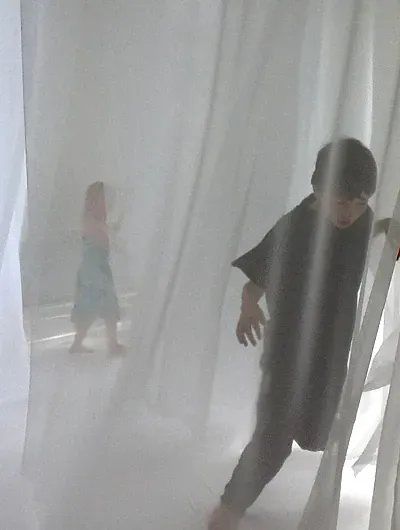
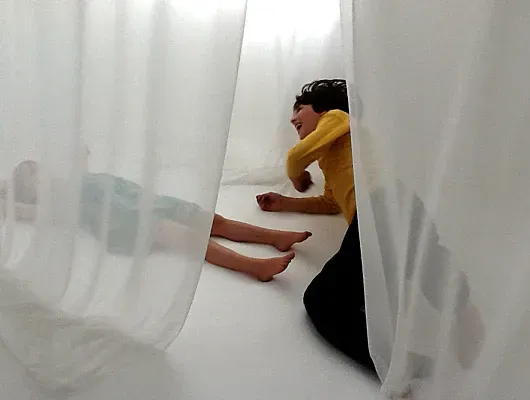
Finally, 30 Upstairs has been playing an important role as an installation space for artists young in their careers. There’s no better illustration of how its set of small connected chambers lends itself to intelligently designed responses than the current magical, immersive wonderland created by Katherine Joyce-Kellaway. I visited with the kids at the weekend and had to drag them out after almost an hour of playing hide and seek.
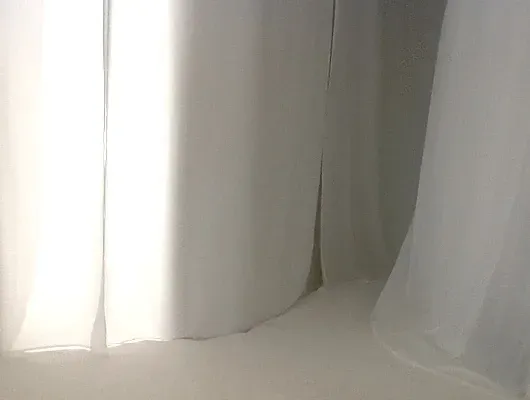
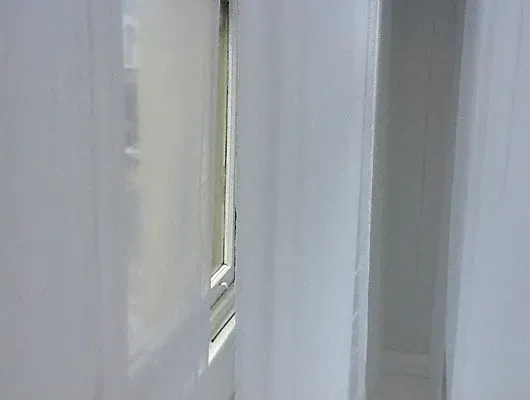
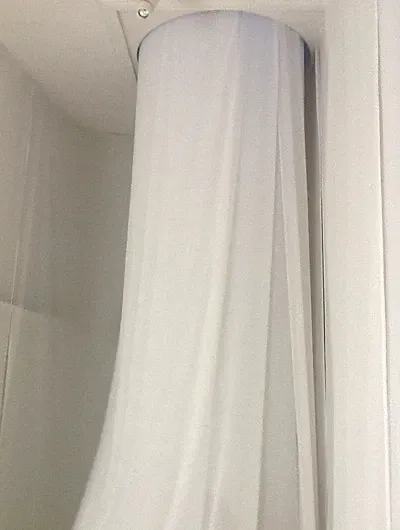
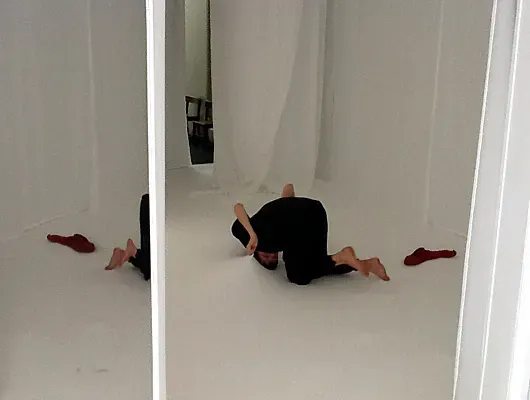
Joyce-Kellaway’s gentle, womb-like environment requires you to take off your shoes at the door. A soft sensory architecture that allows you to reflect on what is physically exterior and what interior, you enter a space that encourages you to play and breathe differently. It’s full of hidey-holes created by onion-like layers of ceiling-to-floor light white fabric, mirrors and faint sounds emanating from the surround, evoking the wind and heartbeats.
A change in state is triggered by having to feel with your hands and feet. The ground is soft and pliable, white fabric over a layer of salt. A participatory form of theatre, it’s designed beautifully to work with the natural light from the windows. The impulse to lie down or explore new postures in such a luxuriant abstracted space is strong. Like a club chill-out room, Joyce Kellaway offers a pause space in the busy city.
I’m reminded of the magic the public so embraced with the Yayoi Kusama show at City Gallery a few years back. The ideas aren’t spectacularly new. Older viewers might recall installation environments of the 1970s that saw the strains of abstract expressionism, minimalism and hippy love-ins translated into environments. There are echoes of Yoko Ono’s obsession with white and mirrored environments. Yet this work, with its constantly changing washes of light, is so delightful and sensitively designed this seemed immaterial.
- Within Outside, Katherine Joyce-Kellaway, 30 Upstairs, Wellington, until 20 December
MUST SEE
Neither peopled or in black and white, Ans Westra’s recent sharp-eyed visual commentary on our troubled relationship with the land was brought together well in Suite Gallery publication Nga Kau ki Muri this year. More strong images are currently on show at Bowen.
- I turn, again, to the landscape, Ans Westra, Bowen Galleries, until 14 December