Stephen Cleary's Business of Development Summit
Written by
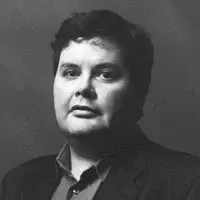
A Business of Development Summit with script development consultant Stephen Cleary will be held on November 18-29 in Auckland, two days before the SPADA Conference.
The Summit is a concentrated examination of script development for development executives, producers, directors, writers, agents and anyone interested in the mixture of creative, technical and business skills, which script development involves. It will also provide a retrospective and prospective analysis of film development in New Zealand.A Business of Development Summit with script development consultant Stephen Cleary will be held on November 18-29 in Auckland, two days before the SPADA Conference.
The Summit is a concentrated examination of script development for development executives, producers, directors, writers, agents and anyone interested in the mixture of creative, technical and business skills, which script development involves. It will also provide a retrospective and prospective analysis of film development in New Zealand.SPADA, in partnership with the NZ Film Commission and Stephen Cleary, will run the Summit at The University of Auckland.
Overview by Course Director Stephen Cleary
There are plenty of development seminars about story and genre, writing and development technique and so on, but rarely an event about the nuts and bolts of Development, which is why I started doing these Business of Development conferences in London five years ago. This is the first time I've brought the
Conference to New Zealand and it comes off the back of an extremely successful Conference in Hobart dealing with Development in Australia some three months ago.
What this Business of Development Summit looks to do is establish the context within which feature development happens - in this case New Zealand - look at how and why development has historically been done this way, looks at the results in terms of production, talent development, genres and styles of films released, return on investment, public enthusiasm and audience growth and so on. It looks to place NZ development in context with comparable film cultures and territories, and proposes other models of development business, practice and activity for delegates to consider. And, at a time of change, it gives the opportunity for a review of history, process and practice moving forward.
The Summit is a meeting place and talking shop for all NZ film professionals involved in development to share views, air grievances, propose new solutions to age-old problems. It's not enough to blame public funders or broadcasters or government or anybody else for the state of things if they're not as you'd like.
By and large, filmmakers get the development environments they deserve and if they don't like it they need to get together and work out how to change it. The Summit aims to give you the information, statistics and perspective to take a long hard look at a crucial part of your business and creativity.
I'm not here to offer you solutions from outside, I wouldn't presume to do that. But I can provoke, question and cajole. It's more important that filmmakers take advantage of this forum to get seriously involved in these issues, because if you don't, other people in other places are going to be taking decisions on your behalf and you'll be living with the consequences.
STEPHEN CLEARY - Course Director
In 1996 Stephen Cleary, then Head of Development at British Screen, founded *Arista Development*, to provide the first serious development skills training for Development Executives, Producers
and Writers in Europe.
Stephen first designed, organized and presented his celebrated *Story Development Workshops* for Arista, and the Workshops have travelled all over the world, training over 1500 filmmakers to date.
Over 80 features brought to the Workshops have been produced. Stephen's 2-day *Development Skills seminars*, *Business of Development Conferences* and *'Specials' *on screenwriting craft and genre have also played to packed houses from Copenhagen to Dunedin and many points in between.
In 2006 Stephen closed Arista and moved with his family to south-west France. He works as an international story consultant, lecturer and screenwriter. He produced the feature film, /New Years' Day/ in 2000, co-produced another, /Goodbye Charlie Bright/, in 2001, co-wrote the feature /Alexandria/ in 2002 and has rewritten a number of feature scripts as an uncredited writer. He is also the co-writer of the autobiography of the singer Nina Simone, "I Put a Spell on You" which has been published in over a dozen countries.
Draft Agenda
Tuesday 18 November
9.00-9.15 Introduction and Welcome
9.15-10.30 Session One: Setting the Scene
Presented by Stephen Cleary
The development picture in NZ today: how much money is spent on film development annually; how many projects are developed; who is developing those projects; how much privately versus publicly funded development finance there is; the national spread of development; conversion rates and the relationship between what is produced and what is developed; development initiatives in comparison to traditional development models; the number of people employed in development; development training and qualification; regulation, standards and benchmarking; things to address going forward.
10.30-11.00 MORNING TEA
11.00-1.00 International Development Best Practices
How does New Zealand sit in the context of international development best
practices?
- What is happening in Australia development and why should NZ care?
- Changes in Australia
- Where are the role models NZ might look at in the future? Are there any?
1.00-2.30 LUNCH
2.30-3.45 Development Practice and its Implications
Presented by Stephen Cleary
Key Questions to Ask When Reading a Script
Whether you're a development executive, a producer, writer or director - we work in an industry where reading and reporting on scripts is a basic part of development practice.
To many, reading scripts seems like second nature. But how do you know if you are reading a script properly? Do you have an organised method that allows you to work your own way through narrative structure, character and plot, in sequence? How do you best order your analysis into a powerful document, which will positively affect the development of any project you work on? And how much time should you spend thinking about the project in front of you, rather than writing about it? And what should you think about first?
3.45-4.15 AFTERNOON TEA
4.15- 5.30 Questions We Don't Ask That We Need to Answer
Presentation and Discussion
What is film development for? Should it be different in the public and private sector? We ask and try to answer some basic questions, and in doing so try to establish some basic principles and common ground. Questions like:
- How many projects should be developed in NZ each year?
- How much should be spent on development in NZ each year?
- Do projects at different budgets need to be developed differently?
- Should projects of different types be developed in different ways?
- If development is varied and multi-faceted, why is script reading and reporting so standardised and unvaried?
- Is the reading tail wagging the development dog?
- Is the development dog wagging the production tail?
Wednesday 19 November
9.15 - 10 45 Fundamental Story Concepts
Stephen Cleary
- How point-of-view works and why that's the most important thing in a script.
- Why is the protagonist the protagonist and why should we care?
- What is the Antagonist for?
- 20 questions to answer before writing your report
10.45-11.15 MORNING TEA
11.15 -1.00 Ground Rules for our own Practice
Stephen Cleary and Panel
- Proposing a Readers' Charter
- What Readers should expect
- The Producer in Development
- The Public Agency in Development
1.00-2.30 LUNCH
2.30-3.45 Succeeding in Development
Panel Discussion
3.45-4.15 AFTERNOON TEA
4.15-5.15 OPEN MIKE SESSION
5.15 - 5.30 Concluding remarks
CLOSE.
13/11/08
ADVERTISEMENT