Sets and the City: Innovative theatre at Battersea Arts Centre
Written by
By James Hadley in London
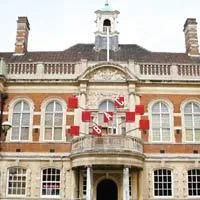
In my healthy and varied weekly diet of theatre in London, Battersea Arts Centre is emerging as one of my most frequently visited venues. It's easily one of the main places to find the pulse of emerging theatre-makers in London. I've written previously about attending an experimental theatre showing, 'Cart Macabre', where the audience were moved around in four person carts, since then I've had three further visits which have built up a bigger picture of what's on offer at BAC.By James Hadley in London
In my healthy and varied weekly diet of theatre in London, Battersea Arts Centre is emerging as one of my most frequently visited venues. It's easily one of the main places to find the pulse of emerging theatre-makers in London. I've written previously about attending an experimental theatre showing, 'Cart Macabre', where the audience were moved around in four person carts, since then I've had three further visits which have built up a bigger picture of what's on offer at BAC.First of the three was attending a Scratch Festival. A Scratch performance is a format that BAC pioneered: a public showing of excerpts from works in progress, with written or verbal feedback invited from the audience afterwards. There's minimal fuss, and you get the sense that audiences love that you have absolutely no idea what you're coming to see - it's creative pot luck, as the works in progress vary from night to night. You're led from space to space around BAC to see normally four different works.
The evening I attended these were: an irreverent piece of physical theatre satirising keep fit videos and the culture of the body beautiful; a short play about two men (one played by a woman) getting carried away by their virile prowess at a urinal; and a satire of competitiveness which consisted of a judging panel and adjudicator rating the shows in the evening's programme in terms of random criteria like how far apart the audience were when they watched each show. It was certainly a mixed bag. Rather than any formal feedback process, the audience are invited to write comments on forms in the foyer and put them in a feedback box, or chat to the artists in the friendly BAC cafe/bar.
The Scratch nights are a great way of emerging artists building a relationship with BAC. This can sometimes lead to being invited to present a season of their work within one of the studio spaces, as was the case with the next show I saw there: Iris Brunette by Melanie Wilson. This was a delicate solo show performed by the writer, who was acclaimed at last year's Edinburgh Fringe for her previous show 'Simple Girl' which is touring this year - evidence of the potential pathways that being 'noticed' at the Fringe can lead you on. 'Iris Brunette' is a fragile, haunting work. You were led into a darkened room where 16 chairs in groups of 4 formed a circle. The space filled with smoke, an atmospheric soundscape, and the lights went up on the actor/writer performing a futuristic detective story in the first person. Playing with the visual vocabulary of film noir, you were led through a series of enigmatic scenes occuring on street corners or in cafes, the innovation was that the audience were cast as all the secondary characters. Rather unnervingly, at any point you might find yourself under a spotlight, being addressed by Melanie's character. Naturally, most audience members were quite reticent to join in the conversation, which added to the sense of mystery, as you only heard one half of the conversation.
The third of my recent visits was to attend one of the hot tickets of this year's Edinburgh Fringe: Once and for all we're going to tell you who we are so shut up and listen by Ontroerend goed, Kopergietery and Richard Jordan. This Belgian production won three of the major awards available at the Fringe, and it was clear why. With nothing short of audacity, thirteen teenage performers play thirteen teenagers in an ensemble scene of chaotic interaction - which is repeated over and over, each time with a different soundtrack and slant, reflecting a different aspect of the contemporary reality of being a teenager. This was as anarchic as anything I have ever seen on stage. The audience were whooping with joy by the end at the sheer ebullience of the performance. In the hard rock version of the scene, every character seemed bent on self-destruction and you felt the full rebellion and fury of misunderstood teenagers - the stage littered with spit, blood, decay and wreckage by the scene's end. A more mellow alt country version of the scene, with essentially the same interactions, somehow communicated the innocence and joy of that stage of life. What had read as destructive now read as harmless playfulness.
Another version, performed to hard house music, had the cast triumphantly rising above their individual concerns and jubilantly celebrating as a unified group. It's hard to put into words the energy that the cast produced onstage with each version of the scene - it was close to contemporary dance in terms of the intricately repeated interactions. What was so affecting, in the manner of community theatre, was the sense that these really were young people experiencing these teenage uncertainties before our eyes, offering a chance for the audience to re-experience some of the joys and pains of teenage years, without feeling the bruises.
Read previous Sets and the City blogs
Feel free to get in touch with any questions (or if you're planning a London visit and want some theatre recommendations) to jamesstuarthadley@gmail.com
Use the comment box below
03/11/08