Home  /  Stories  / 

ScreenTalk: Larry Parr (+video)
12 Feb 2009
Courtesy of NZ On Screen Producer Larry Parr talks to Clare O'Leary about the business and art of film and TV production. Parr has been a longstanding member of the independent film industry…

Courtesy of NZ On Screen

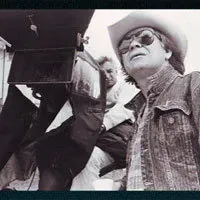
Producer Larry Parr talks to Clare O'Leary about the business and art of film and TV production. Parr has been a longstanding member of the independent film industry since working with Roger Donaldson in the early 80s (Sleeping Dogs, Smash Palace). He set up his own company, Mirage Films, to produce classics based on the books by Ronald Hugh Morrison, Pallet on the Floor and Came a Hot Friday. More recently he has been head of programming at Maori TV and is now working for Maori broadcasting funding agency, Te Mangai Paho.Courtesy of NZ On Screen

Producer Larry Parr talks to Clare O'Leary about the business and art of film and TV production. Parr has been a longstanding member of the independent film industry since working with Roger Donaldson in the early 80s (Sleeping Dogs, Smash Palace). He set up his own company, Mirage Films, to produce classics based on the books by Ronald Hugh Morrison, Pallet on the Floor and Came a Hot Friday. More recently he has been head of programming at Maori TV and is now working for Maori broadcasting funding agency, Te Mangai Paho.In this interview Parr discusses:

  • His unconventional path into the industry: "I wasn't like Geoff [Murphy], Ian [Mune], or Bruno [Lawrence] "¦" Parr had started out as a lawyer in a bank.
  • The early days working to raise the money for, and market, the iconic Roger Donaldson-directed films, Smash Palace and Sleeping Dogs.
  • Raising the finance for a slew of eighties features (Bridge to Nowhere, Starlight Hotel, Queen City Rocker, Constance, Came a Hot Friday, Pallet on the Floor).
  • The landmark 1989 Maori drama series E Tipu E Rea which he produced and which launched the careers of a remarkable number of Maori filmmakers (Lee Tamahori, Riwia Brown, Rawiri Paratene, Anzac Wallace, Wi Kuki Kaa and more). "The series was all Maori crew and cast except for three DoPs".
  • His time as head of production at TVNZ's Avalon studios.
  • The failure of Kahukura Productions and the "time in purgatory" he served between its collapse, and joining Maori Television in 2005 as Head of Programming.
  • Finishing his directorial debut Fracture and helping Taika Waititi complete his Oscar-nominated short film Two Cars, One Night.
  • The achievement of Maori Televsion: "creating a receptive audience [for Maori stories]."
  • His new role at Te Mangai Paho and his vision for a bi-lingual Aotearoa and the promotion of te reo on our screens: "just imagine what sort of country New Zealand would be if everybody had grown up since 1840 speaking both languages "¦ we'd be unstoppable!"
  • Through the ups and downs of a colourful career in independent and network filmmaking Parr reflects on his most satisfying moments, ultimately settling on the 2006 ANZAC Day broadcast on Maori Television, which changed the "social and political landscape and ensured MTS's place in the broadcasting landscape."
  • See the video interview on ScreenTalk.

    Interview by Clare O'Leary for NZ On Screen. NZ On Screen is the home of New Zealand screen content.

    12/02/09