Screen Innovation Production Fund - new recipients
Written by
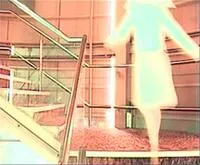
Identity and changing demographics in New Zealand's multi-cultural society are examined in several of the moving-image projects supported in the latest round of the Screen Innovation Production Fund, announced this week.
Korean-born Auckland artist Hye Rim Lee, was offered a $22,000 grant supporting the TOKI/Cyborg Project.
Image: e bang in by Hye Rim Lee who receives funding assistance in the latest Screen Production Fund rounds.Identity and changing demographics in New Zealand's multi-cultural society are examined in several of the moving-image projects supported in the latest round of the Screen Innovation Production Fund, announced this week.
Korean-born Auckland artist Hye Rim Lee, was offered a $22,000 grant supporting the TOKI/Cyborg Project.
Image: e bang in by Hye Rim Lee who receives funding assistance in the latest Screen Production Fund rounds.This series of experimental DVDs explores links between technology, the game design concept and popular culture. Dealing with issues of femininity, sexuality and fantasy, Lee presents the complex influences that contribute to a migrant Korean's identity.
Aio Films Ltd and Wellington filmmaker Ainsley Gardiner's short film, Reflections, offered a $20,000 grant, deals with bicultural identity. Mary, aged ten, becomes increasingly aware of her Maori background when she befriends a young Maori boy. Through the friendship, she gains some freedom and a better understanding of who she is. The film will be produced by New Zealandactor and Hollywood star Cliff Curtis, while rising star Taika Cohen will be director of photography.
The Screen Innovation Production Fund, a partnership between Creative New Zealand and the New Zealand Film Commission, supports the moving-image arts by funding innovative and often low-budget productions. In this funding round, the Fund received 106 applications requesting more than $1.7 million. Of these, 20 projects were offered funding totalling $270,096.
This year's selection panel consisted of Lydia Wevers (Chair and member of Creative New Zealand's Arts Board), Lawrence McDonald, Peter Salmon, Andrew Bancroft and Fiona Bartlett. Lydia Wevers said the panel was pleased with the number of high-quality applications for experimental films dealing with contemporary issues.
"New Zealand culture is developing quickly in its breadth and complexity," she said. "With so many people of different cultural backgrounds calling New Zealand home, it's great to see our filmmakers experimenting and tackling cultural and identity issues through a range of genres."
Responding to a steady increase in applications to the Screen Innovation Production Fund, particularly in the area of digital features, the New Zealand Film Commission has increased its annual contribution from $250,000 to $350,000.
"We welcome the additional funding but there's still considerable pressure on the Fund," Lydia Wevers said. "We were only able to support one in five projects and once again, many worthwhile projects missed out on funding in this round.
"This is the only fund available to New Zealand moving-image artists that actively encourages risk-taking and experimentation, at the same time pushing the medium forward."
Continuing a recent trend, documentary projects made up a large number of the applications. Six projects were offered funding. These films deal with a range of contemporary issues from the rise of the Destiny Church in Wellington filmmaker Peter B. Bell's Destiny in Motion ($14,410) and central Wellington's graffiti art in Wellington film production company Pocket String Picture'sGraffiti Project ($3600) to Auckland's urban night culture in Auckland filmmaker Briar March's Night to Day ($11,000).
One of the Fund's priorities is to support work by experimental or fine art film and video makers. Christchurch artist Nathan Pohio was offered a $8635 grant towards the production of Horsesand The Fall as part of a moving-image based installation. Horses is inspired by the wild horses of the Kaimanawa Ranges, while The Fall appropriates a scene from an Arnold Schwartzenegger film, Commando, in which a man pushes a truck off a hillside, jumps in and rides to the bottom where it explodes into flames.
Another priority is to support innovative, non-commercial projects by established film and video-makers. Auckland filmmaker Grant La Hood was offered $19,658 towards the production of Log Jam, a dance film depicting competitive wood-chopping as an exhilarating dance of men, metal and wood - a sport that pitches youth against experience.
Films supported through the Screen Innovation Production Fund are continuing to make their mark internationally. Prime Minister Helen Clark recently congratulated the Screen Innovation Production Fund after a record number (ten) of its projects were screened at the Telecom New Zealand International Film Festival in July 2004.
"This initiative clearly continues to prove its worth and I am pleased that the films produced under this Fund are being viewed by New Zealand audiences," Miss Clarke said.
Applications to the Screen Innovation Production Fund's next round close on 25 February 2005. Copies of the Funding Guide: Nga Putea 2004 - 2005 are available from Creative New Zealand offices or can be downloaded from the publications page of its website (www.creativenz.govt.nz