Reframing Ourselves
Written by
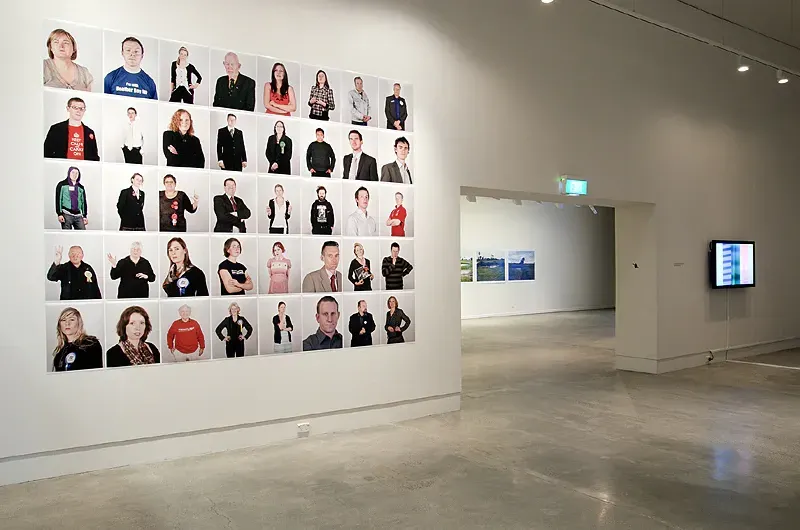
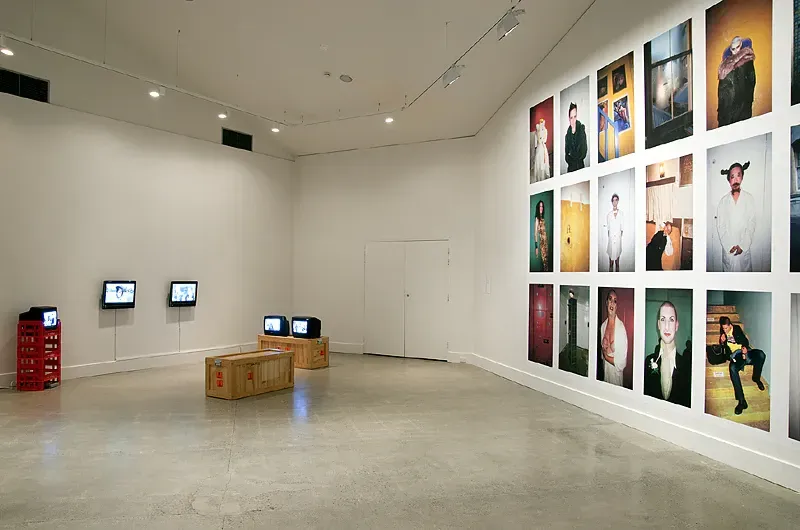
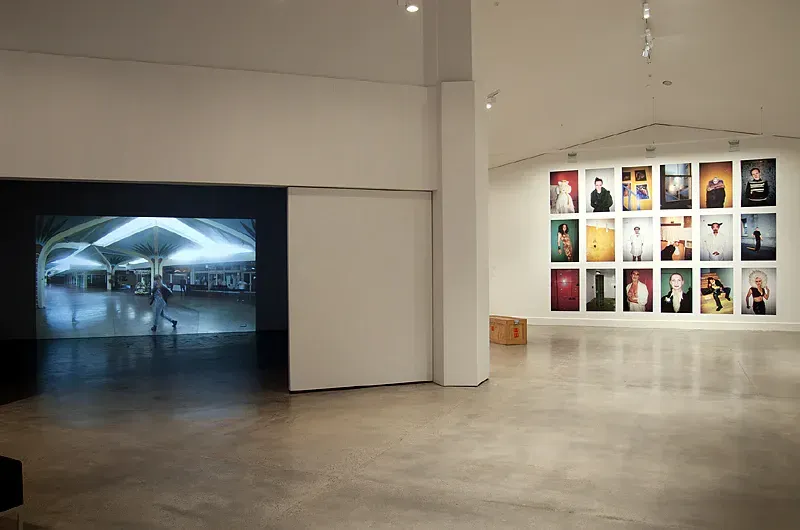
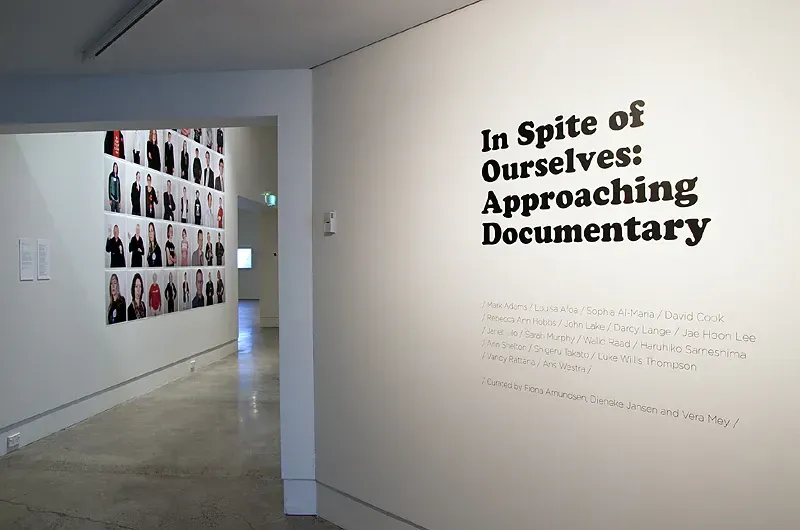
Mark Amery looks at In Spite of Ourselves: Approaching Documentary at New Dowse.
"Like the documentary of old, the artists in this exhibition wish to give voice to the ignored and the concealed, but in the sophistication of their approaches they open out the complexity of their subjects."
* * *
New Dowse director Courtney Johnston starts with the institution in rude health. With demonstrated savviness in cultural criticism and web media, and having played smaller roles within arts institutions, Johnston is a green but potentially smart choice for the job. Galleries need to relook at how they interact with communities, and The Dowse has always had a brave mind of its own.
Exhibition In Spite of Ourselves has the vital feel of the group shows Dowse curator Emma Bugden has been putting together but is in fact from Auckland’s AUT gallery, St Paul Street. Considering artists’ different approaches to the documentary, the theme couldn’t be more relevant. While once documentary and art were considered different fields (one proporting to be objective, the other subjective) today some of the strongest art being made offers fresh approaches to how lives and events are documented.
Like the documentary of old, the artists in this exhibition wish to give voice to the ignored and the concealed, but in the sophistication of their approaches they open out the complexity of their subjects. They react against an increasingly dumbed down and generic treatment of society by mainstream media culture.
The exhibition rightly takes its inspiration from Ans Westra’s seminal 1964 series Washday at the Pa. Westra was interested in showing aspects of Maori life that were the antithesis of the touristic images of their time. The other key historical figure here is Darcy Lange, who in film saw a far more socially effective form of media than sculpture. Elsewise the historical aspect of this exhibition is a little scant (the strong ‘70s images of David Cook are easy companions to Lange and Westra, but don’t offer a fresh approach to the documentary like his recent series River-Road does).
Instead the exhibition recognises the vitality of contemporary documentary based art in New Zealand. It would have been all the better for excluding the handful of international artists in favour of a survey of different ways of looking at ourselves, here. Generally for me their work didn’t push things enough to earn inclusion. Beyond omissions like Wayne Barrar, Edith Amituanai and Ann Noble, notable by their absence are Maori artists. Maori remain subjects rather than authors, despite the likes of Natalie Robertson, Lisa Reihana, Leilani Kake and Rachel Rakena having explored and radically expanded ideas around documentary from an indigenous perspective.
What this show does pay testament to is the strength of documentary led work by Pacific Island artists in Auckland currently. These artists sit well next to locals Ann Shelton and John Lake’s recognition in their respective series of the free and sometimes unexpected diversity of our cultural make-up, disrupting our easily formed stereotypes.
One of my favourite works is Rebecca Ann Hobbs’ film of dancers in an empty Mangere Mall ‘waacking’, a form of street free-styling that began in Black, Hispanic and Gay nightclubs in America. Beautifully framed and paced, the work feels both spontaneous and structured. Dynamically claiming public space, movement is mirrored and then uniquely, seemingly casually reinterpreted by each individual.
Strong too is the exhibition’s attention to the way technology effects the way we treat information. Particularly smart is Luke Willis Thompson’s affecting presentation of photographic records of mass unmarked graves of immigrant workers in Fiji. Shuttle zooming through hundreds of images on an old microfilm machine - having to physically shift at excessive speed through this quantity of tragedy – makes for, in this digitized point and click world, pointed and poignant comment.
- In Spite of Ourselves: Approaching Documentary, at New Dowse until 2 December
Also not to be missed
A man walks down a dark country road, the film all gritty textures and mesmeric blur. -This is a beautiful, musical, impressionistic piece, where film is an emotional fabric. Your senses and your sense of yourself are heightened.
SJ Ramir’s Disquiet, until 29 September, Film Archive Wellington