Rated E - Copyright law protects original movie versions against cleaned up
Written by
Rated E - When it's wrong to leave nudity, sex and violence on the cutting room floor
By Rob Batty
In the last five years, a unique industry has developed in the United States which specialises in the sale of DVD versions of Hollywood movies, such as Titanic or The Godfather. Yet, in these versions, digital corsets cover Kate Winslet's nudity and Don Corleone lips occasionally move without sound. When a film is altered, a directors' reputation, vision and unique presentation to audiences may be compromised. Rated E - When it's wrong to leave nudity, sex and violence on the cutting room floor
By Rob Batty
In the last five years, a unique industry has developed in the United States which specialises in the sale of DVD versions of Hollywood movies, such as Titanic or The Godfather. Yet, in these versions, digital corsets cover Kate Winslet's nudity and Don Corleone lips occasionally move without sound. When a film is altered, a directors' reputation, vision and unique presentation to audiences may be compromised.To protect their work against unauthorised editing, film directors in the US have turned to copyright law. As this article will explain, copyright law in New Zealand may also provide recourse for directors who feel that their works have been mauled in a new editing suite.
CleanFlicks v Steven Soderbergh
Last month, a District Court judge in Colorado ruled that companies (including CleanFlicks LLC) that edited sex, swearing and violence out of Hollywood movies were liable for copyright infringement. These "clean movie" companies edited movies by copying the movies onto hard drives and then deleting or adjusting inappropriate scenes (according to their own guidelines). The "clean movie" companies had initially sought a ruling that the products did not infringe the intellectual property of studios or directors. The aggregate copyright holders of the films, including studios MGM and Time-Warner, and a group of prominent directors filed a counter claim for copyright infringement.
The Decision
The "clean movie" companies asserted that they were making fair use of the copyright works. The US fair use doctrine requires the balancing of four factors to determine whether non-licensed incorporation of copyrighted material in another's work is fair. It is unique to the US and provides an affirmative defence to copyright infringement.
The "clean movie" companies asked the Court to apply a new public policy test under the fair use doctrine, which took into account that they were criticising objectionable material commonly found in current movies, and that they are providing more "socially acceptable" alternatives to enable family friendly viewing. However, this argument was roundly rejected. The Court said:
"This Court is not free to determine the social value of copyrighted works. What is protected are the creator's rights to protect its creation in the form in which it was created."
The Court granted a permanent injunction restraining the companies from distributing unauthorised edited versions of the films.
The New Zealand Position
In New Zealand, the Copyright Act 1994 (Act) does not provide for such a general fair use doctrine. Accordingly, if decided here, the case would have been decided in a more straight-forward manner. Under the Act, it is an infringement of a copyright owner's exclusive rights for a third party to copy a whole or a substantial part of a movie without the copyright owner's permission or licence.
In a similar factual situation as the CleanFlicks case, it is possible that a person who copied and then edited movies to remove items regarded as offensive may try to argue that there is a public interest justifying an infringement of copyright. As with the CleanFlicks case, we consider a New Zealand Court would not extend New Zealand's public interest defence to provide a positive right for a person who is not the director or author of the film to alter creative and entertainment properties.
In a case where the director of a film is not the owner of the copyright in the film, and the copyright owner does not object to the copying and alteration of a copyright work, the director may be somewhat powerless to prevent their work from being significantly altered and redistributed by relying on traditional copyright infringement principles.
Recently film maker Barry Barclay requested that his name be removed from the credits of one of his film documentaries, The Kaipara Affair after it was recut and edited for television by the producer without his knowledge. Barclay described the recut as "hurtful and abusive", and said that the television edit effectively rewrote the storyline, in particular, marginalising the women involved. In response, Barclay wrote to the Prime Minister, and the Board of New Zealand on Air asking for a freeze on New Zealand on Air's production funding until the protocols were established.
Moral Rights
It is possible that his contract relating to "The Kaipara Affair", Barclay waived his moral rights, introduced into the Act in 1994. If not, Barclay may have found appropriate recourse in the moral rights provisions of the Act. These provisions can be traced to civil law systems, which developed copyright laws from the standpoint of authors' rights.
Moral rights include the right of the author to be recognised as the author of a work and the right of an author not to be falsely attributed as the author of a work.
Derogatory Treatment
Relevant for the present case is section 98 of the Act which provides that:
The director of a film that is a copyright work has the right not to have his or her work subjected to a derogatory treatment.
This moral right is limited in certain respects by definitions in the Act. First, the definition of "treatment" is limited to include any addition to, deletion from, alteration to, or adaptation of a copyright work. It does not (directly, anyway) cover derogatory treatment by inappropriate association. For example, it may be socially inappropriate to have a heavily religious film featured in a gay and lesbian film festival.
Secondly, section 98(1)(b) of the Act provides that the treatment of a work is only derogatory if the treatment is prejudicial to the honour or reputation of the director. The test as to whether there has been damage to the director's honour or reputation is an objective one. Therefore, a director must establish that the treatment of the work prejudices the director's honour or reputation as an artist. It is not sufficient that the director is merely aggrieved by what has occurred.
Perhaps reflecting the limitations surrounding moral rights under the Act, there have been no cases in New Zealand which discuss what "prejudicial to the honour or reputation" means in this context. However, some commentators have suggested that it will be likely to include an assessment from a reasonable person involved in the relevant industry.
The Public Interest In Protecting Creative Expression
Notwithstanding those limitations, the treatment of "The Kaipara Affair" potentially falls within the derogatory treatment concept as, in Barclay's view, (and from the view of reasonable directors in the industry) it would have been prejudicial to his honour to be associated with the edited version.
"The Kaipara Affair" may have provided a prime example of a director successfully asserting his moral rights to prevent the screening of a re-edited film. There may have been some issues to relation to establishing derogatory treatment to an objective standard. For example, would a reasonable person in the industry have considered cutting a 133 minute film to 70 minutes to be prejudicial to the honour or reputation of the director? Moreover, what role would cultural considerations have played in this objective assessment?
In our view, those considerations could all be overcome by Barclay and this case would have fallen squarely within the protections provided by the Act's moral right provisions. These protections can be of fundamental importance to the creative integrity of film directors and authors. As the CleanFlicks case suggested, there is a strong public interest in providing such protection for creative expression. Underlying the protections offered by copyright law is a clear message to those who think that particular films are offensive or are a corrupting influence, that the answer lies not in mutilating existing material but encouraging new films in the marketplace.
***************************************************************
Rob Batty is an intellectual property specialist with Simpson Grierson www.simpsongrierson.com
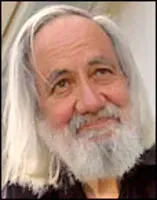
Image: Rob Batty considers a recent American film copyright case in relation to NZ law and looks at the case of Barry Barclay's "The Kaipara Affair" which was recut for TV.
22/8/06