Q&A: Shirley Horrocks
Written by
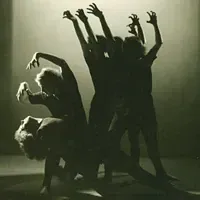
New Zealand Director/Producer Shirley Horrocks answers questions from The Big Idea community about her documentary Dance of the Instant.
See the comment box below.
The film won Best NZ Short Documentary, Best NZ Research and Best NZ Educational Documentary in the New Zealand competition at the Documentary Edge Awards, held on March 3 2010.
* * *
Dance of the Instant
The New Dance Group pioneered modern dance in the period 1945-1947. The Group was controversial, years ahead of its time but a forgotten chapter in New Zealand dance history.
Filmmaker Horrocks and dance historian, Marianne Schultz evoke New Zealand’s post-war mood – a time of optimism and excitement, with a new sophistication emerging in a previously old-fashioned and provincial society. They capture how a young group, without money or institutional support, succeeded in creating something new in the arts, by sheer determination and innovative thinking.
Members included: Czech refugee Edith Lennart who learnt modern dance in Europe, Philip Smithells then head of the Physical Education programme in schools and considered a visionary, His wife Olive together with Rona Bailey, a Physical Education instructor who studied modern dance in the USA with dance pioneers such as Martha Graham were the other members. They collaborated with other prominent artists including dramatist Bruce Mason and Brian Brake, a brilliant photographer.
Shirley Horrocks
Shirley Horrocks (born in Auckland, New Zealand) has specialised in documentaries about artists. She has run her own production company, Point of View Productions, successfully for 25 years. Her work has won a number of awards and receives festival screenings around the world, in addition to television screenings in New Zealand and Australia. Many of her films (including Marti) have been shot by Leon Narbey (the DOP of the feature film Whale Rider).
Horrocks has made documentaries about the leading artists of New Zealand including poets (such as Allen Curnow), novelists (such as Albert Wendt), painters (such as John Reynolds) and photographers (such as Marti Friedlander). She concentrates on artists that, in her opinion, deserve to be much better known internationally – their work has been obscured by New Zealand’s marginal position in the world.
She aims at immersion within the artist’s world and mind, so that her subjects tell their own stories in their own particular style. This involves a process of quiet observation and dialogue over several years. At the same time, Horrocks focuses closely on the artist’s social contexts. And an extensive search for archival material – from news footage to home movies – adds a rich texture to her reconstructions of the artists’ early lives.