Pasifika Playwrights: Who Told You, You Couldn't Write About That
Written by
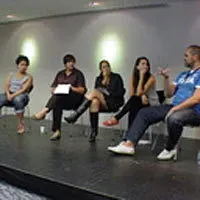
Courtesy of Playmarket News
In March Pacific Island theatre practitioners and others from the theatre came together for an afternoon of discussion and play presentations as part of Playmarket's fourth Pasifika Playwrights' Development Forum, funded by the Auckland City Council at Auckland's The Edge.
This panel discussion "Who Told You, You Couldn't Write About That"
considered the questions their plays raise about what others expect them to write about. Are there restrictions on what the Pacific experience is? Who controls those stories?
Courtesy of Playmarket News
In March Pacific Island theatre practitioners and others from the theatre came together for an afternoon of discussion and play presentations as part of Playmarket's fourth Pasifika Playwrights' Development Forum, funded by the Auckland City Council at Auckland's The Edge.
This panel discussion "Who Told You, You Couldn't Write About That"
considered the questions their plays raise about what others expect them to write about. Are there restrictions on what the Pacific experience is? Who controls those stories?
Chair: Teresa Brown, NZ Actors Equity
Miria George, Playwright
Victor Rodger, Playwright
Louise Tu'u, Playwright
Arnette Arapai, Playwright
Vela Manusaute, Playwright
Teresa Brown: As an opening question, can I ask the panel to talk about some productions you've been involved in or devised recently? Just as a brief background for the audience.
Vela: The last thing I did was 'Once Were Samoans' about half cast Samoans who've got Maori blood. What? Some Maori going to tell me. I can't write about that? Yes, I can write about that. Just want to say to Teresa, that being a writer is the most powerful thing there is, whatever your writing the actor's going to speak out. You got to tell a good story that has meaning placed into it. When I wrote about 'Once Were Samoans', I knew I was dealing with Maori issues in it, and I have a lot of Maori friends, and I do care about the Treaty of Waitangi , I'm probably the only Samoan that does.
Louise: The work you just saw was called 'Providence.' I have been working on it since December. It's about a homeless guy. Most homeless people in Auckland are Maori. I have done research on that. Still working on it. Ironically the play I wrote before that was about two sewer rats who are from Cyprus, and who are art curators. So the first thing I wrote was the only Pacific thing so far.
Arnette: I've written 2 plays, 'Love Handles' where Vela was the Director and Jenni Heka was one of the main characters. I produced that on stage at Maidment Studio. After that was 'Miss South Pacific' written and produced and staged at Maidment Studio again. My next play is out in June called 'Running with the Bulls'. I centre on the Maori and Island theme. And I'm really happy that Vela has brought that up because I was a bit iffy about it, but now what the hell I'm going to go for it. So June 18th to June 21st, all booked in and ready to go.
Miria: Kia mai tatau. I am Miria, my last play was called "and what remains" and in May to June of last year I travelled to the UK and did two seasons one in Cambridge and one in London. The premise of the play is that all Maori had left New Zealand and it is set in 2010. The last Maori is on her way out. The play was developed in 2004 at Pasifika Playwrights, and Jason Greenwood was there as well so it's good to see him writing.
Teresa: Kia ora Victor, we've heard enough about you doing so well. What sort of restrictions, challenges or barriers have you faced as a Pasifika playwright?
Victor: My Name Is Gary Cooper sort of answers that. I finished it in Samoa when I was on holiday last May and I thought 'If this ever came to Samoa I'd been stoned'. When it went on last year I braced myself for that because the thrust of it is about a Samoan guy getting revenge on his dad by sleeping with his half brother and sister, and his father's wife. And there was a gay kiss, there was a brother sleeping with his sister, and there was a little bit of quasi-incest thrown in for good measure. I went there and I was ready to get stoned because I believed in what I was writing, and it was the story I wanted to tell. I am always of the school that you just go there, so long as you have got a reason behind, rather than just for the sake of going there. If you've got a reason you go there. Just be ready to get stoned.
Teresa: And Miria, do you have any challenges or barriers that you've faced and have struggled from?
Miria: That was and what remains I was called a separatist and a racist for it. The set up for it was that the liberal government who were currently in power in New Zealand had knowingly sterilised the female Maori population, and hence either you stay in the country and be sterilised or leave. There were more than enough people telling me that I shouldn't write about it. So I think for any of the new writers coming through one of the most important things that you should know is when to stop taking onboard people's feedback and criticisms.
Teresa: Arnette, barriers and challenges...
Arnette: I guess when I wrote 'Miss South Pacific' I had a scene whereby Miss Samoa and Miss Tonga were having a confrontation and Miss Samoa accuses Miss Tonga of being a horse-munching murderer. The story is that Miss Tonga's family cooks a horse in the paddock and then fricken slaughters the horse and put in the umu for their lunch. That didn't go down well, and a lot of Tongan friends were quite upset about that. To me it was well hey, you grow up in the 80's and you go to Auckland Girls Grammar and you are of Nuiean and Cook Island descent and you have the Tongan girls on one side and the Samoan girls on the other and you immediately know there are some rivalries and I wanted to write about that. I am going to write it or somebody else is going to write it. So be prepared to get stoned and criticised because that's what a playwright is, you are going to be criticised -and I am going to be labeled a stirrer. I took the piss out of the dusky maiden and was told I was making fun of Pacific sisters. Well I was making fun of Pacific sisters and I am not ashamed to say it because they make fun of us, so I turned around ten years later, made fun of them and put them on stage. So to me, yeah I am being stoned from the back and knifed from the front but I am going to stand there and take it. So that's my beef.
Victor: It's interesting having worked on Shortland Street. One of my least favorite things when I was on the storyline table was having Epsom housewives tell me how my people acted, and the same for my Maori colleague at the time. As minorities we are very rarely in charge of how we are represented. But you know being a Gemini I can see the other side... sometimes it works out well. I was over the moon when I went to the opening night of Gary Cooper that Roy directed, a white man and a former colleague at Shortland St.
In the industry you do get a lot of people with a limited frame of reference that we think it is a lot bigger than what it really is. They're telling you, "Because I experienced this cleaner doing this its like this...". The Polynesian experience is not a generic experience which I think a lot of people and sometimes people within our community kinda think, and that's something I am conscious of. When I was in Hawaii and I gave a talk about my work at the University of Hawaii I got attacked by the cultural credibility police, who weren't really down with what I was talking about. Go there, get ready to get stoned.
Miria: I think it goes back to the conversation that these guys were having earlier. It's about control. Who else is going to programme these stories that don't fit into the box, that don't reflect a generic Pacific or Maori or whatever experience. Yes we have a huge raft of fantastic talent, but that doesn't programme what goes on in mainstream theatres, that's why we totally need a venue. We need our own venue where we can put forward fresh work. That's why as a playwright I produce with Tawata Productions. I honestly think that is the only way I would see my work in this country. The first place my play gets invited to go to isn't Palmerston North, it isn't Auckland, it's the UK. Why is that?
Teresa: Just picking up on that actually why do you think that it is easier in some aspect to show Pacific or Maori productions overseas and to be funded and played overseas?
Louise: I think in a way we are still exotic. I just had my first play Le Tauvaga read in New York, which Victor was part of. Americans are open to the point of being completely naive. I think they're more prepared to go with the risk where as here we are just still kind of competing with ourselves. Which is why this forum exists, but you need to get more of the younger people, they're the legacy basically. We are preaching to the converted.
Yes questions, Nathaniel?
Nathaniel Lees: I am interested in the women writers, were there any cultural taboos that you had to overcome to write what you wanted to write about. You know growing up there are things that Pacific Island women and Maori women can't talk about, can't be part of. Are there things that you had to overcome so that you could talk about them in your writing?
Miria: My Cook iIland whanau were just happy that I hadn't been arrested and that I was taking the risk to express myself as an artist.
Arnette: With my first play "Love Handles" my mum was horrified; she was like "you know Arnette, every family have skeletons in the closet". I was like, "in our case we have got a fricken graveyard", and as far as I am concerned I am going to write about it. It's not even based on what happened to my grandparents, it's all fictional but I think that your parents they take it to heart that it's there story being told... I am really mindful of my mum and my dad being in the audience. My dad came up and said there's a lot of swearing, you don't really need swearing, YES I do need swearing, it's my generation we swear all the time!
Teresa: Louise, your mum's in the audience...
Louise: My parents are always in the audience, put your hands up.
They have always been supportive just by turning up. I love taking them to the theatre because my Mum really hates the theatre. She thinks it's the most fucking boring thing on earth. The only thing they got excited about was 'Muja 'which was an African dance group. Otherwise she just falls asleep. I think I had to wake her up through Black Grace. I said Mum, it's a Samoan song , she goes Arh! I know Samoan songs. Dad likes to see if there are any Shortland Street people here.
Teresa: Vela you're an example of very successful production company. Is there advice you've got for people to get to the level you've got?
Vela: It's all about hustling, like there is no one like me, honestly, there's no one. I can turn a 'My name is Gary Cooper' into a DVD next week. That's how good in bed I am! I can you tube that! You know I really want to break into films. And no one is gonna give me a million dollars - "here ya go brown boy it's your turn" - and that's the only reason why we set up. If any of you guys have been to my studio it's a production house and we have a recording company. You've just got to do it for yourself, you can't wait for Roy. It's actually a product, and I write for a certain audience I know my audience, I write for a certain audience. You got to know who your audience is.
Hone Kouka: Speaking as one of the few Maori here. You have five playwrights and three of you are writing stuff about Tangata Whenua I think that's really awesome. It really awesome to hear other people's view of us. I think the question is: why?
Arnette: Running of the Bulls... It's about our Pacific Island pioneers back in the 40's and 50's who literally came into NZ and didn't settle in Auckland and went further afield to Tokoroa, to the East Coast. And these Pacific Island people couldn't speak English, hooked up with Maoris, married them and then stayed there. I'm talking about my Uncle, K don't laugh, his name is Beverly Hills. We call him Uncle Hilly, that was his name. He settled down on the East coast. He never left. When he died he wanted a piece of Niue on his grave. These Maori born and bred kids had to ask my Mum, where the hell is Niue. So 'Running with the Bulls' is based on that story. But it goes a step further. It's about a Maori family going back to a Samoan family who have been there for 50 years and saying we want our land back. And being Islanders you know they don't give over their land they take up arms and you fight for your land. So sorry it's going to be confrontational. But you heard it from me first here. So if you don't see me for the next six months you know what's happened, Tama Iti's come to get me.
Vela: The license is that I grew up with a lot of Maoris, I spent most of my time robbing houses... nah! 'Once Were Samoans' it's all about the issue of every year they come together every year and they protest about the treaty of Waitangi. It's as simple as this, the Samoans say lets just go down and burn the building down. Burn the parliament building down. Get it done with. And that's just me that's my voice saying I'm sick and tired of the same thing every year ... here we go, they're going to march... do something!
It has to have meaning to it, you can't go like and diss another race, you don't want them coming to the theatre and giving you a hiding or something. Then again it's a Samoan play, so who would turn up?
Teresa: Louise you have Maori characters in your play.
Louise: Yes my lead's Maori, basically from research there was mainly Maori and Pakeha people who are homeless. I mean you can easily recognise the Samoans because my parents usually know who they are.
Teresa: I'm just wondering what the panel view about Palangis writing Pacific island characters.
Vela: Let's go! That's what we really want to talk about! Bring it on! Bring Dave Armstrong on!
Arnette: I think it's fantastic for me personally. I don't think we have the right to tell a Palangi person: "No you can't write about that because you don't know." I don't think that's right. You want to write about Mongolia then write about Mongolians, you want to write about Islanders then write about Islanders. It's great it's more writing about us. So You're a playwright you shouldn't have limitations. For me for example it's like 'I can't write about Tongan women because I don't know anything about Tongan women.'
Vela: The example is Dave Armstrong. He's written a play, the book has been out for 10 years. I keep thinking, and this is me, what does he know about Pacific culture? He taken pages; he knows the structure and the winning formula and just adds them on. I just think it should have been given to a Pacific playwright. It's about career. It's a career move; I mean he can write what ever he wants to write about. But why?
Roy: As far as I know every single word in the play is Sia's. It's adapted by Dave; Dave approached ATC with the idea to do it because he loved the book. Sia, who wrote the book, she granted him the right to do that. Now, it's her story, it's her book, she controls that material. So your argument is with her.
Miria: I don't know what arrangement the author and the playwright have. I think it's always healthy to question it though, because when you experience life from a different way of seeing the world, you have different ways of doing things. You can relate to experiences but they're not the same.
Teresa: I suppose the larger question is whether or not we restrict what stories are being told about us by restricting who tells them? Or is it just better to get those stories out there anyway. Paki I over heard you say a playwright is a playwright is a playwright.
Paki Cherrington: You start putting restrictions on that, Shakespeare would have only written English plays. They can write about what they bloody well like, I might not like it having read it or trying to act it, but hey you're restricting them. To say "No, you must come from that culture to be able to write about it." That's a load of codswollop.
Teresa: Tanika Gupta when she introduced herself before the reading of 'Fragile lands' said specifically 'I'm a Playwright. I'm not an Asian playwright; I'm a playwright and happen to be Asian'. Have any of you guys been labeled particularly because of your culture first and then your profession? Does it bug you?
Victor: Of course, but I mean we're always going to be 'other', you know in the context of here. It doesn't bug me it just is.
Miria: I think it's always important to remember that we define what Pacific Theatre is, we make it. So you can't tell us what the shape of it is even though you might think you know the shape. But we're the creators. So we make the shape and it has no limits.
Nathaniel Lees: Does the quality of what you write, have any influence on whether you can write about a different culture? If what you write is shit about someone else's culture does that mean you can write about their culture?
Arnette: I'm of Nuiean descent NZ born. I hate saying that, the NZ bullshit, but I don't know how to speak Nuiean. What I identify with more is the Samoan and I know more Samoan words than I do anything else, apart from English. I get accused, when Nuiean come to see my plays, they say "that's such a Samoan play and she's Niuean." What the hell are you supposed to do? I've been told I should be writing more about Niueans. I can't write about Niueans I've never lived in Niue.
Paki: It's just a little rock. My mother's from Niue.
Arnette: Yeah, you see your damned if you do and your damned if you don't. You're still going to get criticisd. You get told that your play's shit; hey you had an opinion that's all that matters. I'd rather someone have an opinion than go I didn't think anything of it.
Jason Greenwood: It's all stepping stones.
Dianna Fuemana: Just harping back to your question about who can write what. On the stage what you have is young Pacific people telling Pacific stories. We're not pushing the Kiwi white story, we're pushing our own stories. Why is there Pakeha not telling their own stories but wanting to tell our stories as well?
I guess for some writers that seems to be an issue. I guess the other side is many of you are not writing for Palangi. I know Louise your new one is, and I've written a show that features a Palangi man - my best known work. But you know we want to continue to tell our own Pacific stories, whether its Samoan, Nuiean or Maori. There is a conglomerate of Pacific nations that we are writing for.
I guess the thing is when we look over and we see palangis writing about us it's like OK, what is that about? Are you enriching the work and adding to the work and making it a NZ Pacific thing that we do all together. How come you're not writing for your own?
You see all these Pacific writers and a potential to branch into theatre, film and television. I just wonder if it just takes away from the pool of young Pacific people trying to come up - when South Pacific Pictures does a story and its all about PI people and the writer is Palangi and the producer is Palangi and the production company is Palangi, where does it leave someone like Vela, who has amazing stories to tell? Whose stories are realer in a sense because the story comes from him? It's not been facilitated by a middle man, its coming from the voices.
Hone Kouka: I just wanted to continue on with what Dianna was saying, to linking to what Vela were saying about "Where we Once Belonged". For me it's fantastic that it's happening and yes you're right Roy, it was Sia's choice. But it's an opportunity lost. Is how I see it, for a Pacific Islander playwright to have this exposure, that's a big thing for us. That exposure is power. You know, when our people Pacific Islander, Maori, whatever, are right up in the big places then it helps all of us. They go OK, cool, if one can do it more people can do it as well. That's kind of how I see what you were saying echoa and what you were alluding to as well Dianna.
It's just those opportunities, it's not to say that Dave shouldn't do it, its not to say he won't do a good job. It just to say it would have been awesome to have a PI writer articulating it. Not to say that they would be better or worse or whatever, but just given that opportunity. An opportunity would have been a big deal, it would have been up to you then to either deliver or not.
Katrina Chandra: For Dave he really loved that story of Sia's so much and anybody could have done it. Anybody. But nobody else wanted to, I mean, its not that there was a producer there saying I want someone to write this, it's having the passion for something and then making a proposal. Maybe what isn't realised is that you can do an adaptation of a work. If you really love something. Nobody is going to stop any of you doing an adaptation of a Palangi work if you can get the copyright for it. I'd say why not? Why don't you? But it's really what you're passionate about. And what you want to see and what you want to do.
Teresa: Leading on from what Hone talked about in terms of opportunities just as a wrap up from the panel. What other things do you think could help nurture and support Pacific playwrights to continue production? That will make better productions or bigger productions? Or make a living out of it? It's almost a wish list. Three wishes, Vela?
Vela: Santa Claus never makes it out to South Auckland....Ummm. I guess just unite, we got to unite, Pacific Islanders we've got to unite, use like Playmarket and call on the resources of Roy and Victor Rodgers and Hone Kouka. We just got to unite and get on with it, because I've been in this playwright forum four years now and the same people and the same groups should be getting bigger. And the opportunities... that Sia Figiel book's been out for 10 years and none of us brown writers ever picked it up. So don't have anything to complain about. The reason why I write about being a Pacific Islander, is its rich and it's true to my core and I celebrate my culture. I don't write about white people or anything else because I don't believe in that culture. My culture is me, seeing the way I see the world. So, let's get it on.
Louise: For my work at the moment, because I'm only looking at one work at a time, It would be constant work shopping and having this kind of database of these people here working together. I pick up on what Vela says: unity is so not here. In the Pacific Island theatre community, it's so fractured. Look at yourselves. I mean half of you are white. OK that was a good moment of silence. Sorry. I just really love it when young people are here because they're the energy; their buzz. I'm still in that age group I think. My passion is really workshopping and getting it out to them. Cos they're going to take on the legacy.
Arnette: Basically take advantage of the opportunities that Playmarket have, CNZ, the NZ Writers Guild. Opportunities are there, it's just a matter of networking and accessing that because a lot of us take it for granted. Access all the networks and basically stop having that mentality that we have that we're owed it, because we're not. We just got to get up and work for it. I'm saying that because I can put my hand on my heart and say I've written my stuff and produced it myself.
It's like a business model you need to make money. Don't think 'it doesn't matter because people are going to come and see it'. Don't lull yourself into that false sense of security. You need to make money from it, that's the reason why players like Maidment Studio will keep you on. So for me I have to look at it like a business model.
Take criticism if it's constructive. If people hate your stuff then that's great too. Because at the end of the day you're the one writing and you know you just write them in as a character and put their name in, and you base that character around them!
Miria: I think my wish list would be a lot of what everyone else has said but development through our established Maori and Pacific practitioners. We don't have to reinvent the wheel because God knows they did it for us. So I'd really love to keep doing that, keep developing apprenticeships, but for all of our emerging writers, our directors and our producers as well as our techies - we need more Maori and Pacific techies, so we can build the house ourselves.
Victor: I'm working on a play now and it's like eight characters and they all are four afakasi Samoans and four full Samoans and I'm spoilt for choice on who to think of. Because I always like to think of an actor when I'm writing and I'm spoilt for choice of who to use and always really encouraged by that. I guess the only wish that I've got and this is more a TV/film thing is that I'm really hungry to have brown bosses. The rot starts at the top when you're not getting the right team.
Teresa: This is my Willie Jackson style wrap up. For me it's about structure and resourcing, not to reinvent the wheel. Learning how other countries have had success. Reaching out to them and working collectively, of course that's my equity plug. I think that there are very few people in this industry that have the luxury that I do in my position to step back and look at the bigger picture. You're too busy molding your own projects and you're moving from project to project so I'd encourage you too actually to work more collectively. We're natural orators. As Victor said there is no shortage of really good Polynesian actors, directors and playwrights so let's just work on that strength. Faafetai Lava Malo Vito for your input on the panel.
Related story
Pasifika Playwrights' Development Forum The future of Pacific Theatre in Auckland and beyond
Victor Rodger: Earning an Airfare