Pasifika Playwrights: The future of Pacific Theatre in Auckland and beyond
Written by
Courtesy of Playmarket News
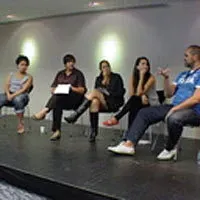
In March Pacific Island theatre practitioners and others from the theatre came together for an afternoon of discussion and play presentations as part of Playmarket's fourth Pasifika Playwrights' Development Forum, funded by the Auckland City Council at Auckland's The Edge.
This panel discussion considered issues facing the future of Pacific Theatre in New Zealand.Chair: Ola Aniwashawun, Royal Court Theatre, UK Lisa Davis, Community Arts Coordinator - Maori, ACC Mark Amery, Playmarket Vela Manusaute, producer and playwright, Kila Kokonut Krew Roy Ward, Literary Manager, ATC. Sam Scott, Artistic Director, Massive Company
Ola Animashawun: One the things I'm involved with at the moment is a project called Critical Mass that has been running for four years. This was because the landscape could be much more colorful than it actually is or actually was four years ago in London. Hence we started a program targeting black writers, to get them to write black plays, so we could produce them. And once we got them on the stage in the theatres then everything else will follow. More directors, more actors, more audiences and most importantly more voices being heard, being represented. So that's what I do, a lot of the time.
Vela Manusaute: Talofa lava, Malo, Malo. Vela Manusaute is my name. Kila is the game, better recognize. I do not think there is any future for Pacific Theatre. The reason is otherwise I wouldn't have set up Kila Kokonut Krew. Kila Kokonut Krew is set up because we can't fit in a square box. We're set up to produce our own game, and run our own game, without going to places like ATC in the end to try and fit in that box. I credit Victor Rodger with his fantastic play; it was the best play I have ever seen, and not because my wife was in it. It was the calibre of the play that represents our Pacific Island people.
I was so jealous when I was sitting there, not because of the play, but because of the budget that they had to play around with. But in terms of the Pacific Island, the flavor sells. Brown flavor always sells. I don't think there is a future; I credit Dianna Fuemana and Playmarket for setting something up like this for our voices to be heard. It is important. However, in the last 10 or 15 years, there never was a Pacific Island vision. There's no vision. We're driving down a highway with no lights on so I think we need to create a Theatre.
You know you have got TV1, TV3, Palangi voices are being heard. You got the Maori TV. They're trying to get their voices heard and there are no Pacific Island voices, our voices are on at 11 o'clock at night, cos no one gives a damn about waking up and seeing it. We have to do something. You know Sione's Wedding was a movie controlled by white people, with brown people in it. That's not our voices. That is not, so we got shine the light.
Lisa Davis: I think there is a future for Pacific theatre, but maybe there is not a place or I suppose a home where people can go to one place to foster and grow. I suppose in terms of developing Pacific Theatre, we from Auckland City Council have funds available to help foster that growth. Coming from a council perspective and I feel also on a personal level, because I used to work here at The Edge, that there's a whole developmental stage in Pacific Theatre that's out there in communities, that's happening that's buzzing, but there's a whole other level that's missing to take it to the next level. (Vela) You see you've identified one and you've filled a gap, you've started your own company. The council and my position specifically is about working with people in the community, finding out what you want, and supporting artists and activities to get that off the ground.
Roy Ward: Look fairly obviously there is a future for Pacific Theatre but maybe it's not just one future though. In terms of Auckland Theatre Company, yes it's the largest theatre company in the country not just the city. But it is the Auckland Theatre Company and there is a real commitment to reaching as much of the Auckland population as possible and representing various audiences, plural, the more market research we get we will know who our audiences are. And they come to different shows.
But there is a real willingness there to reach out to Pacific audiences and bring pacific work to a, if you like, white mainstream audience. We're probably better at that because that's who our audiences are, it's largely white and conservative, but it's changing. And we are actively looking to do this work, but were not pretending for a moment that we are Pacific Theatre, because we're not you guys.
And so if you like I see it as a real opportunity for cultures to meet. To take those stories from one group and share them with another. That's what we can do and facilitate. And we are providing the two plays that I have been around for, Victor's play and Where We Once Belonged. You know three of the actors have been in both shows, that's three months work, so we are keeping them and doing our best to keep those people in the mix and employ people. I take your point about the budgets; you know I've been there for three years. It's the only time I've worked in a company of that scale and to be able to direct with that kind of money makes a huge difference.
Ola: Sam can I bring you in at this point again. One of the questions is, what first of all is the vision? And if that question still stands, and if so, who holds the vision? Are you part of that vision? Are you aware of the people out there who are part of the vision or should be part of the vision?
Sam Scott: I suspect that many people hold the vision, and different people hold different visions. As part of Auckland and terms of what Massive does I'd like to be clear that Massive is a fusion company, we don't target anyone in particular. In terms of when we make work, it depends very much on who's in a cast at any one time as to what we will develop. So when Albert started making Whero's he started with Witi's (Ihimaera) stories and he took off from there what he wanted. When we are devising as we are with the girls show, or when we made the boys show we were very much whoever's in the cast and what they bring to it, and how they define the work. The voices within that group, which are many and varied and some Pacific as well, then that's what defines it. That's always our starting point. Who's in the group? What do they want to say? How do they want to say it?
Mark Amery: Ola, I'm really interested in hearing more myself about your experience of, in terms of black writers in the Royal Court, and how it was 10 years ago and whether anything has changed. Whether these things are still kind of token, whether - is it any different really? Is it any different for rising Playwrights in London and the bigger culture?
Ola: Yes is the easy answer but I think due to a 10-year period, if you do a snapshot where we're at, I would say these things go in cycles. And 10 years ago you'd be hard pushed to name black writers, black female, black male writers who have broken through, who are being featured on a regular basis, in places like the Royal Court Theatre. Which is what people see as getting to be part of the establishment as a young writer. And that's why I set up the programme Critical Mass for four years ago. I'd been at the Royal Court ten years by that time, and I thought that we just kept hitting the ceiling, so that's where the seeding programme started.
The development programme inspired no shortage of people getting on who clearly had got lots to say, and clearly have got the talent. If you looked ten years ago at what was actually on the main stage of the theatre there was definitely a paucity of writers. If anything 10 years ago we were coming to the end of a group of writers, and a lot of companies had gone out of business - had got out of existence at the beginning of the 90's, end of the 80's because of the economic situation in Britain. A lot of writers, a lot of voices had gone with a generation of a certain age and a certain experience. They'd said OK we've had enough, it's a waste of time and they'd given up. It was even worse than what it had once been, which is what I mean by theatre going in cycles.
In the 80's it was really vibrant but by the 90's it was petering out to nothing, and that's what we've tried to start again. Today when you look at the programme, and you start to name the writers, Tanika who I can tell you is the vanguard leading that way, people like Debbie Tucker Green, Roy Williams, Lennie James you know the writers are there from our programme. I'm delighted that in the four years that we've done it we've produced on our stage at The Royal Court three new Black writers. And one of the writers has just opened another play this week while I've been away with another theatre company, and he's coming back with his third play for us and a national tour. One of the other writers has been nominated for an Olivier award, so it does make a difference. It's really important. It has to be done so the next question for me is how to sustain it, cos that's how you get that cyclical thing. I mean for me we've got all these black writers going through, winning awards, that's fantastic alright, now I'll stop. But then it's over, the initiative's gone, and you'll turn around 10 years later and “where's everybody, where's everybody gone?†You've got to find ways of keeping it going. It does make a difference and if you don't do anything you've got no chance of making a difference.
So that's why I talked about vision, because that's where my starting point was, it was a simple vision. I want to see some black writers having their plays produced at the Royal Court Theatre. And then there will definitely be some black actors on stage. Then if we do that then they might become writers themselves and directors themselves. Then we have some black directors in the industry directing anything not just black, anything. And then if we do that, we'll definitely be seeing black people, brown people coming to the theatre much more than we have been seeing. Without a doubt there's a link. Who are the people coming to the theatre? The white middle class. Why? Because that's the kind of people on the stage in the plays. So you start to mix it up a bit.
Vela: I think what we need to do is get a Pacific Theatre. Have our own theatre; you know we can't compete against ATC or Massive. They have completely different voices to us, to what we are. We have to create our own. We've got to support our own, cos no-one can beat Laughing Samoans filling out 2700 seats; you know we got our own audience. You know no one can beat the Naked Samoans, so we got our own voices, I think all of us just have to get together, someone to give us some money or we got to go borrow it! There are other Playwrights coming up we got to develop our own people, you know what I mean to be heard in the game. We can't wait for ATC to do my play. You got your stuff you make when you want to, how you want to, but at the moment for our Pacific people we are desperately hungry! Hungry for work. Hungry for our voices to be heard. I can never come up to you and say, “Hey Roy read my play.†Cos it has to fit the square box you create for your own audience.
Roy: Maybe the square box is morphing into a kind of a different shape? I don't know?
Vela: Well it's a small square box! Cos when I went to see Victor Rodger's play there was only 2 brown people there. I'm just speaking from experience here.
Roy: I'm not arguing with you there. I understand completely but as Ola was saying, if we don't start doing the work, we're never going to get there.
Vela: I salute you for doing your work. Like I said it was the best play I ever seen. It was a fantastic play. That's the standard, that's the international standard of any Samoan play I've seen. I'm grateful for that.
Roy: We very deliberately programmed Where We Once Belonged very soon after that, we've only done two plays since we did Gary Cooper and now the next one is this summer. Look that's two plays in a 15-year history.
Vela: Shocking
Roy: I agree with you. Let's build on that! Let's start for the future now.
Vela: Roy, 10 years later maybe it'll be three plays.
Roy: I wouldn't say that but -
Vela: What I'm just saying is instead of waiting for ATC, we can develop our own, build our own. Without that people like Victor Rodger, Hone Kouka, and the rest would be history. We have our own people.
Roy: There has to be a little reality check here. I agree you should have your own venue and yes you should, but I just have to remind you that ATC doesn't have its own venue and desperately wants one, and at the moment can't have one. So we're all to some degree in the same boat.
Vela: But we're not in the same boat. The bank balance of ATC is totally different to Kila Kokonut Krew.
Lisa: I wanted to say in terms of the funding side. We have Creative Communities, which is for emerging artists.
Vela: Well how much is that, what $2000.00?
Lisa: Well it's 2-5 but my point is it's there for people to access if they want to start building on that stuff, and only 5% of Pacific and Maori together went for that fund and it was the same for Arts Alive as well.
Ola: Why is that? Do you know if the council asks that question themselves?
Lisa: Yes, yes we have, especially in the last round.
Ola: And what's their answer?
Lisa: Well I suppose my question is to this forum here is; Do you know about it? Are we getting to the right people?
Mark: But you know that's where, Jenni Heka's just started a position in Playmarket, and for us this is really a key thing. Just someone out there who's going to involve people, whose building it up and talking to people like Lisa, who's saying “Look there is funding, there's this venue here, there's this building here.†It's these kind of small steps that can start things.
Ola: Partly it's about faith as well, a belief that you really want to have it and use it. It's easy to create a pot of money and go, oh the people aren't applying for it. But I think part of the reason is you have to have conviction that goes behind that. Absolutely this money is not going to stay in this budget for this financial year. There's a month to this financial year and we still have the money, so we get out there and we get it to someone. When you hear the passion that Vela's got - I can't believe that, people should be knocking on the door.
Hone Kouka: I just wanted to ask you Ola with the Royal Court. Who, why and when were decisions made to invest in minority work? Because maybe that's a way to look at it from here. You have a model that works and is working and needs to be kept working, so perhaps that's why I pose that sort of question, so we can rework it to how our environment works here. Because we've got strong places like Auckland Theatre Company and places like that as well, and that's why I ask when, why and who?
Ola: When 2004. Why? Because I saw this glass ceiling that the writers weren't getting beyond and thought it was wrong and an injustice. Who? Me. I was lucky to be in the position of Senior Manger of the Royal Court Theatre, an Associate Director running a department dedicated to inspiring and encouraging people to write. Young people to write. So once I had made that decision all I had to do was convince my boss, as there was only one other person above me which was the Artistic Director, that this is what we wanted to do and it was a good thing to do. He was nervous of that, but the other thing was that I got some funding; I got some money to do it. So money talks always. So even though he was nervous and wasn't sure: would it work/ was it right to separate people out and target black people/ what would that look like to the outside world? It didn't matter cos we had 50,000 pounds behind us. He said, why not go for it. I was in control of that. And we just did it.
Hone: So definitely having a person in a position of power is one of the ways helps and then bringing the community together?
Ola: Definitely, for want of a better metaphor, one of the ways to attack this is from all angles. When you've got someone with money and power in a hierarchy, that's really one of the best angles to attack it from, not the only way but it certainly helps.
Mark: I get asked that question all the time about the programme Playmarket is setting up. Why are we isolating out those groups? Well for one thing there is Tangata Whenua and there is recognition of that, but it's just that these voices aren't heard. These stories aren't being covered; there is a really strong need there. You know. There is no need to apologize for that but it's again where I think people have to be pro-active.
One of the things I hate in this country is this sense that the whole idea of positive discrimination is somehow just a politically correct notion. It's not actually about recognizing a group, making them feel they can come together and have voice as a community. And that's what I would say to the ATC and ACC, well if there's only 5% PI and Maori applying, well take some responsibility for that by being pro-active and getting out there. I do think that there is that responsibility.
Ola: It would be good to have five-point action plan. One for each of you of what do we do next? How do we move forwards? The question that was posed was what was the future, is there a future? There has to be a future or there would be no point being here otherwise in my opinion. So if there is one thing that would help move that future forward, make it more secure and more optimistic, what is it?
Sam: I'll start if you want, it strikes me that you're (Vela) a vision leader, so the person that's a vision leader and has a vision should be leading. Because that's how I think success happens in any organization or anything. So I would really look to the people who have really strong visions, who are really clear about what they really want to see and can lead it. You centre yourself strongly as that vision leader. It's led from the top and it's led very strongly. And not generically - you lead it with what you want.
Dianna Fuemana: And that's when they throw money at you Vela.
Sam: Then they know what to focus on and then they have a really clear idea, so rather than you being all of the Pacific community.
Mark: I just like to support that idea Sam. I don't think it's some kind of amorphous theatre space that gets branded ‘Pacific Island Theatre'; it has to have a vision. All great theatres are built on an aesthetic and a strong philosophy a vision of what they are trying to do and why. It maybe that it produces more than just Pacific Island playwrights. We saw a wonderful reading this week of Tanika Gupta's play Fragile Land about second generation immigrants in London. Please put this on the stage here, because it's powerful within our context. It needs someone who actually says this is what I want to programme.
I think Artistic direction is really, really important. I sometimes worry in this country that the new generations beyond the Colin McColl's don't feel the empowerment and the strength to do that.
Lisa: In terms of my role in Council it's about fostering relationships, and I can see a way forward for me in being actively in the community and doing that. I feel I've started doing that maybe not specifically in the Pacific Island community but it's a great opportunity to start.
Ola: She's got money; you want some, she's got some.
Lisa: Its true and we do want to give it away to you as well, that's the thing and even if we don't have the money lets start a conversation, we can find money somewhere sometime. I suppose to me I'd just like to open up conversations by phone, now, later, anytime. I'm a resource, use me.
Vela: Thank you for that Sam, truly. Yes someone's got to lead us, our voices need to be heard, we need to unite, and we need to unite. I don't care about Auckland Theatre Company or Massive. They can have their own.
For me it's all about bringing people to the theatre hearing our voices, and we have to unite as writers, as actors, because our pacific stories are very important. Because no one else is going to tell them. I know this because for the last five years I have created my own work. I've taken people overseas with my own money and that kind of stuff cos I want to be heard. I appreciate what the council has to say, but I really want to control our own voice to be heard. I mean anyone who does any plays is never wrong because it's their own vision. But my vision as a Pacific Island actor/writer is my voice to be heard that's why it's important and no one can say that I'm wrong because they were never there when I was small.
It's important because it's my own journey. I truly agree with you Sam because someone does need to lead the pack and people like Dianna Fuemana will come on board and control everything else and we need the support of Playmarket to get more than one play a year, we need different voices to be heard out there. We can't wait for ATC to give us a call or Massive to hire anybody, we as brown people of Aotearoa need to be heard. You hear?
Roy: Building relationships is important, yes, but build on the good will that is here as well. Because its there and you have friends in these places, you can call us. Don't wait for me to call you. Harass us. I feel really positive about where Pacific theatre is going. If ATC can do Victors play and get full houses and do a sold out season of Niu Sila. We intend to build on that within our company and I am sure there will be a crossover. When I was casting Gary Cooper I came to see Dianna's play Mapaki, I had been following Nora Ati through drama school, but I didn't know she could do that work and that's how she got the role in Gary Cooper. There is crossover. Let's just build on it.
Vela: The reason I go see plays at ATC is to see the standard. Its no good just for us to support any boonga onnga plays, because it's not going to give us any credibility. Its not experimental theatre, I want the money. I don't want five grand, you can get that five grand from Black Power down the road, we want to get great directors onboard and put it up. It's not going to be a theatre that shows plays that have been written overnight. We want the standard; we've done the hard yards.
No more I feel sorry for me kind of theatre. It's about celebrating who we are. I want to take it to the next level and go international. We want to go to the Royal Court Theatre. Will you take us? Lol. I'm serious, we want to go far. We got to lift our Game.
Ola: Lift our game; it's those final words I'd like to end on. It's true, I think from what I've observed and witnessed in the week that I have been here and the things I've seen in the past with Dianna, Massive and Mark. The passion is clearly here, the energy is here, no question about the talent or the ability or the voices. And I think it's just about focusing it, galvanizing it. Thanks very much for our panel contributions and contributions from the floor. Thanks very much.
Related stories Pasifika Playwrights' Development Forum: Who Told You, You Couldn't Write About That Victor Rodger: Earning an Airfare
- An extract from the Autumn 2008 edition of Playmarket News.