Paris' Odeon Theatre
Written by
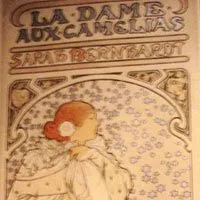
In terms of theatre, when I think Paris, I think Sarah Bernhardt. The Comedie Francaise, the Jacques Lecoq school, or the venues and companies led by Peter Brook and Ariane Mnoushkine might all be more important theatre associations that the city has, but from a purely personal perspective, the fact that Paris was Sarah Bernhardt's home town is more important.
In terms of theatre, when I think Paris, I think Sarah Bernhardt. The Comedie Francaise, the Jacques Lecoq school, or the venues and companies led by Peter Brook and Ariane Mnoushkine might all be more important theatre associations that the city has, but from a purely personal perspective, the fact that Paris was Sarah Bernhardt's home town is more important. Nowadays, many people haven't even heard of 'The Divine' Sarah - even though she was the most famous actor of the late nineteenth century world.
Spending two weeks in Paris recently, it was meant to be a holiday from theatre as well as from work, but my fondness for Sarah Bernhardt reeled me back into a theatre experience while I was there. I only speak tourist level French, so hadn't expected to go to see a show in French, but wound up booking for an 11 hour spectacle... but more about that later.
I first became a Sarah Bernhardt fan when I read a colourful biography of her while in high school - her life really is one of those stranger than fiction affairs. If you're up for an interesting theatrical biography, try 'Madame Sarah' by Cornelia Otis Skinner some time. Not only was she one of the first actors to go on transatlantic tours, she had numerous lovers (possibly including King Edward VII), various plays written especially for her - including her friend Oscar Wilde's 'Salome', continued to act after her leg was amputated, bought an island off the south of France, scandalously sometimes slept in a coffin, and wore a hat with a stuffed bat on it. So while in Paris I couldn't resist making a pilgrimmage to her grave at the famous Pere Lachaise cemetery. Surprisingly it's one of the more modest tombs there - other mausoleums are much larger than some family homes!
'The Divine' Sarah first found fame at the Odeon Theatre in Paris' Latin Quarter on the Left Bank - I remember reading about her being carried through the streets on the shoulders of adoring students after one first night triumph. So when I stumbled upon the Odeon Theatre by accident during my wandering around the city, I decided to investigate further. The current building looks a little like a bank from outside, with a series of huge stone columns at the top of broad steps, and when you go inside the decor is rather palatial with huge mirrors and chandeliers.
In my very limited French I confirmed with the box office manager that the play they were currently showing was 11 hours long. That's what I thought it had said on the poster, but really? It was an epic text by French Playwright Paul Claudel, called The Silk Slipper, but what tempted me to buy a ticket despite knowing I'd hardly understand a word was the fact that the production was directed by Olivier Py, current Artistic Director of the Odeon Theatre. I'd read an article about his work some time ago, and seen some startling images from productions he's directed, so decided this might be one of those unmissable theatrical spectacles which would still be worth the price of admission despite my limited French. I bought a surprisingly cheap ticket for a seat right up in the gods - just 16 euro for the full 11 hours spread over two evenings - so that's about NZ$4 per hour. If I got bored, I figured I could always sneak out.
This was the first time I have ever watched a play entirely in a foreign language within its country of origin. I was dreading someone starting to chat to me in French and then thinking me a total imposter when they found I couldn't understand enough French to be able to follow the production. I could follow the gist of it, but unfortunately 'The Silk Slipper' is clearly quite a formal, poetic work - characters speak in monologues of up to 15 minutes rather than dialogue, which makes following what's going on much harder. The stage and costume design was indeed spectacular - like that of an opera it had huge set pieces which were wheeled around or lowered from above. A series of golden proscenium arches that fitted into each other like russian dolls were moved around on a gold mirrored floor to make various performance environments. Particularly striking was a scene played out on a mirrored platform at a steep 45 degrees rake, during which a border of burning petrol ignited, and the stage lights dimmed, so that the actors were lit only by the rectangle of fire around them. And in another scene an actor emerged walking on top of a seven foot high gold mirror globe.
What was most striking about the production though was the archaic nature of the acting style. Ironically this seemed to be very close to the descriptions I'd read of acting in Sarah Bernhardt's time. The lengthy and clearly very emotional and poetic monologues were declaimed sonorously, with lengthy vowel sounds accentuating the characters' emotional pleas. Had I been able to understand all that was being said, I think I would still have found it hard to connect with. There was a formality to the acting that I don't think I've ever seen on NZ or English stages; an emphasis on word over action similar to what you might see in an opera production if they were speaking rather than singing. But as my French comprehension is limited, I can't really comment on the production's quality. It certainly seemed a theatre of lofty idealism, such as is quite unfashionable in London or NZ, but this seems to be director Oliver Py's interest. He wrote in his programme note about the importance of theatre artists still giving full reign to their dreams onstage, despite living in such a conflict-ridden and secular world.
Despite being one of the most prestigious venues in France, the Odeon will soon be presenting a month of work by the emerging theatre artists of Paris, who have been encouraged to dream broadly in their offerings. The experience has left me wondering if one of the most cutting edge theatre innovations of today is to explore such challenging idealism onstage.