Our future - together
Written by
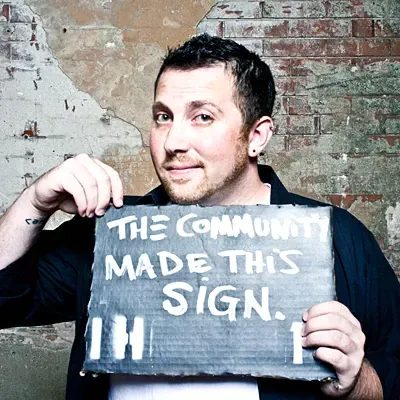
Alex Hillman cofounded one of the first coworking spaces, Indy Hall in Philadelphia, in 2006 and has used it as a model for community building around the world since. So it's no surprise his vision of the future is all about community.
Alex Hillman cofounded one of the first coworking spaces, Indy Hall in Philadelphia, in 2006 and has used it as a model for community building around the world since. So it's no surprise his vision of the future is all about community.
"Being able to reconnect with the humanity of our work is the next big shift in our future. While I think many people correlate the future with technology, I correlate it with relationships and deeper, more meaningful work."
Alex will be sharing his community building tips and 'resilience thinking' at Survive & Thrive 2013, courtesy of NZ coworking space The BizDojo (TBI HQ).
Tell us a bit about what you do and what drives you?
I believe that anything can be made better by working together...but only if we focus more on the "together" part than we usually do.
I come from an IT and web development background, but for the last 7 years have been focused on Indy Hall - a co-working community and shared space. I think back to 2006, when I felt alone, and I felt like nobody in Philadelphia understood what was going on outside of their tiny little bubbles. Now, in 2013, our community isn't just bigger but it's stronger than ever before. Perhaps most exciting, we're living in a different Philadelphia... one that we're changing for the better by creating it together.
Tell us about your recent or upcoming projects?
One of the most amazing things to come out of Indy Hall recently is a farmers market - the N3rd Street Farmers Market. One of the reasons that I love this project is because of how very little I had to do with it happening. It's the product of the environment, and the people in that environment, and the mentality that they share. It's a ripple effect in it's finest form.
Let me try to explain what I mean:
I don't have kids, but if you do, you'll know what I mean when I say that a community gets to a point where it starts doing things you didn't show it how to do, and the N3rd St Farmers Market is one of those sorts of things. Two of our members - Ahava and Karina - noticed that while our neighborhood is vibrant and active (tons of places for lunch and dinner, one of the things it's noticeably missing is a way to get fresh, affordable produce to make your OWN meals.
They took Indy Hall's spirit and motto of JFDI (Just F*#king Do It). First, contacting farmers to get them on board, then finding a venue partner, then sorting out the insurance logistics. All told, the farmers market was launched in just a few weeks.
This community-led farmers market is now connecting neighbors - not just with fresh produce, but with each other. I've met more of my neighbors in the last 3 weeks than I have in the previous 6 years.
Do you like to look at the big picture or focus on the details?
I like changing my zoom level often, it keeps me in touch with a more realistic version of any given situation. "Big picture" people often struggle to see the important details, and detail oriented people struggle to see the forest for the trees. If you're spending too much time with one or the other, you're already losing.
I'm a big fan of "fractal solutions", or the way I like to think about them, "environmental" solutions. Partly because they force me to look at tiny, nuanced details as well as the big picture. My favorite analogy for this approach is this:
Imagine you have a perfectly flat, smooth table in front of you. There's a marble sitting in the center of the table.
If your task were to make the marble move, but you weren't allowed to touch the marble itself, how would you do it? What if the direction you needed to move the marble were more or less specific? What if you had to do it without making any noise? What if you had to do it with your eyes closed? What if there were other objects on the table that you didn't want to move?
Different approaches - and different constraints - mean that in order to achieve a certain outcome you need to make changes the environment, but you also have to consider how those environmental changes affect other things in the environment?
That's how environmental solutions work.
What's your number one business tip for surviving (and thriving) in the creative industries?
This should be obvious by now: don't do it alone. But more nuanced than that...play the long game. Focus on the people you're working with, and on building deep, meaningful relationships with them. Trust, and work to earn trust.
These are the people who you're going to learn from, and who are going to learn from you. Having those relationships in place before you need them is the secret to lasting success.
‘So it’s the future already, all ready?’ What does this mean for you and what you do? Are you ready?
What's old is new. The way we're going to do business is more like the way we've done business in the past than the way we do business in the present. We learned how to scale things in the last 150 years - but as a result the humanity of work has been lost. We used to buy our bread, meat, and cheese from three vendors, each of whom we'd gotten to know personally. Now we buy a supermarket or fast food sandwich.
Being able to reconnect with the humanity of our work is the next big shift in our future.
While I think many people correlate the future with technology, I correlate it with relationships and deeper, more meaningful work. I feel like the last 6 years of work I've done give me a peek into the future of how more and more people are going to work.
Do you think people realise they are in the future and are prepared for that reality?
I think that people are more prepared than they realize...but the mistake they make is looking outside instead of inside. Figuring out what you already have - experience, resources, perspective, knowledge - rather than focusing on what you don't yet have, is an important shift into planning for your future.
What are you doing now (in business or practice) that you couldn’t imagine doing a year ago?
Going to New Zealand is a lifelong dream. To be able to do it with the purpose and mission to help and teach what I've learned about building amazing communities and collaborative business ecosystems is absolutely incredible.
The rate and pace of change is constantly increasing. What challenges and opportunities does this present for creatives?
I don't think that's actually true. I believe that change has always happened at the same rate, but our awareness of change has heightened because our field of vision has increased. The internet lets us know about change, even if we're not there to see it/feel it ourselves.
With all the information and noise, how do you scan and decide what is important to you?
To the point of the previous question, most of the supposed "change" going on around us is little more than noise about change, not the change itself.
The best way to cut through the noise is to change how you listen: listen more for what people have done (and the reasons why they did it), not what they say they're going to do.
Actions speak louder than words is a cheap turn of phrase, but it's true in this case.
It’s been a rocky few years, how have you rolled with the punches (in business or practice)?
I know that the "big world" experienced some rocky times in recent years, but I can't remember a time where we stopped growing or even slowed.
I attribute this to our focus on community more than anything else - in times of chaos and survival, we're actually wired to look for our communities. Simon Sinek calls this the "circle of safety", where we can feel more comfortable with danger in our surroundings because we know and trust that other people in the circle have our back...and they feel safe because we have theirs.
Communities aren't just resilient in times of challenge...they're more resilient during those times and humans are actually chemically designed to be that way.
We’re talking about resilience at Survive & Thrive, what’s your top tip for bouncing back?
I bet you can guess it's got something to do with communities, relationships, or trust :)
The reason that most people and communities don't bounce back is because they refuse to see or acknowledge what actually caused the problem in the first place.
And it's not really entirely their fault - it's hard to see that stuff in ourselves. We need objective outside perspective.
I'm not talking about other peoples' opinions, mind you. I'm talking about data.
Observations. "I see this." "I hear this."
My top tip is to have even a couple of these people in your "circle of safety" that you'll actually listen to...and then listen to them. Really listen.
What’s your top tip for creating a work / life balance?
Align them.
I personally blend them together - my work is a big part of my life. I work with my friends. I spend a lot of time outside of work with my coworkers. But that's not the part that you should copy.
The REASON that I blend them is because the work that I do, and my personal goals, are aligned. For me, it's important to work with people that I care about, and to care about the people I work with. That allows me to keep them balanced.
Figure out what's important to you about your work and about your life. Do your personal goals and your work goals support each other (even if they're not exactly the same)? If not...work on that before you worry so much about work life balance. That will fall into place when you get it right.
What excites you about the opportunity to be in NZ at Survive & Thrive?
Like I said before, I'm fulfilling on a lifelong dream of coming to NZ. To be able to do it under a banner of supporting people, their cities and ultimately their country by sharing what I've learned about successful community and culture building couldn't possibly be more exciting.
I sense something very unique about New Zealand's culture, part influenced by its size and distance from much of the world but also influenced by it's history and landscape that makes this opportunity to "level up" during Survive & Thrive even greater.
What’s your big idea for 2014?
I think my big idea is that big ideas don't matter as much as we think they do. It's the little things - the choices we make, the way we interact with each other, and our attention to what's happening all around us that matter the most.
The path to BIG change is through lots of small, consistent, and meaningful changes.
- Survive & Thrive is brought to you by The Big Idea and Arts Regional Trust.
* * *
Alex Hillman cofounded one of the first and longest standing coworking spaces, named Indy Hall (short for “Independents Hall”), in 2006 and has gone on to use it as a model for assisting in the building and growth of countless communities around the world since then. As a consultant, he is focused on helping build communities that are hyper-connected, highly productive, and selfsustaining. Alex’s insights and techniques were part of the community building roadmap for Las Vegas’s celebrated Downtown Project.
Alex has been cited as an expert on coworking & community building by the New York Times, the Wall Street Journal, Philadelphia Inquirer, Philadelphia Business Journal, WIRED magazine, Philadelphia magazine, and others.