One-Race Photo Finish? - the Wallace Awards at The Dowse
Written by
Courtesy of Dominion Post - 2004-11-26
A One-Race Photo Finish
by Mark Amery
Taking in the work of the forty finalists in this year's 13th Wallace Awards exhibition I'm struck by what funny things arts awards can be.
There's a tendency to look to them to provide some kind of counsel as to who the 'winners' in the visual arts are, as if judgement can be made with a one-race photo finish.
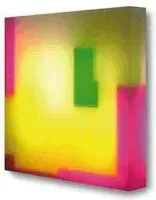
Image: Jim Speers English Electric 2004Courtesy of Dominion Post - 2004-11-26
A One-Race Photo Finish
by Mark Amery
Taking in the work of the forty finalists in this year's 13th Wallace Awards exhibition I'm struck by what funny things arts awards can be.
There's a tendency to look to them to provide some kind of counsel as to who the 'winners' in the visual arts are, as if judgement can be made with a one-race photo finish.
Image: Jim Speers English Electric 2004Yet, who is fastest or strongest in the visual arts not only depends on the differing tastes and perspectives of those judging, but also on how an artist develops from exhibition to exhibition, series to series, and year after year. Reputation is prized above trophies and the pulling power of a single work.
Which is not to say awards don't help. One of the strengths of the Wallace Awards, created so generously by art patron and collector James Wallace are the prizes themselves, assisting the winners' development in a profession where little is certain. This year's winner Jim Speers receives a $35,000 and a six-month residency in the UK, while a Development Award of a residency in New York has given to sculptor Matt Ellwood.
You'd be wrong however to make evaluations on the state of contemporary New Zealand art from viewing this awards exhibition (on show at the Dowse Art Museum in Lower Hutt until December 5). While the Wallace Awards are open-entry and the prizes substantial, only a couple of handfuls of widely recognised established and emerging artists are among the finalists.
There are several reasons for this. Firstly, as I say reputation is everything. Entering a competition with a single work rather than being judged (as with the Walters Prize) on your practise is considered by some a dubious honour. This might sound incredibly precious, but its not when you consider that contemporary art increasingly values the media of installation, video and photography above that, generally, of the single object.
Work entered may not be video, performance, digital photographic prints or new media. The work must also be of a limited size and weight, ruling out the majority of installation. Some leading contemporary artists like Daniel Malone and Francis Upritchard have found ways within their practise to accommodate this (both with small objects isolated sensitively together by the curator under glass on a plinth). Many, it would seem haven't.
This also rules out a great deal of strong photographic art. Contemporary photographers often work in series (sets of prints) and are increasingly utilising digital photography. Strong photography work in the award like that of runner-up Miranda Playfair, and Rachel O'Neill's arresting double image, felt like they just sneaked in under the radar.
The award feels stuck between acknowledging changes in contemporary practise (reflected by the strong, varied jury this year) and the values of their patron. "New Zealand is particularly strong in painting and sculpture," James Wallace wrote earlier this year for the Prospect 2004 on-line catalogue, "and yet many public gallery contemporary exhibitions show a perverse reaction to that and embrace installation and performance art, most of which is as boring as it is fatuous." Wallace may leave the judging of the 13th awards to a jury, but the conditions of entry still help advance his cause.
It's not that the work on display this year isn't often good, it's just a rather odd, compromised reflection of the work currently being produced in New Zealand. It's as diverse as this year's judges, but only occasionally outstanding. Indeed, you could say I found quite a bit of it as boring and fatuous as Wallace finds installation. With such an array of one-hit-wonder art strategies being tried out it sometimes felt easiest to give attention to the most instantly gratifying. Should I have sided with the little girl who voted her favourite to be the cat portrait made out of chocolate drops by Ryuzo Nishida (entitled 'VIP (very Important Pussy')?
Wallace Trust curator John Orfanos makes the best of this situation with some strong conversations between works in the space. The Awards also continues to have particular strength in its recognition of artists deserving of recognition they rarely receive otherwise. This year Rob McLeod won a Special Jury Prize for another of his splendid recent paintings that sees cut outs of mutant-Disney organisms spring like a bouquet out of a magician's suitcase. Likewise it's great to a strong painter like Dunedin's James Robinson transcend fashion to sit on the wall next to one of Seraphine Pick's gloriously uneasy paintings of screaming naked newly-borns. Both these artists evoke the violence of giving birth to life. Robinson stabs away at his surfaces in the abstract, the skin of the work hacked, stitched, pricked and stapled away at as if he is engaged in some form of excavation of the ground as a carbonised residue of a life that burnt too intensely.
The Wallace Awards have previously been criticized for a bias towards painting. With winner Jim Speers's wall sculpture 'English Electric', the judges get it both ways. This is at once the most contemporary and traditional object in the show. While with the seductions of his light box, Speers plays off architecture, advertising and consumer cultural values, conversely he also genuinely seems to want to warm us up with surfaces that evoke soft colour field paintings of the 1960s. It's almost disturbing to learn he does preparatory watercolour studies for this work.
Perhaps Wallace should restrict the award to painting and be done with it, celebrating the continued vitality of this medium. Certainly the Peoples Choice winner here would back up such a move. Garry Currin's painting 'Landscape Without Moses' has all the dark romantic spiritualism of the German tradition, or Turner at his most atmospherically wild and daring. We are caught midair, with a apocalyptic tornado providing a dazzling display of light as it creates a path through stormy ocean before us, the security of landforms a distant, hazy apparition. Utterly seduced by this painting's mysticism, there was nothing boring or fatuous about it.