Of course the Venice Biennale is about art, but...
Written by
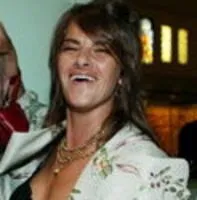
Anyone for Venice?- Courtesy of Guardian Unlimited
Of course the Venice Biennale is about art, but as first-time visitor Lynn Barber discovered, if you tag along with Tracey Emin, parties take priority over pictures
Sunday June 19, 2005
Image: Party girl Tracey Emin, flew in on Ron Wood's lear jet.
Read on for the Frontseat interview with Josie NcNaught in Venice and Elizabeth Kerr of Creative New Zealand.Anyone for Venice?- Courtesy of Guardian Unlimited
Of course the Venice Biennale is about art, but as first-time visitor Lynn Barber discovered, if you tag along with Tracey Emin, parties take priority over pictures
Sunday June 19, 2005
Image: Party girl Tracey Emin, flew in on Ron Wood's lear jet.
Read on for the Frontseat interview with Josie NcNaught in Venice and Elizabeth Kerr of Creative New Zealand.Courtesy of Frontseat - 19th June 2005
PRESENTER (OLIVER DRIVER): The Venice Biennale was established 110 years ago to showcase Italian art; now it's a high profile international art show, considered the most significant of its kind. It's held every two years from June to November with more than 70 countries taking part. Well it's been a year since Creative New Zealand announced conceptual arts collective Et Al as our ambassadors to the 51st Venice Biennale. The announcement created a political storm after Act Party MP Deborah Coddington called Et Al's work crap. Answers were demanded from the Government about the artists' practice of anonymity and then Prime Minister Helen Clark extracted an assurance that Et Al would furnish someone from their elusive collective to talk to the media while in Venice, even though Et Al prefer their art to do the talking. Josie McNaught filed this exclusive television report for Front Seat.
JOSIE MCNAUGHT (REPORTER): Where else could I be but Venice? I'm in the Giardini, the main exhibition area at the Venice Biennale. There are over 70 countries exhibiting this year but less than half of them are here in the Giardini. The real action is taking place these days out there in the city. There is no space left in the traditional Biennale exhibition zone so most countries have to find a new venue each time they go. New Zealand's base is a derelict orphanage on the main tourist route that provides the all important foot traffic, and here is Et Al's The Fundamental Practice. The exhibition stays for five months but it's the first week that's crucial in terms of getting all the right people to notice so marketing guru Howard Grieve came on board to help.
HOWARD GRIEVE (ADVERTISING GURU): We could never afford to win everybody so we had to be very clever about who we wanted to win, so we worked on a thing we called the key influences strategy which was let's isolate the top 200 people that we think are . . . can be influential and let's talk to them and get them excited about coming to the show and allow them to on sell the story, so we started a long time ago on that strategy.
ROBERT STORR (CURATOR, 2007 VENICE BIENNALE): When I went to the Biennale office to do my first business ten days ago already there was a brochure for this, the only country by the way that had a brochure on the desk at the Biennale office as I walked in, so the organisation effort has been fine.
PRESENTER: That's Robert Storr, he knows Et Al because he awarded them the Walters Prize last year; more significantly he's curating the next Venice Biennale.
STORR: Well I think this is a very good presentation. I think Et Al is a very good artist and that I know directly from having been in Auckland but this looks very good in situ.
PRESENTER: So it's time for the big question that New Zealanders have been asking for over 150 years, do you like us?
VOX POP#1: The exhibition is quite interesting. It's difficult to understand it in the beginning, you have to really sit down and look.
VOX POP#2: Very thought provoking, very sort of Dr Stephen Hawkins of Cambridge and this sort of was just amazing so.
PRESENTER: Yeah, great.
VOX POP#2: Yeah, it's really good.
VOX POP#3: It does seem quite down beat, quite repressive . . . you know, I was surprised that'd be the representation of New Zealand.
VOX POP#4: I'm still not quite sure, I'd like to read more about the work, I think, but no, I think it's actually one of the more edgier works here at Venice.
VOX POP#5: Just stepping in there today I've found it quite a peaceful experience and, you know, it's quite an enjoyable sort of compelling exhibition and I'm actually quite looking forward to going back in there now and having another look.
VOX POP#6: I don't know; it made me think of Dr Who.
PRESENTER: Among the visitors were several expat artists and dealers. Like me they were taking a rare opportunity to assess how New Zealand's conceptual art practice fits into a global context.
HAMISH MORRISON (SPIELHAUS MORRISON GALERIE, BELIN): New Zealanders are obviously very thrilled with what they've done, yeah, and it was very well organised. I would say it's, yeah, honestly it's not my cup of tea.
RONNIE VAN HOUT (ARTIST): Excellent work, it's, you know, she's kind of exceeded herself in some ways, you know, it's very complex but also very simplified and, you know, so I think the ideas are coming through strongly, you know, it's not so mysterious.
MORRISON: If it was not my own country then I would probably be more dismissive and walk away. I found what was written about it more interesting than the actual exhibit itself which is a worry for me.
PRESENTER: Getting to the Biennale ain't cheap. Patrons and corporate sponsors like 42 Below top up Creative New Zealand's half million dollar funding base. This is the last of three forays to Venice so it's crunch time. Should New Zealand be back?
HON. RUTH DYSON (CABINET MINISTER, NEW ZEALAND GOVERNMENT): It is really important that New Zealand is represented at events such as this. It is an opportunity for us to show the talents that we have in New Zealand, an opportunity for us to become better known so I'll certainly be supporting our participation in future years.
STORR: I mean, you should not give up the effort at all. I mean, . . . simply increase it basically, you know, it is a truly international art world. New Zealand is at a physical remove from the art world but is connected by information by, you know, all kinds of things and I think it would be a terrible mistake not to repeat the experience and actually to up the anti.
GREG BURKE (NEW ZEALAND COMMISSIONER): We're 48 hours into it and it's just, we won, we're totally successful.
PRESENTER: Well they've won the publicity battle but not the Biennale's Pavilion Prize, that went to France. Still, New Zealand's Commissioner Greg Burke is looking a lot more relaxed than he did a year ago on Front Seat when we asked him the obvious question, who makes up the Et Al collective?
BURKE (EX FRONT SEAT 2004): It's a very good question, I can't necessarily answer that question.
UNKNOWN FRONT SEAT REPORTER: You can't answer because you don't know or because you'd prefer not to?
BURKE: Well I think I've probably said enough on that issue.
PRESENTER: Payback for Greg has come early. He leaves in August for a top job in Canada, but he's got advice for us about Venice before he goes.
BURKE: There needs to be follow through and there needs to be follow through in terms of getting some of those curators, some of those directors coming out to New Zealand. Lots of people have expressed an interest in doing so, looking at art seeing . . . you know, just making it easy for them to come.
PRESENTER: Not so easy was getting in touch with the elusive Et Al collective. Even though anonymity is part of the artists practice the Prime Minister was assured that the artist would engage extensively and give interviews with international media. But how? Apparently still smarting from Front Seat's coverage last year Creative New Zealand's publicist and Et Al's entourage made it difficult for us to get close to the artist, even off camera. Still she looked like she was enjoying herself. The question remains, when the sun sets on New Zealand at Venice this year will it rise on us again in 2007?
PRESENTER: Josie will be back next week with another report on what other countries took to Venice. Now Creative New Zealand committed $1.5 million for New Zealand to make three forays to the Biennale. This year's exhibition is the last of those three and the arts body now has to enter lobbying mode to get the money it needs to continue sending our artists to Venice. Creative New Zealand's Chief Executive Elizabeth Kerr joins me now. Good evening Elizabeth.
ELIZABETH KERR (CHIEF EXECUTIVE, CREATIVE NEW ZEALAND): Good evening, Oliver.
PRESENTER: Right well, the visitors numbers are in and New Zealand's done better so far than last time but is that to do with Et Al or is that more to do with the location and the intensive marketing campaign?
KERR: I think it's both. The feedback we're getting is that this exhibition's really interesting, really intelligent, that the complexity is very good for this audience and so people are going, people are talking about it in Venice and so I think the visitor numbers are a direct reflection of Et Al's work. As well as that, as you can see from the story that Josie's filed that it was a really big marketing campaign that we undertook, as smart as we could be with the dollars we had.
PRESENTER: Now who did Et Al talk to in the media?
KERR: She talked to a range of media, as I understand it, but I'll have to say that Et Al is not just one person. Et Al means and others and there were a lot of others there who were fronting this exhibition and the feedback we've had is that that team did an outstanding job.
PRESENTER: So who did they talk to exactly in the media? Which media did they talk to?
KERR: About 30 international media attended the media preview so we've had people from Frieze magazine which is really influential.
PRESENTER: And they all got to talk to representatives of the arts collective?
KERR: Or to the Commissioner or to the curator or to members of the team.
PRESENTER:So the Commissioner and the curator, not the artist or the artist's representatives?
KERR: Some time the artist or the artist's representatives.
PRESENTER:So Merilyn Tweedie or other people as well associated with the art got to talk to international artists, international media?
KERR: No. I think we shouldn't labour this point too long, Oliver. I'd much rather talk about how successful the exhibition's been in Venice. I don't think there was any deliberate attempt to exclude any media, domestic or international, from the exhibition and in fact our experience has been that this time we've had the biggest media hit of the three.
PRESENTER: What do we get back as average New Zealanders? Your Chairman Peter Biggs wrote in his rave report from Venice that every Kiwi would benefit from this; how?
KERR: It's about New Zealand's profile with a really influential audience. It's quite clear we're going to get a lot of interesting international media as a result of our presence in Venice. I think every time we take New Zealand arts offshore, and we're doing a lot of it at the moment, there are something like 64 New Zealand artists who already this year have been supported to go offshore with our funds, every time we do that we take a special profile of New Zealand.
PRESENTER: Why does it cost half a million dollars? Can you talk me through, you know, what the money goes on?
KERR: Yeah, absolutely. We're there for five months, people sometimes forget this. They see all of the brouhaha that happens at the Vernisage [phon] and they think, oh gosh, you know, everybody's over there on some big junket and it's a lot of fun for all those people having nothing but parties. In fact what we've done is set up a complex exhibition in a venue that we've hired for five months and staffed, then we have to have a marketing campaign because there's 74 countries in Venice and we have to cut through that clutter so we have to have a smart marketing campaign where we're able to promote it in all kinds of ways with publications, with all the things that a marketing campaign will have so half a million dollars doesn't go very far.
PRESENTER: Sure. So will Creative New Zealand, you know, will Creative New Zealand be back? Will we be sending another artist?
KERR: Great question. We can't answer that yet. I would say there's a lot of positive signs that we have met our outcomes, that we have achieved the profile we've wanted, that we've attracted the right kind of influential people, but we agreed to go three times and then evaluate it and we'll do just that over the next few months.
PRESENTER: Do you think you'll win support of the Arts Minister to go back?
KERR: Can I read you what Ruth Dyson has just written to me and copied to the Minister?
PRESENTER: Ruth Dyson is not the Arts Minister.
KERR: No but she's the Arts Minister's representative at the Venice Biennale and what she said is, the team has worked incredibly hard to ensure that our chosen work was known, understood and discussed. New Zealand's profile has been raised in a significant way by their work which was tireless.
PRESENTER: The first year was Margaret Wilson, the second year was Chris Carter, she was there because she was nearby will the Arts Minister who you know didn't seem particularly positive about the selection will she be able to be convinced?
KERR: Well I'd just like to correct something you said at the very beginning where you said we need to lobby for funds to go again. In fact, Creative New Zealand can make that decision to go again, of course. We want to do that with the support of the Arts Minister and it's my expectation we'll have that.
PRESENTER: So her opinion isn't important, it's an independent decision of the board?
KERR: Of course it's important, her opinion, she is the Arts Minister, but yes Creative New Zealand is independent of Government and we make decisions about how we invest.
PRESENTER: Do you think we should go back?
KERR: The jury's out for me. I think we'll do the evaluation first, Oliver.
PRESENTER: Really.
KERR: But I think it's been a fantastic success so far.
PRESENTER: Why is the jury out for you?
KERR: Well the jury's out on everything. We're an organisation [interruption].
PRESENTER: Well after everything you've just said it sounds to me like you think it's been a tremendous success [interruption].
KERR: I do think it's a tremendous success.
PRESENTER: And you think it's a great thing that we should be there.
KERR: Absolutely but I actually . . . I'm not going to pre-empt the process I don't make the final decision, that's our Arts Council.
PRESENTER: Fantastic. Thank you very much for joining me, Elizabeth Kerr, on Front Seat.
KERR: Thanks Oliver.
ENDS