Ngugi wa Thiong'o - Decolonising the Mind
Written by
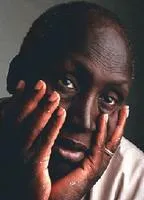
The University of Auckland recently conferred an honorary doctorate on Ngugi wa Thiong'o (right), widely regarded as one of the most significant writers on postcolonial literature. Professor Ngugi wa Thiong'o, from Kenya, will be the first African writer to be honoured by a New Zealand university. His work as a writer, playwright, journalist and lecturer has had a worldwide impact on postcolonial theories.
Professor Ngugi will give a public lecture at The University of Auckland on Tuesday 12 July at 6.30pm at the Maidment Theatre.
The University of Auckland recently conferred an honorary doctorate on Ngugi wa Thiong'o (right), widely regarded as one of the most significant writers on postcolonial literature. Professor Ngugi wa Thiong'o, from Kenya, will be the first African writer to be honoured by a New Zealand university. His work as a writer, playwright, journalist and lecturer has had a worldwide impact on postcolonial theories.
Professor Ngugi will give a public lecture at The University of Auckland on Tuesday 12 July at 6.30pm at the Maidment Theatre.
Professor Ngugi's criticism of colonial rule, Christianity and post-colonial abuses in Africa led to his imprisonment without trial in Kenya in 1977. After his release he left Kenya for a self-imposed exile in London.
He now lives in the United States, where he is Director of the International Center for Writing and Translation at the University of California, Irvine, where he holds the position of Distinguished Professor of English and Comparative Literature.
In the late 1970s, Professor Ngugi renounced writing in the English language, arguing instead that African writers should use their native language when writing, rather than European languages, to build an authentic African literature.
While in prison, he wrote Caitaani Mutharabaini, later translated into English as Devil on the Cross, the first modern novel in Gikuyu, his native Kenyan language.
Ngugi wa Thiong'o's most famous novels are Weep Not, Child (1964), The River Between (1965), A Grain of Wheat (1967) and Petals of Blood (1977). Other works include Detained (1981), a prison diary, Matigari (1987), a satire based on a Gikuyu folk tale, and Moving the Centre: The Struggle for Cultural Freedom (1993), a collection of essays.
Professor Ngugi spoke about his beliefs in writing in the native language when giving the Robb Lectures at The University of Auckland in 1984. The lectures were subsequently published as the book, Decolonising the Mind, triggering an international debate on the topic.
Prior to his current position at the University of California, Ngugi wa Thiong'o was Maria Remarque Professor of Languages and Professor of Comparative Literature and Performance Studies, New York University. He was elected an Honorary Member by the American Academy of Arts and Letters in 2002.
Professor Ngugi gave a public lecture at The University of Auckland on Tuesday 12 July. His lecture, Decolonising the Mind: Revised, will discuss the politics of language in the post-colonial era.