New Saatchi website for Piccinini Show
Written by
In an innovative use of new technologies, Saatchi & Saatchi have designed an exciting website and podcast to accompany the exhibition Patricia Piccinini €” In Another Life . Exhibition users can navigate through a selection of key works from the exhibition whilst hearing Patricia Piccinini speak eloquently about them.
Read on for Mark Amery's review courtesy of The Dominion Post
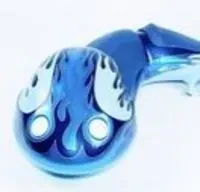
Image: Cyclepups (2005) - baby motorbikes in the Piccinini Exhibition at City Gallery, Wellington.In an innovative use of new technologies, Saatchi & Saatchi have designed an exciting website and podcast to accompany the exhibition Patricia Piccinini €” In Another Life . Exhibition users can navigate through a selection of key works from the exhibition whilst hearing Patricia Piccinini speak eloquently about them.
Read on for Mark Amery's review courtesy of The Dominion Post
Image: Cyclepups (2005) - baby motorbikes in the Piccinini Exhibition at City Gallery, Wellington.As a special feature of the site, users can download these artists commentaries onto their Ipod to use as an exhibition audio guide.
This popular podcast gives visitors a fresh and personal perspective into the provocative exhibition. There is no need to miss out if you do not have your own iPod €” City Gallery Wellington have iPods loaded with the commentaries for visitors to use while they view the exhibition.
Tom Eslinger, Worldwide Creative Director-Interactive/Emerging Media, Saatchi & Saatchi saw the opportunity to push a few boundaries with the show. 'After meeting Patricia and hearing her talk about her ideas and work, we concentrated on how we could share that very cool experience with people that would visit the show - how can we use interactive as a channel to connect people more closely with Patricia's ideas?'
This was how the idea of creating a podcast and a site based around Patricia discussing her work took shape. Eslinger thought 'How can we use this exciting emerging media to convey ideas and emotions? €”Something at the heart of the work we do at Saatchi & Saatchi. We're extremely proud and humbled to be part of such an amazing show.'
The podcast is available at www.citygallery.org.nz or in the gallery.
27 March- 2 April 2006
************************************************
The Art of Seduction - Courtesy of The Dominion Post - 2006/03/30
By Mark Amery
There's something eerily appropriate about the news this week that City Gallery have launched a website that allows you to download to your iPOD an exhibition guide for In Another Life, with the artist Patricia Piccinini introducing each of her works.
The Australian artist's immaculately produced sculpture, drawings, video and photography already employ plenty of hooks. Piccinini plays up to our fetish for sleek consumer items (note how her marvellous creatures rest on customised leather). Then there's our love of future 'what if' fantasises (my mind keeps turning to Day of the Triffids, with its equally terrific storyline and moral complexities), or the fact that we're suckers for those big Bambi eyes. This is art that recognises sentimentality, astonishment and curiosity as key driving human qualities.
With a few additions, the exhibition centres on a body of work that begins with her work that represented Australia at the 2003 Venice Biennale. This works' focus is nurturing and family, spinning on the tension between our instinct to nurture and our impulse to capture and manipulate.
Missing from this exhibition is a 2002 work, Game Boys Advanced in which the viewer approaches the figures of two eight year old boys playing a Game Boy. It's only, apparently, when you got up close that you noticed that these boys have the skin of old men (a reference to the premature aging clone sheep Dolly). It makes me think of exhibition visitors with their iPODs. As technological advancement allows us to gather information at an exponential pace, do we allow ourselves enough time to think?
Piccinini's work sets out to create this kind of thinking space. The clear motivation for the iPOD introduction is simply the amount of compelling information behind each of these artworks in terms of research, creative process and attention to real scientific possibility. You sense a desire to ensure we don't leave without being abreast of all the facts.
I say consult the supersmart website and recently released catalogue later. Why should I be interested in approaching a work of art with the artist in my ear telling me what it's about? That's an experience between the artwork and me, interference with its slow seduction routine.
Piccinini's pick-up approach is perhaps best summed up in one of several instructions delivered by Japanese girls via video monitors to her Truck Babies (Cute yet racey little blue and pink Semis with big round baby bums): "see with your heart, drive with your mind".
She employs a full armoury of devices to get us into the knot of questions that are conceptually at the heart of her practice. Like Venus Fly Traps her work's combination of gooey gorgeousness and grotesque grunt draws us into a web where we (hopefully) confront the inconsistencies inbuilt into our moral codes. A place reached by connecting together the snatches of narrative provided.
Take Surrogate (for the Northern Hairy Nosed Wombat) for example. You approach a docile wrinkled creature, atop a tastefully embroidered baby blue dais. You are probably struck first by the friendly little fella's lifelikeness, and then second by the utterly remarkable bodily resemblance to a potbellied middle-aged man.
The Surrogate is an extraordinary creation that rewards a long look. Simultaneously however you can't also help admiring the dinky little tent provided for this creature behind - surely the height of nursery fashion. This leads you to move around the work, only to discover that this is not just some biotechnologically-advanced pet, but that the creature's back and bottom feature a series of pods within which embryo are developing into furry wombats.
There's a compelling drama played out here. We struggle to determine what we consider normal, pushed as we are between seduction and repulsion, nurture and nature, our good intentions and our bad. Listening to Piccinini talk on the audio sample later its confirmed that the wombat is endangered, and that discussion between the artist and a zoologist revealed that their has in fact been a proposition to use a surrogate - the Southern Hairy Nosed Wombat - for the Northern.
These artworks work as hard to be loved as the creatures do. In this respect I find myself musing on art's own need to be loved and nurtured, and the defencelessness of its hybrid position.
In fact its almost because these works call out so hard to be cared about, that they leave me a little ambivalent. They're so busy trying to impress, so overtly staged that there's little chance that they'll truly move me.
For one thing, however lifelike the creatures remain models made of silicone and fibreglass. The works get caught a little awkwardly in the artist's clever play with competing strategies: creatures existing on the cusp between the suburban and the wild; pets to care for; Disney desirables; and showroom items - be they the possums in designer pods, or less successful works included like the Cyclepups series, 'Wollemi' and 'Radial'.
Gone are the stuffed hunting trophies of museums of old. In this museum, Piccinini's taxidermied treasures alert us to the fact that we've moved on to new ways of manipulating nature. One of her art's great achievements is its ability to make us recognise our responsibilities as humans have shifted dramatically.
Piccinini seems at pains to stress that her work is about asking questions rather than providing any clear answers. Despite this however there is one position constantly pushed by the actual work in this exhibition - that we need to care, and that care means a responsibility for what we bring into the world.
ENDS
************************************************
MONTANA KEYNOTE LECTURE
JULIANA ENGBERG
EXTRAHUMAN: THE NEW ORGANIC ORDER OF PATRICIA PICCININI
Sunday 02 April, 2pm
Described by ArtForum magazine as 'an impeccable eye wedded to a keen intellect' and 'Australia's most maverick and ambitious curator of contemporary art', Juliana Engberg is currently Artistic Director of ACCA (Australian Centre for Contemporary Art, Melbourne). Curator of the 2002/03 exhibition Retrospectology: The World According to Patricia Piccinini, Engberg will present a keynote lecture on Piccinini's provocative practice.
FREE ENTRY
UPCOMING
GALLERY BABES
Thursday 6 April, 10:30am
Mums & Dads €”keen for a healthy dose of art-intellectual entertainment? Bring the baby in the buggy and join us for a family-friendly tour of the current exhibitions Michael Smither €”The Wonder Years and Patricia Piccinini €”In Another Life. The tour is followed by coffee and chat.
JUDITH FYFE - MICHAEL SMITHER: THE TALKING YEARS
Sunday 9 April, 2pm
Wellingtonian, Judith Fyfe has been friends with Michael Smither since the late 1960s. Over a period of six years, Fyfe recorded hundreds of hours of oral history as she interviewed Smither about his sketchbooks, page by page. Like diaries, these books house the artist's biography as he drew and sometimes wrote about his daily life.
Fyfe will discuss those talking years, and bring a friend's insight (as opposed to a curator's or an expert's), into the connections between art and the everyday life of Smither. Having been involved with the documenting of his sketchbooks she is now, as a lawyer, working with him on the legal issues that will assist artists to achieve fair recompense for the ongoing value of their work.